
🚀 宇宙の記憶・カレンダー検索
🚀 象徴的な写真:
APOD第1回
🚀 創造の柱
🚀 スピリット火星着陸
🚀 ハッブル超深宇宙
🚀 地球へようこそ|ブルー・マーブル
🚀 エンケラドス
🚀 ベテルギウス
🚀 火星着陸
🚀 青い夕焼け
🚀 冥王星のハート
🚀 皆既日食
🚀 アースライズ再構築
🚀 ブラックホール
🚀 ウェッブ初画像
🚀 アポロ11着陸
APOD30周年(2025年6月16日)
四分円類
Quadrantids
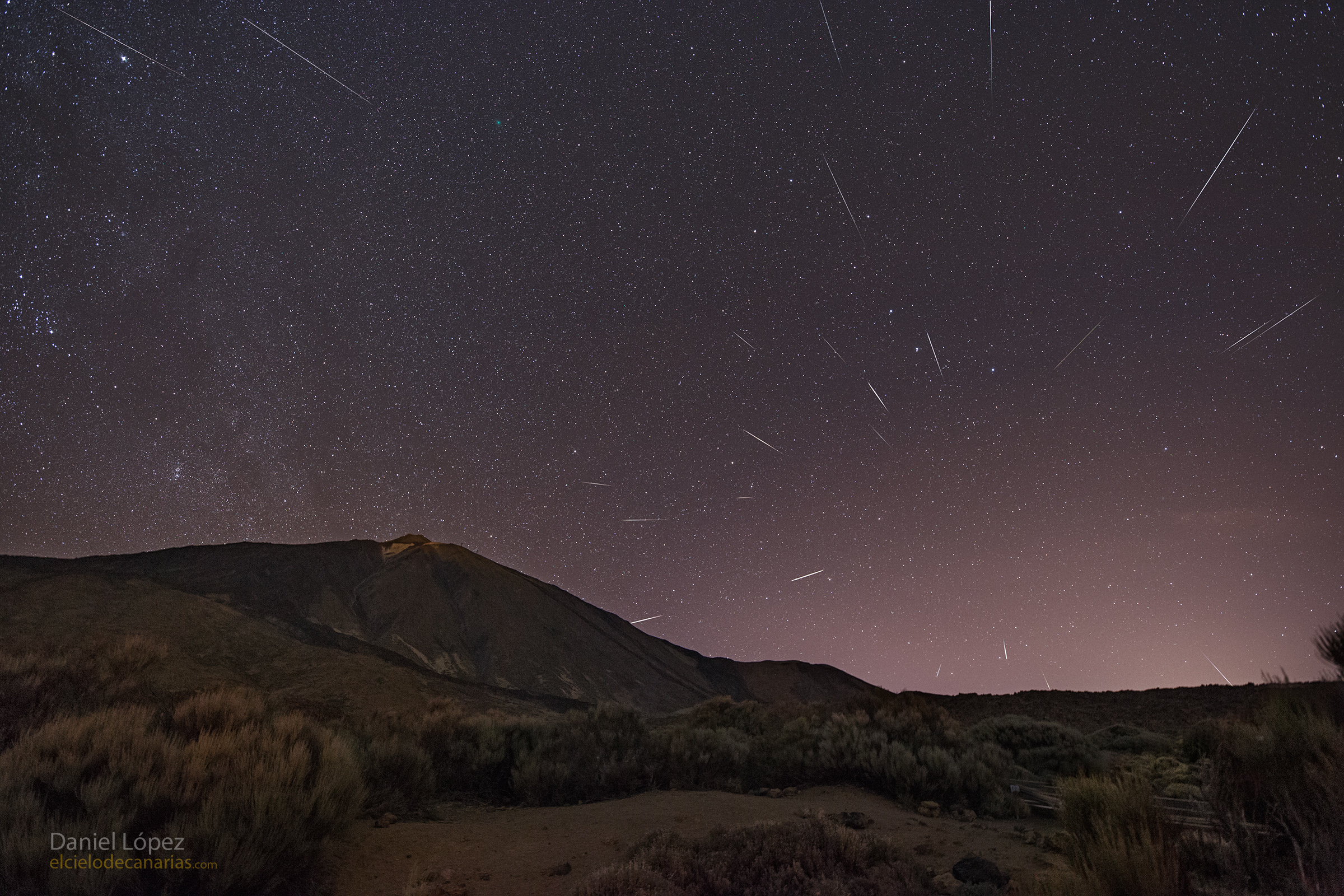
忘れ去られた星座にちなんで名付けられたしぶんぎ座流星群は、地球の北半球の天体観測者にとって毎年恒例のイベントです。通常、1 月 4 日の寒い早朝に短時間ピークを迎えます。流星群の放射点は、天文学的に廃止された古い星座である壁面四分儀座の中にあります。その位置は、現代の星座であるヘルクレス座、うしかい座、りゅう座の境界付近にあります。午前 2 時 30 分から現地の夜明けまでの間、暗く月のない空で記録されたデジタル フレームで構成されたこの空景には、約 30 個のしぶんぎ座流星が数えられます。流星群の放射点は、カナリア諸島のテネリフェ島のテイデ火山のすぐ右側、北の空でおなじみの北斗七星のすぐ下に昇っています。しぶんぎ座流星群を生み出す塵の流れの発生源として考えられるものは、2003 年に小惑星であると特定されました。よく見ると、火山の頂上付近、画面上部近くに、小さくて特徴的な緑がかったコマが見えるはずです。それが、2018年のクリスマスに地球の空に現れた彗星、ヴィルタネンです。
原文(English)
Named for a forgotten constellation, the Quadrantid Meteor Shower is an annual event for planet Earth's northern hemisphere skygazers It usually peaks briefly in the cold, early morning hours of January 4. The shower's radiant on the sky lies within the old, astronomically obsolete constellation Quadrans Muralis. That position is situated near the boundaries of the modern constellations Hercules, Bootes, and Draco. About 30 Quadrantid meteors can be counted in this skyscape composed of digital frames recorded in dark and moonless skies between 2:30am and local dawn. The shower's radiant is rising just to the right of the Canary Island of Tenerife's Teide volcano, and just below the familiar stars of the Big Dipper on the northern sky. A likely source of the dust stream that produces Quadrantid meteors was identified in 2003 as an asteroid. Look carefully and you can also spot a small, telltale greenish coma above the volcanic peak and near the top of the frame. That's the 2018 Christmas visitor to planet Earth's skies, Comet Wirtanen.
\ この感動を宇宙仲間にシェア /
宇宙をXでシェア
© El Cielo de Canarias / APOD