
🚀 宇宙の記憶・カレンダー検索
🚀 象徴的な写真:
APOD第1回
🚀 創造の柱
🚀 スピリット火星着陸
🚀 ハッブル超深宇宙
🚀 地球へようこそ|ブルー・マーブル
🚀 エンケラドス
🚀 ベテルギウス
🚀 火星着陸
🚀 青い夕焼け
🚀 冥王星のハート
🚀 皆既日食
🚀 アースライズ再構築
🚀 ブラックホール
🚀 ウェッブ初画像
🚀 アポロ11着陸
APOD30周年(2025年6月16日)
Arp 194: 合体銀河群
Arp 194: Merging Galaxy Group
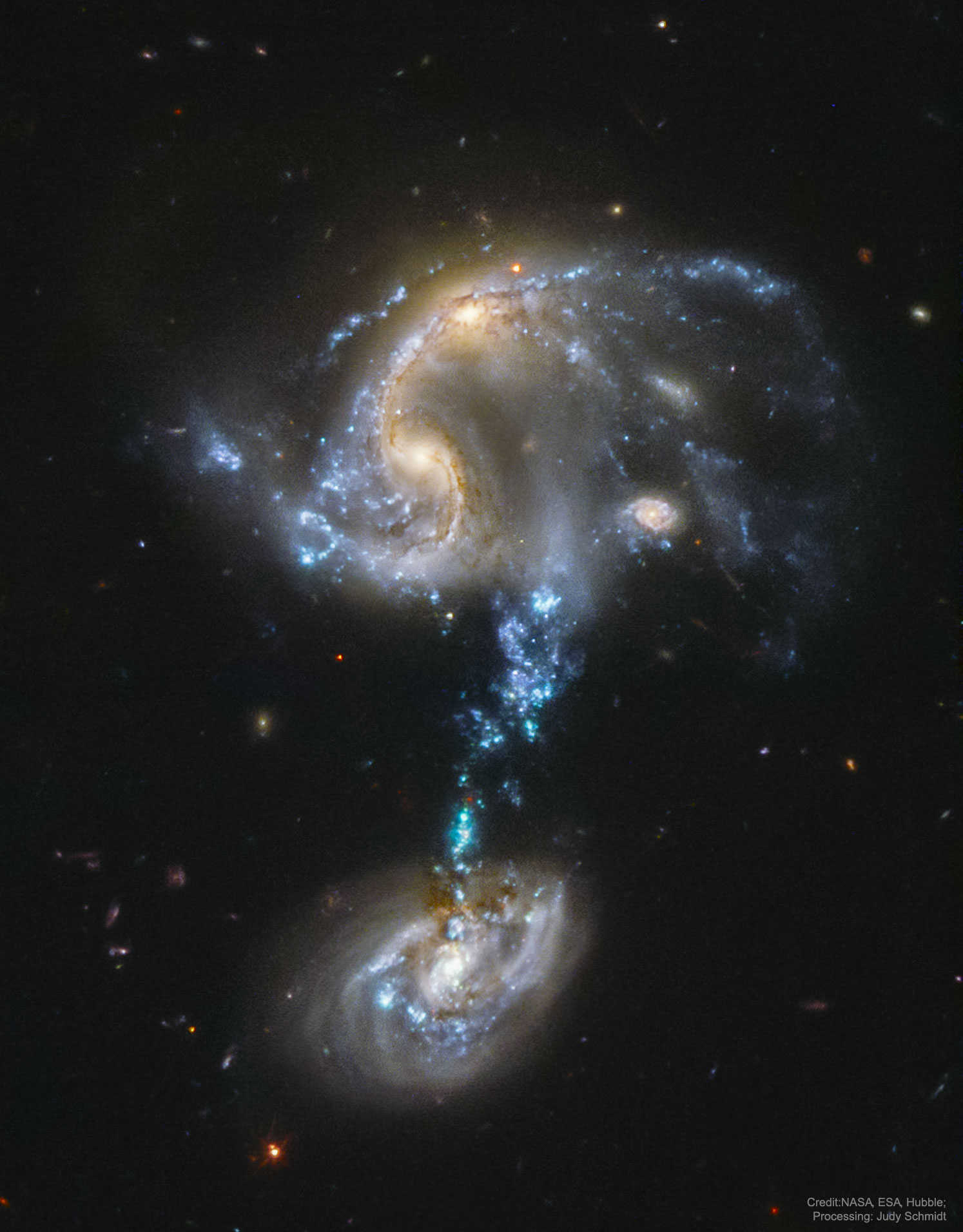
なぜこれらの衝突銀河間の橋のところで星が形成されているのでしょうか?通常、銀河が衝突する際、星形成は銀河円盤または潮汐尾に限定されます。しかし、Arp 194では、まさに橋のすぐそばに若い星の明るい塊が存在します。ハッブル宇宙望遠鏡によるArp 194の注目画像を含む画像とデータの分析、そして相互作用のコンピューターシミュレーションは、過去1億年以内に下の銀河が上の銀河を通り抜けたことを示しています。その結果、ガスの流れが残され、現在、下の銀河に向かって落下しています。天文学者たちは、急速な衝突後の乱流が最近弱まったために、この橋で星が形成されているのではないかと仮説を立てています。約10億年後には、上の銀河に重なる小さな銀河(見えますか?)を含むすべての銀河が、一つの大きな銀河に合体するでしょう。
原文(English)
Why are stars forming in the bridge between these colliding galaxies? Usually when galaxies crash, star formation is confined to galaxy disks or tidal tails. In Arp 194, though, there are bright knots of young stars right in a connecting bridge. Analyses of images and data including the featured image of Arp 194 from Hubble, as well as computer simulations of the interaction, indicate that the bottom galaxy passed right through the top galaxy within the past 100 million years. The result has left a stream of gas that is now falling toward the bottom galaxy. Astronomers hypothesize that stars form in this bridge because of the recent fading of turbulence after the rapid collision. In about a billion years, the galaxies -- including a smaller galaxy superposed on the upper galaxy (see it?) -- will all merge into one larger galaxy.
\ この感動を宇宙仲間にシェア /
宇宙をXでシェア
© NASA / APOD