
🚀 宇宙の記憶・カレンダー検索
🚀 象徴的な写真:
APOD第1回
🚀 創造の柱
🚀 スピリット火星着陸
🚀 ハッブル超深宇宙
🚀 地球へようこそ|ブルー・マーブル
🚀 エンケラドス
🚀 ベテルギウス
🚀 火星着陸
🚀 青い夕焼け
🚀 冥王星のハート
🚀 皆既日食
🚀 アースライズ再構築
🚀 ブラックホール
🚀 ウェッブ初画像
🚀 アポロ11着陸
APOD30周年(2025年6月16日)
レオトリオ
The Leo Trio
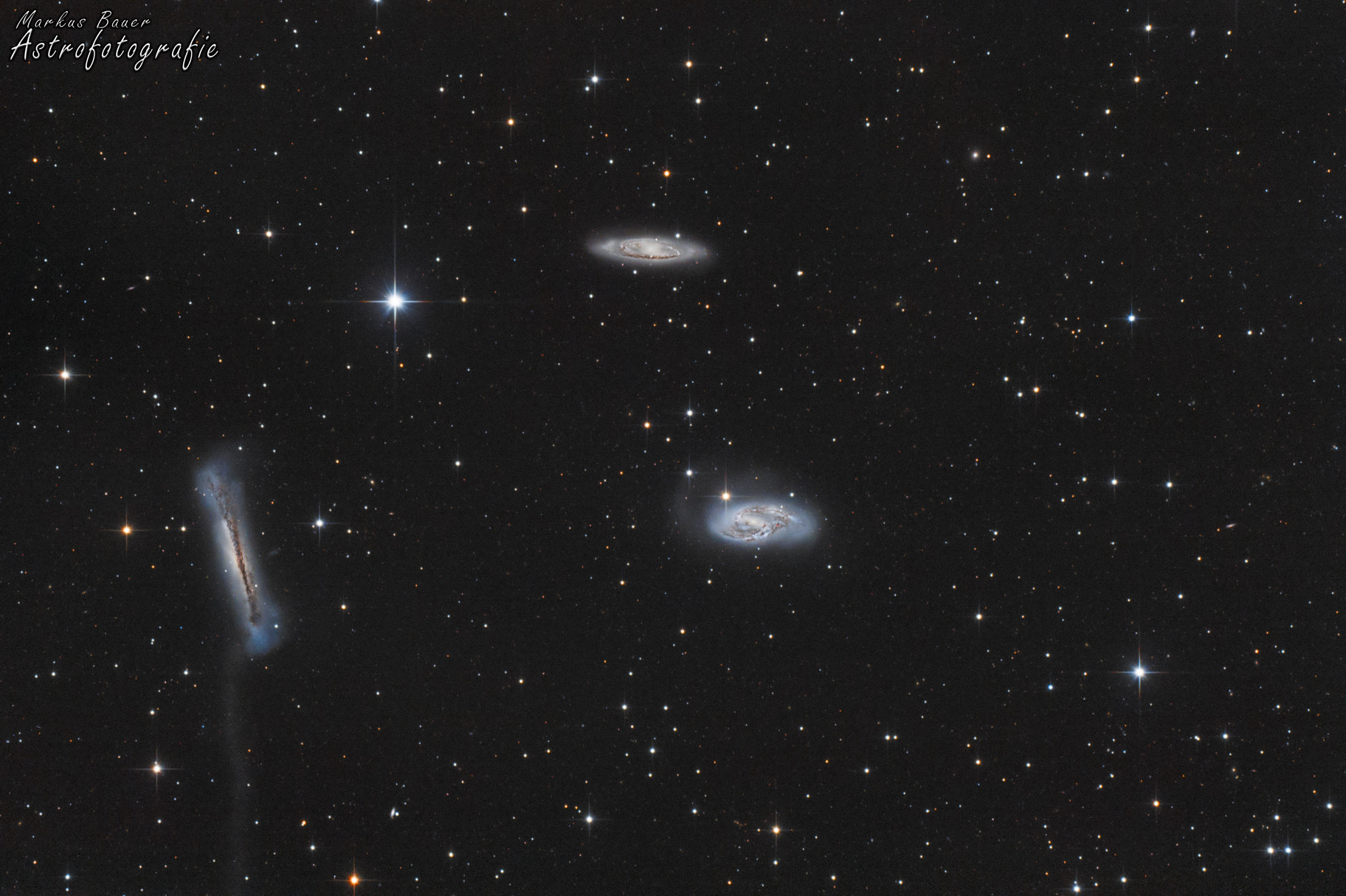
このグループは北半球の春に人気があります。しし座トリプレットとして有名なこの3つの壮大な銀河は、1つの視野に集まっています。控えめな望遠鏡でも撮影でき、多くの人を魅了するこれらの銀河は、NGC 3628(左)、M66(右下)、M65(上)として個別に紹介できます。3つとも大きな渦巻銀河ですが、銀河円盤が視線に対して異なる角度で傾いているため、見た目が異なっています。ハンバーガー銀河としても知られるNGC 3628は、魅力的に横から見ることができ、その膨らんだ銀河面を横切る塵の帯が視界を遮っています。M66とM65の円盤はどちらも十分に傾いているため、渦巻構造がはっきりと見えます。このグループの銀河間の重力相互作用は、NGC 3628の潮汐尾と歪んで膨張した円盤、M66の伸びた渦状腕など、特徴的な痕跡を残しています。この壮大な眺めは、空のほぼ2度(満月4個分)に及ぶ。3つの星の推定距離は3000万光年で、この視野は約100万光年に相当する。もちろん、手前の尖った星々は、我々の銀河系の中にある。
原文(English)
This group is popular in the northern spring. Famous as the Leo Triplet, the three magnificent galaxies gather in one field of view. Crowd pleasers when imaged with even modest telescopes, they can be introduced individually as NGC 3628 (left), M66 (bottom right), and M65 (top). All three are large spiral galaxies but they tend to look dissimilar because their galactic disks are tilted at different angles to our line of sight. NGC 3628, also known as the Hamburger Galaxy, is temptingly seen edge-on, with obscuring dust lanes cutting across its puffy galactic plane. The disks of M66 and M65 are both inclined enough to show off their spiral structure. Gravitational interactions between galaxies in the group have left telltale signs, including the tidal tails and warped, inflated disk of NGC 3628 and the drawn out spiral arms of M66. This gorgeous view of the region spans almost two degrees (four full moons) on the sky. The field covers about a million light-years at the trio's estimated distance of 30 million light-years. Of course the spiky foreground stars lie within our own Milky Way.
\ この感動を宇宙仲間にシェア /
宇宙をXでシェア
© Markus Bauer / APOD