
🚀 宇宙の記憶・カレンダー検索
🚀 象徴的な写真:
APOD第1回
🚀 創造の柱
🚀 スピリット火星着陸
🚀 ハッブル超深宇宙
🚀 地球へようこそ|ブルー・マーブル
🚀 エンケラドス
🚀 ベテルギウス
🚀 火星着陸
🚀 青い夕焼け
🚀 冥王星のハート
🚀 皆既日食
🚀 アースライズ再構築
🚀 ブラックホール
🚀 ウェッブ初画像
🚀 アポロ11着陸
APOD30周年(2025年6月16日)
N11:大マゼラン雲の星雲
N11: Star Clouds of the LMC
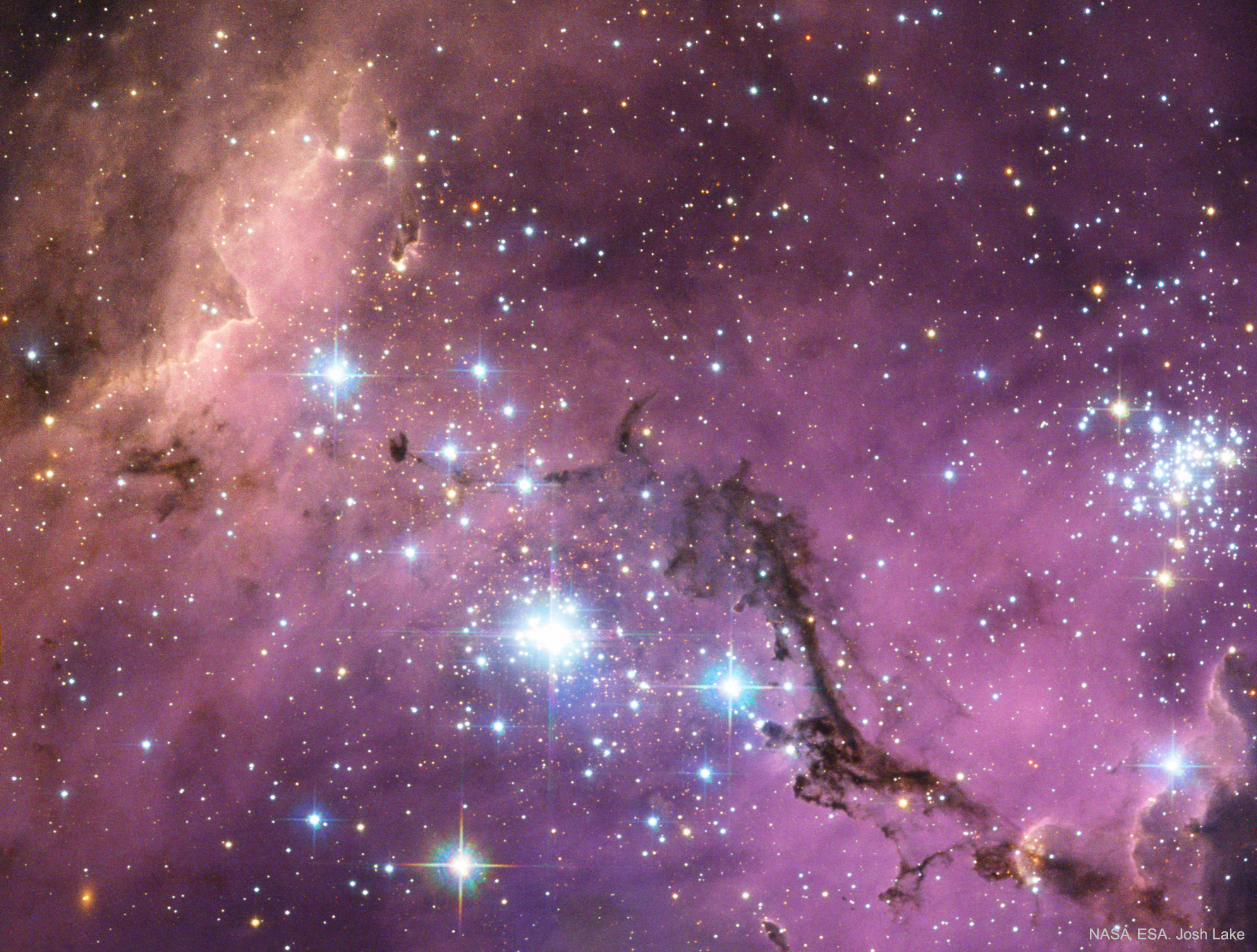
巨大な星、荒々しい風、塵の山、そしてエネルギーに満ちた光が、局所銀河群で最大かつ最も美しい星形成領域の1つを形作っています。N11として知られるこの領域は、その母銀河である天の川銀河の隣に位置する大マゼラン雲(LMC)の多くの画像の右上に見ることができます。掲載されている画像は、ハッブル宇宙望遠鏡によって科学目的で撮影され、アマチュアによって芸術的に再処理されてハッブルの隠された宝物コンテストで優勝しました。上の画像に写っている部分はNGC 1763として知られていますが、N11輝線星雲全体は、LMCでタランチュラ星雲に次いで2番目に大きいものです。画像周辺には、誕生しつつある若い星を収容する暗い塵のコンパクトな球体も見られます。ハッブルによるLMCの変光星の新しい研究は、観測可能な宇宙の距離スケールの再較正に役立ちましたが、遍在する宇宙マイクロ波背景放射を使用したスケールとはわずかに異なる結果となりました。天体物理学者向け:天体物理学ソースコードライブラリで1,900以上のコードを閲覧できます。
原文(English)
Massive stars, abrasive winds, mountains of dust, and energetic light sculpt one of the largest and most picturesque regions of star formation in the Local Group of Galaxies. Known as N11, the region is visible on the upper right of many images of its home galaxy, the Milky Way neighbor known as the Large Magellanic Clouds (LMC). The featured image was taken for scientific purposes by the Hubble Space Telescope and reprocessed for artistry by an amateur to win a Hubble's Hidden Treasures competition. Although the section imaged above is known as NGC 1763, the entire N11 emission nebula is second in LMC size only to the Tarantula Nebula. Compact globules of dark dust housing emerging young stars are also visible around the image. A new study of variable stars in the LMC with Hubble has helped to recalibrate the distance scale of the observable universe, but resulted in a slightly different scale than found using the pervasive cosmic microwave background. Astrophysicists: Browse 1,900+ codes in the Astrophysics Source Code Library
\ この感動を宇宙仲間にシェア /
宇宙をXでシェア
© NASA / APOD