
🚀 宇宙の記憶・カレンダー検索
🚀 象徴的な写真:
APOD第1回
🚀 創造の柱
🚀 スピリット火星着陸
🚀 ハッブル超深宇宙
🚀 地球へようこそ|ブルー・マーブル
🚀 エンケラドス
🚀 ベテルギウス
🚀 火星着陸
🚀 青い夕焼け
🚀 冥王星のハート
🚀 皆既日食
🚀 アースライズ再構築
🚀 ブラックホール
🚀 ウェッブ初画像
🚀 アポロ11着陸
APOD30周年(2025年6月16日)
深宇宙:いて座の星雲
Deep Field: Nebulae of Sagittarius
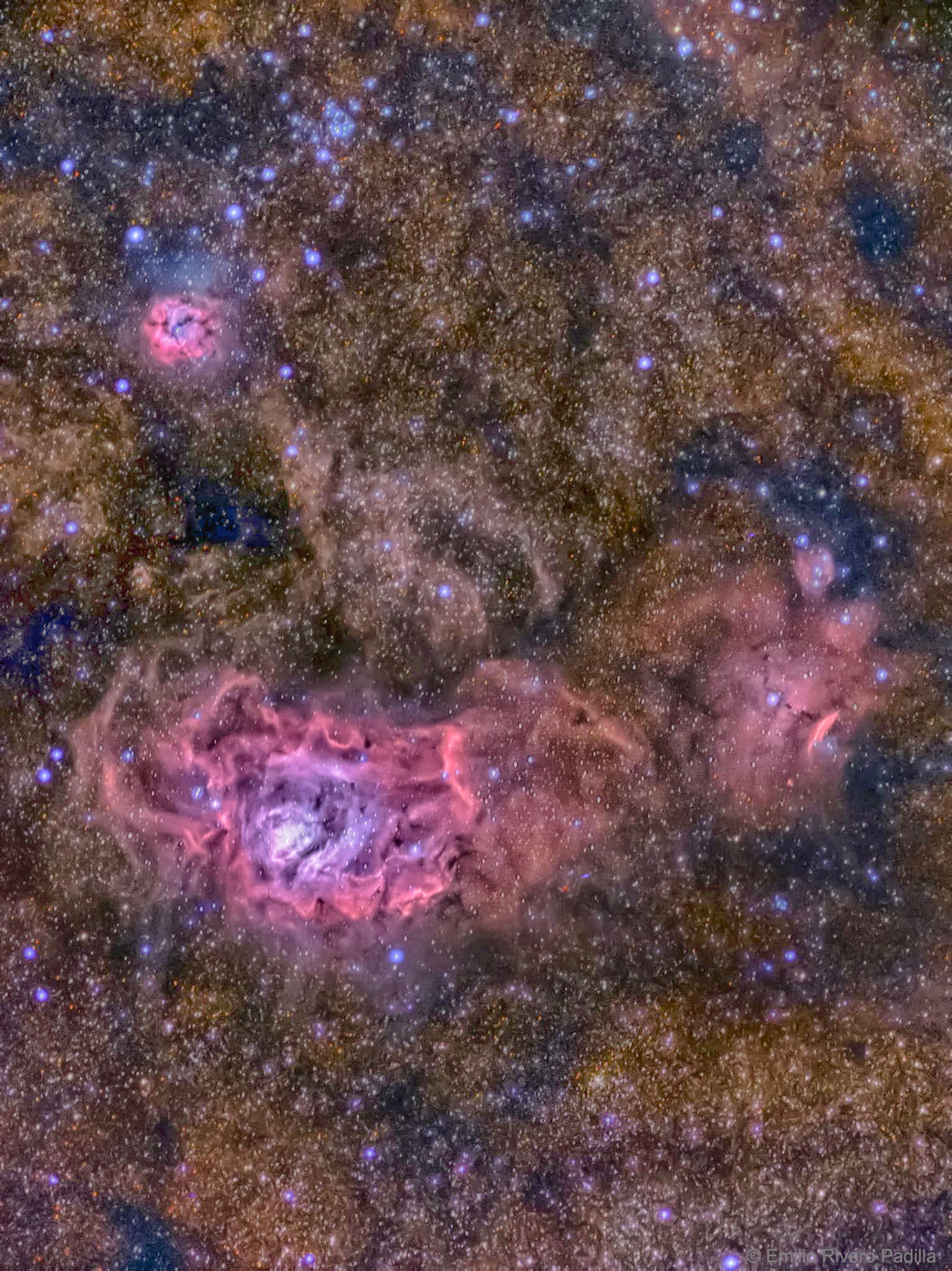
これら3つの明るい星雲は、いて座や天の川銀河中心部の星が密集した領域を望遠鏡で巡るツアーでよく取り上げられます。実際、18世紀の宇宙旅行者シャルル・メシエは、そのうちの2つ、中央のすぐ左にある大きな星雲M8と、左上にある色鮮やかなM20をカタログ化しました。3つ目の輝線領域にはNGC 6559が含まれており、M8の右側にあります。これら3つはすべて、約5000光年ほど離れた星形成領域です。100光年以上も広がるM8は、ラグーン星雲としても知られています。M20の一般的な愛称はトリフィドです。輝く水素ガスが輝線星雲の支配的な赤色を作り出しています。対照的に、トリフィドの青い色合いは、星の光が反射した塵によるものです。最近形成された明るい青い星が近くに見えます。この色鮮やかな合成空景は、2018年にスペインのカナリア諸島にあるテイデ国立公園で撮影されました。
原文(English)
These three bright nebulae are often featured on telescopic tours of the constellation Sagittarius and the crowded starfields of the central Milky Way. In fact, 18th century cosmic tourist Charles Messier cataloged two of them; M8, the large nebula just left of center, and colorful M20 on the top left. The third emission region includes NGC 6559 and can be found to the right of M8. All three are stellar nurseries about five thousand light-years or so distant. Over a hundred light-years across, the expansive M8 is also known as the Lagoon Nebula. M20's popular moniker is the Trifid. Glowing hydrogen gas creates the dominant red color of the emission nebulae. In striking contrast, blue hues in the Trifid are due to dust reflected starlight. Recently formed bright blue stars are visible nearby. The colorful composite skyscape was recorded in 2018 in Teide National Park in the Canary Islands, Spain.
\ この感動を宇宙仲間にシェア /
宇宙をXでシェア
© Emilio Rivero Padilla / APOD