
🚀 宇宙の記憶・カレンダー検索
🚀 象徴的な写真:
APOD第1回
🚀 創造の柱
🚀 スピリット火星着陸
🚀 ハッブル超深宇宙
🚀 地球へようこそ|ブルー・マーブル
🚀 エンケラドス
🚀 ベテルギウス
🚀 火星着陸
🚀 青い夕焼け
🚀 冥王星のハート
🚀 皆既日食
🚀 アースライズ再構築
🚀 ブラックホール
🚀 ウェッブ初画像
🚀 アポロ11着陸
APOD30周年(2025年6月16日)
星空の下、燃え盛る火山
A Volcano of Fire under a Milky Way of Stars
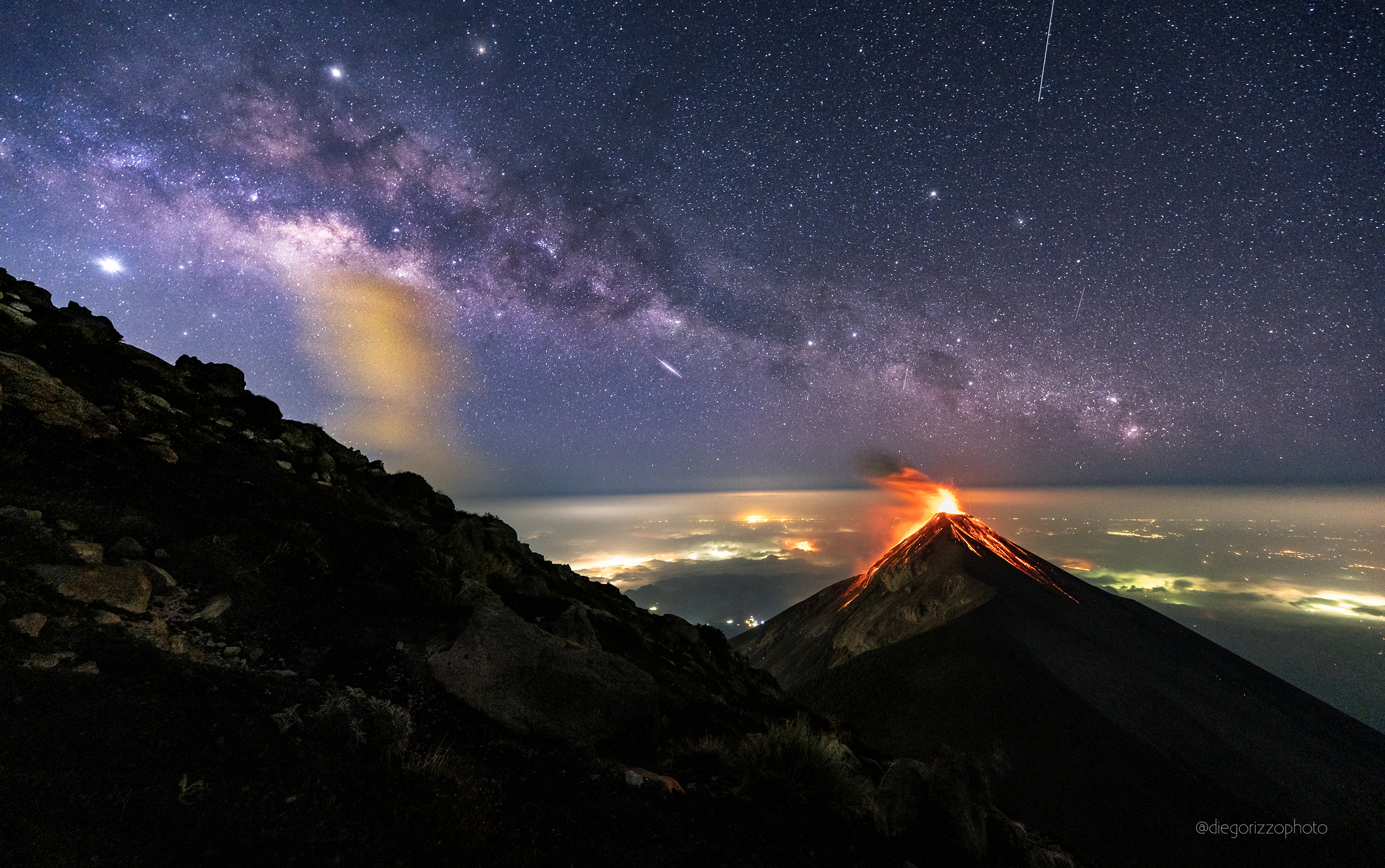
陸地と空、どちらがより印象的か判断に迷うこともある。例えば、掲載されている写真の陸地では、フエゴ火山が噴火し、山頂には赤く燃える火山灰が風に吹き上げられ、山腹には光り輝く溶岩が流れ落ちている。下の薄い霞を通して、近隣の町の明かりが見える。一方、空には、天の川銀河の中心面が左上から斜めに走り、そのすぐ下には流星が、右上には衛星の軌跡が見られる。木星も左上に見え、そのすぐ右には明るい星アンタレスが輝いている。陸地と空の大部分は、4月中旬にグアテマラのフエゴ火山の姉妹火山であるアカテナンゴ山の斜面から、タイミングよく撮影された25秒の露光で捉えられた。しかし、流星の画像は、火山噴火がそれほど写真映えしなかった約30分前に撮影された同様のフレームに写っており、後からデジタル処理で追加されたものです。APODをフォローするには、Instagram、Facebook、Reddit、またはTwitterをご覧ください。
原文(English)
Sometimes it's hard to decide which is more impressive -- the land or the sky. On the land of the featured image, for example, the Volcano of Fire (Volc�n de Fuego) is seen erupting topped by red-hot, wind-blown ash and with streams of glowing lava running down its side. Lights from neighboring towns are seen through a thin haze below. In the sky, though, the central plane of our Milky Way Galaxy runs diagonally from the upper left, with a fleeting meteor just below, and the trail of a satellite to the upper right. The planet Jupiter also appears toward the upper left, with the bright star Antares just to its right. Much of the land and the sky were captured together in a single, well-timed, 25-second exposure taken in mid-April from the side of Fuego's sister volcano Acatenango in Guatemala. The image of the meteor, though, was captured in a similar frame taken about 30 minutes earlier -- when the volanic eruption was not as photogenic -- and added later digitally. Follow APOD on: Instagram, Facebook, Reddit, or Twitter
\ この感動を宇宙仲間にシェア /
宇宙をXでシェア
© Diego Rizzo / APOD