
🚀 宇宙の記憶・カレンダー検索
🚀 象徴的な写真:
APOD第1回
🚀 創造の柱
🚀 スピリット火星着陸
🚀 ハッブル超深宇宙
🚀 地球へようこそ|ブルー・マーブル
🚀 エンケラドス
🚀 ベテルギウス
🚀 火星着陸
🚀 青い夕焼け
🚀 冥王星のハート
🚀 皆既日食
🚀 アースライズ再構築
🚀 ブラックホール
🚀 ウェッブ初画像
🚀 アポロ11着陸
APOD30周年(2025年6月16日)
オリオン座の星間雲
The Interstellar Clouds of Orion
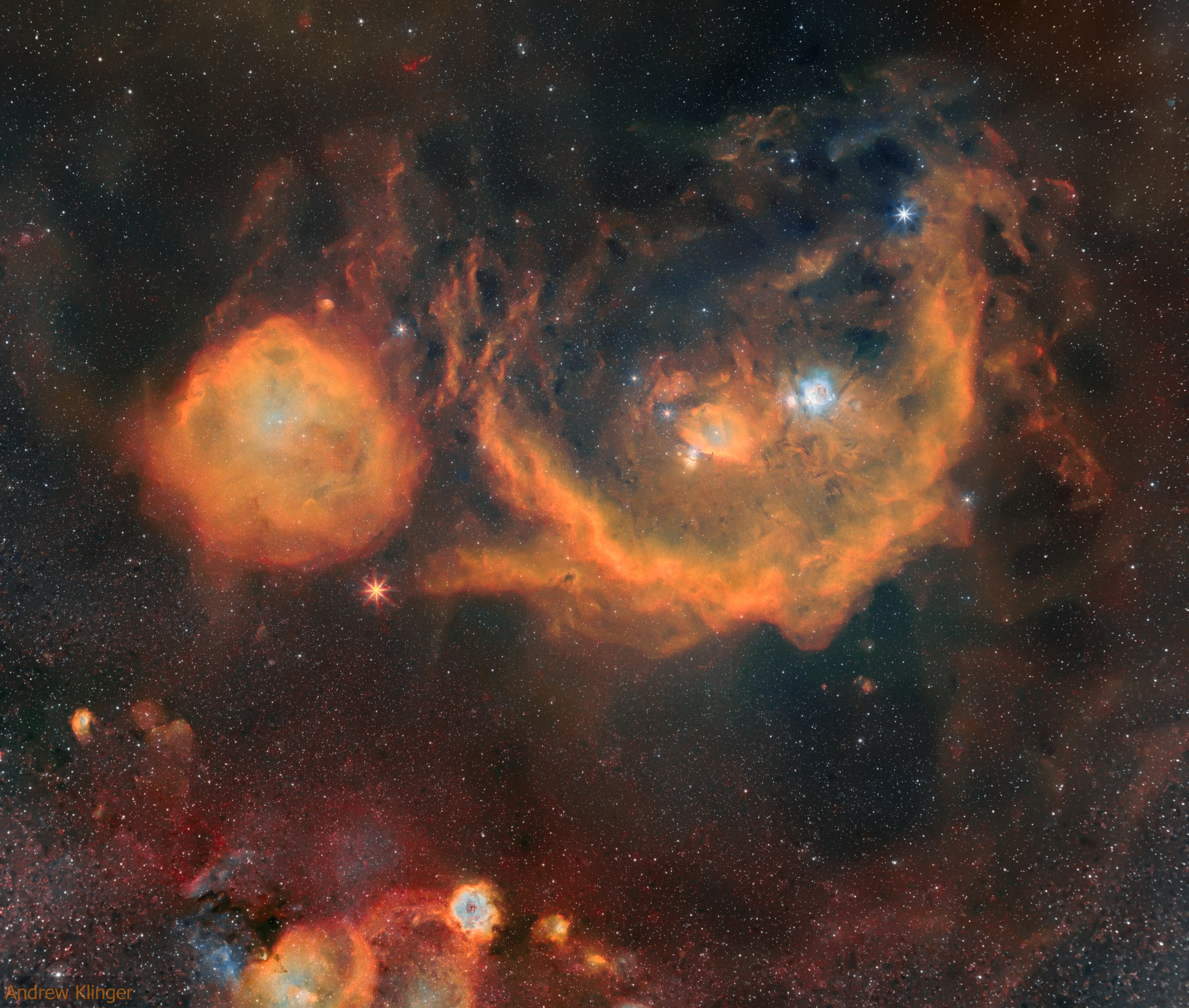
オリオン座は、単に3つの星が並んでいるだけではありません。それは、印象的な星雲が数多く存在する宇宙の領域です。このよく知られた空の領域をより深く理解するために、1月、2月、3月の晴れた夜に長時間露光による新しい画像が撮影されました。23時間の撮影時間と数えきれない画像処理を経て、水素、酸素、硫黄の光で撮影されたこの画像は、月の視直径の40倍以上にも及ぶ範囲をカバーしています。数多くの興味深いディテールが明らかになった中で、特に目を引くのは、画像の中心のすぐ右にある明るい赤橙色の弧、バーナードループです。バラ星雲は、画像の中心のすぐ左にある巨大なオレンジ色の星雲ではありません。そちらは、メイサリングとして知られる、より大きく、あまり知られていない星雲です。バラ星雲は確かに写っています。画像の下の方にある、明るいオレンジ、青、白の星雲です。画面中央のすぐ左にある明るいオレンジ色の星はベテルギウス、右上の明るい青色の星はリゲルです。オリオン座の三つ星は、この賑やかな画面では見つけにくいかもしれませんが、注意深く見れば画面中央のすぐ右に見つけることができます。
原文(English)
The constellation of Orion is much more than three stars in a row. It is a direction in space that is rich with impressive nebulas. To better appreciate this well-known swath of sky, a new long exposure image was taken over several clear nights in January, February and March. After 23 hours of camera time and untold hours of image processing, the featured collage in the light of hydrogen, oxygen, and sulfur was produced spanning over 40 times the angular diameter of the Moon. Of the many interesting details that have become visible, one that particularly draws the eye is Barnard's Loop, the bright red orange arc just to the right of the image center. The Rosette Nebula is not the giant orange nebula just to the left of the image center -- that is larger but lesser known nebula known as the Meissa Ring. The Rosette Nebula is visible, though: it is the bright orange, blue and white nebula near the image bottom. The bright orange star just left of the frame center is Betelgeuse, while the bright blue star on the upper right is Rigel. About those famous three stars that cross the belt of Orion the Hunter -- in this busy frame they can be hard to locate, but a discerning eye will find them just to the right of the image center.
\ この感動を宇宙仲間にシェア /
宇宙をXでシェア
© Andrew Klinger / APOD