
🚀 宇宙の記憶・カレンダー検索
🚀 象徴的な写真:
APOD第1回
🚀 創造の柱
🚀 スピリット火星着陸
🚀 ハッブル超深宇宙
🚀 地球へようこそ|ブルー・マーブル
🚀 エンケラドス
🚀 ベテルギウス
🚀 火星着陸
🚀 青い夕焼け
🚀 冥王星のハート
🚀 皆既日食
🚀 アースライズ再構築
🚀 ブラックホール
🚀 ウェッブ初画像
🚀 アポロ11着陸
APOD30周年(2025年6月16日)
木星の光輪の亡霊
The Ghost of Jupiter's Halo
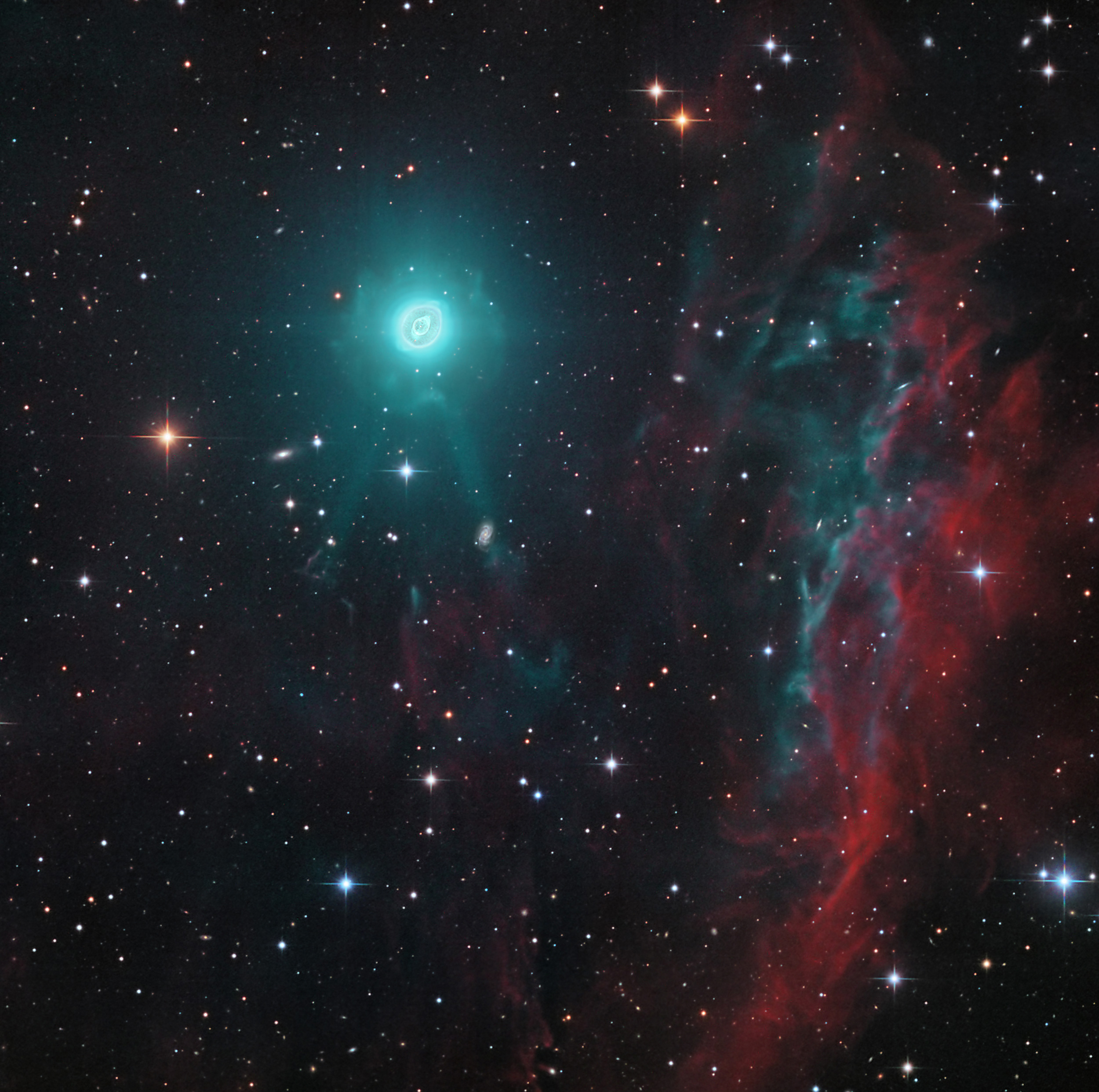
NGC 3242のクローズアップ画像には、太陽のような死にゆく星が残した残骸、通称「木星の幽霊星雲」が写っている。しかし、この深く広い望遠鏡画像には、美しい惑星状星雲のめったに見られない外側のハローが、左上、うみへび座の天の川の星々と背景の銀河の方角に写っている。星雲の中心にある白色矮星からの強烈で通常は見えない紫外線放射が、可視光での幻想的な輝きを生み出している。実際、NGC 3242の進化した白色矮星の惑星が、星雲の対称的な特徴と形状に寄与した可能性がある。星が惑星状星雲を形成するずっと前の赤色巨星段階で始まった活動が、より淡く広範囲にわたるハローの原因であると考えられる。NGC 3242は直径約1光年で、地球から約4,500光年離れている。右側に見られる、かすかに光る物質の雲は、星間ガスである可能性が高く、たまたまNGC 3242の白色矮星に十分近いため、その紫外線放射によってエネルギーを得ていると考えられる。
原文(English)
Close-up images of NGC 3242 show the cast off shroud of a dying, sun-like star fancifully known as The Ghost of Jupiter nebula. But this deep and wide telescopic view also finds the seldom seen outer halo of the beautiful planetary nebula at the upper left, toward Milky Way stars and background galaxies in the serpentine constellation Hydra. Intense and otherwise invisible ultraviolet radiation from the nebula's central white dwarf star powers its illusive glow in visible light. In fact, planets of NGC 3242's evolved white dwarf star may have contributed to the nebula's symmetric features and shape. Activity beginning in the star's red giant phase, long before it produced a planetary nebula, is likely the cause of the fainter more extensive halo. About a light-year across NGC 3242 is some 4,500 light-years away. The tenuous clouds of glowing material at the right could well be interstellar gas, by chance close enough to the NGC 3242's white dwarf to be energized by its ultraviolet radiation.
\ この感動を宇宙仲間にシェア /
宇宙をXでシェア
© CHART32 Team / APOD