
🚀 宇宙の記憶・カレンダー検索
🚀 象徴的な写真:
APOD第1回
🚀 創造の柱
🚀 スピリット火星着陸
🚀 ハッブル超深宇宙
🚀 地球へようこそ|ブルー・マーブル
🚀 エンケラドス
🚀 ベテルギウス
🚀 火星着陸
🚀 青い夕焼け
🚀 冥王星のハート
🚀 皆既日食
🚀 アースライズ再構築
🚀 ブラックホール
🚀 ウェッブ初画像
🚀 アポロ11着陸
APOD30周年(2025年6月16日)
HDR:地球が月に落とす円形の影
HDR: Earth's Circular Shadow on the Moon
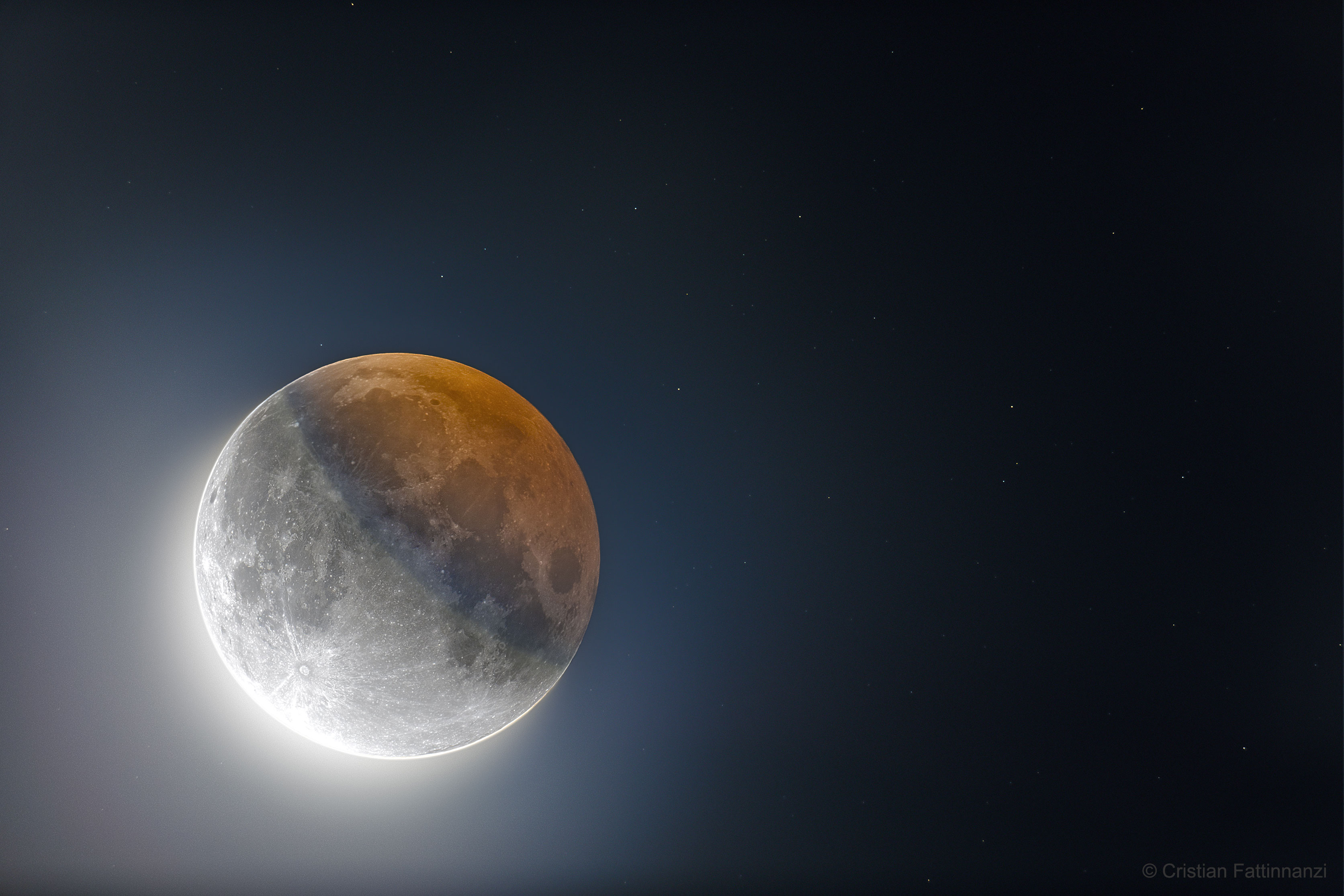
月面にこれほど大きな円形の影を作り出すものは何でしょうか?それは地球です。先週の満月、バックムーンは、太陽と地球とほぼ一直線に並ぶほど満月でした。このような場合、地球は月に影を落とします。地球の影が月面に円形であることはアリストテレスによって言及されており、少なくとも紀元前4世紀から注目されていました。新しいのは、人類がこの影を高ダイナミックレンジ(HDR)で記録できるようになったことです。先週の部分月食のHDR合成画像は15枚の画像を合成したもので、最も明るい部分が露出オーバーにならないように1/400秒という短い露光時間と、最も暗い部分を明るくするために5秒間の露光時間が含まれています。地球の本影の内側にあるこの最も暗い部分は、地球の大気によって屈折した光が月に届くため、完全に暗くはありません。次の皆既月食は2021年5月に起こります。 2019年7月の部分月食:APODに投稿された印象的な写真の数々
原文(English)
What could create such a large circular shadow on the Moon? The Earth. Last week's full Moon -- the Buck Moon -- was so full that it fell almost exactly in a line with the Sun and the Earth. When that happens the Earth casts its shadow onto the Moon. The circularity of the Earth's shadow on the Moon was commented on by Aristotle and so has been noticed since at least the 4th century BC. What's new is humanity's ability to record this shadow with such high dynamic range (HDR). The featured HDR composite of last week's partial lunar eclipse combines 15 images and include an exposure as short as 1/400th of a second -- so as not to overexpose the brightest part -- and an exposure that lasted five seconds -- to bring up the dimmest part. This dimmest part -- inside Earth's umbra -- is not completely dark because some light is refracted through the Earth's atmosphere onto the Moon. A total lunar eclipse will occur next in 2021 May. Partial Lunar Eclipse in 2019 July: Some memorable images submitted to APOD
\ この感動を宇宙仲間にシェア /
宇宙をXでシェア
© Cristian Fattinnanzi / APOD