
🚀 宇宙の記憶・カレンダー検索
🚀 象徴的な写真:
APOD第1回
🚀 創造の柱
🚀 スピリット火星着陸
🚀 ハッブル超深宇宙
🚀 地球へようこそ|ブルー・マーブル
🚀 エンケラドス
🚀 ベテルギウス
🚀 火星着陸
🚀 青い夕焼け
🚀 冥王星のハート
🚀 皆既日食
🚀 アースライズ再構築
🚀 ブラックホール
🚀 ウェッブ初画像
🚀 アポロ11着陸
APOD30周年(2025年6月16日)
スピッツァー宇宙望遠鏡のオリオン座
Spitzer's Orion
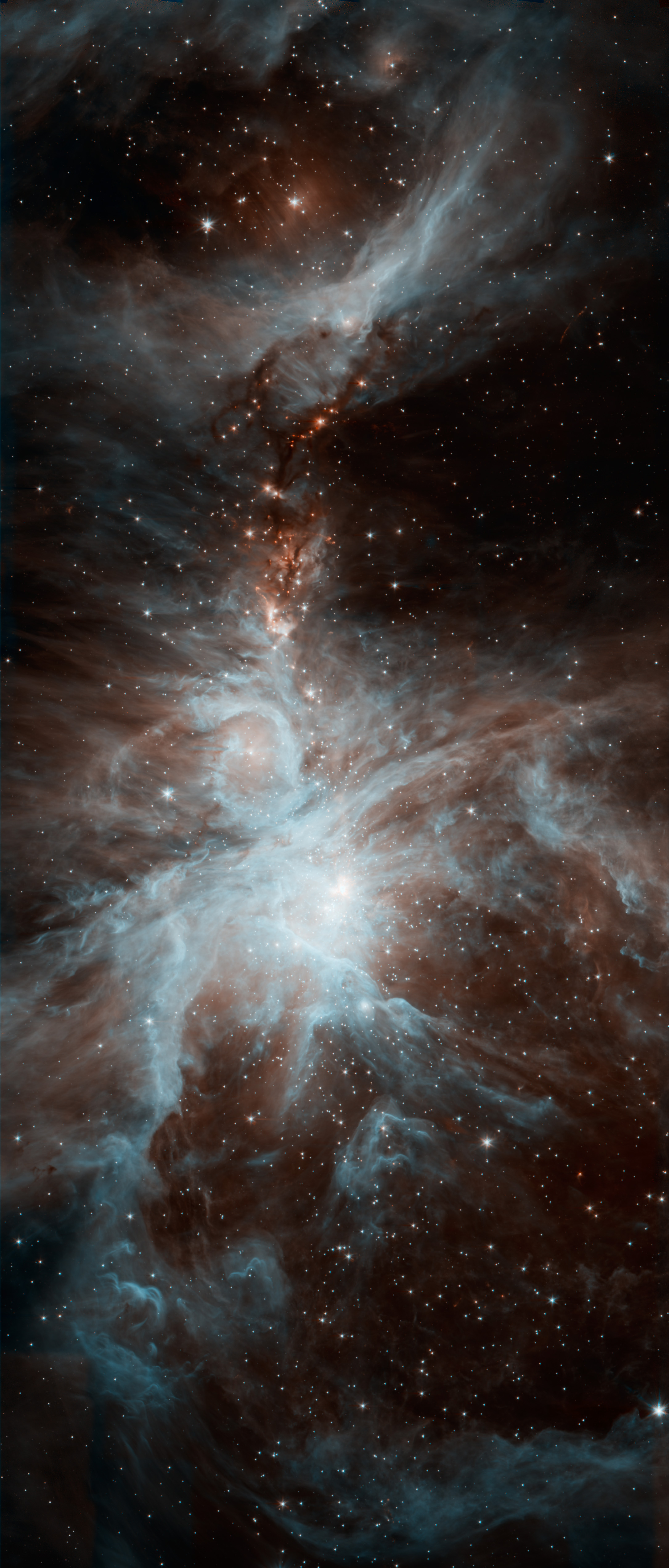
宇宙の景観の中で、オリオン星雲ほど想像力を掻き立てるものは少ない。約1500光年離れた巨大な星形成領域である。スピッツァー宇宙望遠鏡によるこの赤外線画像は、星雲の若い星々の明るさを監視するために収集されたデータに基づいて作成されたもので、星雲の若い星々の多くは、まだ塵に覆われた惑星形成円盤に囲まれている。オリオンの若い星々の年齢は約100万年で、太陽の年齢46億年と比べるとはるかに若い。この領域で最も高温の星々は、画像の中心付近にある最も明るい星団、トラペジウム星団に集中している。 2003年8月25日に太陽周回軌道に打ち上げられたスピッツァー宇宙望遠鏡は、2009年5月に液体ヘリウム冷却材が枯渇しました。しかし、この赤外線宇宙望遠鏡は現在も運用を続けており、ミッションは2020年1月30日に終了する予定です。2010年に撮影されたこの擬似カラー画像は、スピッツァーの比較的高い動作温度でも赤外線に感度を保つ2つのチャンネルから得られたものです。
原文(English)
Few cosmic vistas excite the imagination like the Orion Nebula, an immense stellar nursery some 1,500 light-years away. Spanning about 40 light-years across the region, this infrared image from the Spitzer Space Telescope was constructed from data intended to monitor the brightness of the nebula's young stars, many still surrounded by dusty, planet-forming disks. Orion's young stars are only about 1 million years old, compared to the Sun's age of 4.6 billion years. The region's hottest stars are found in the Trapezium Cluster, the brightest cluster near picture center. Launched into orbit around the Sun on August 25, 2003 Spitzer's liquid helium coolant ran out in May 2009. The infrared space telescope continues to operate though, its mission scheduled to end on January 30, 2020. Recorded in 2010, this false color view is from two channels that still remain sensitive to infrared light at Spitzer's warmer operating temperatures.
\ この感動を宇宙仲間にシェア /
宇宙をXでシェア
© NASA / APOD