
🚀 宇宙の記憶・カレンダー検索
🚀 象徴的な写真:
APOD第1回
🚀 創造の柱
🚀 スピリット火星着陸
🚀 ハッブル超深宇宙
🚀 地球へようこそ|ブルー・マーブル
🚀 エンケラドス
🚀 ベテルギウス
🚀 火星着陸
🚀 青い夕焼け
🚀 冥王星のハート
🚀 皆既日食
🚀 アースライズ再構築
🚀 ブラックホール
🚀 ウェッブ初画像
🚀 アポロ11着陸
APOD30周年(2025年6月16日)
赤外線で見るクモ星雲
The Spider Nebula in Infrared
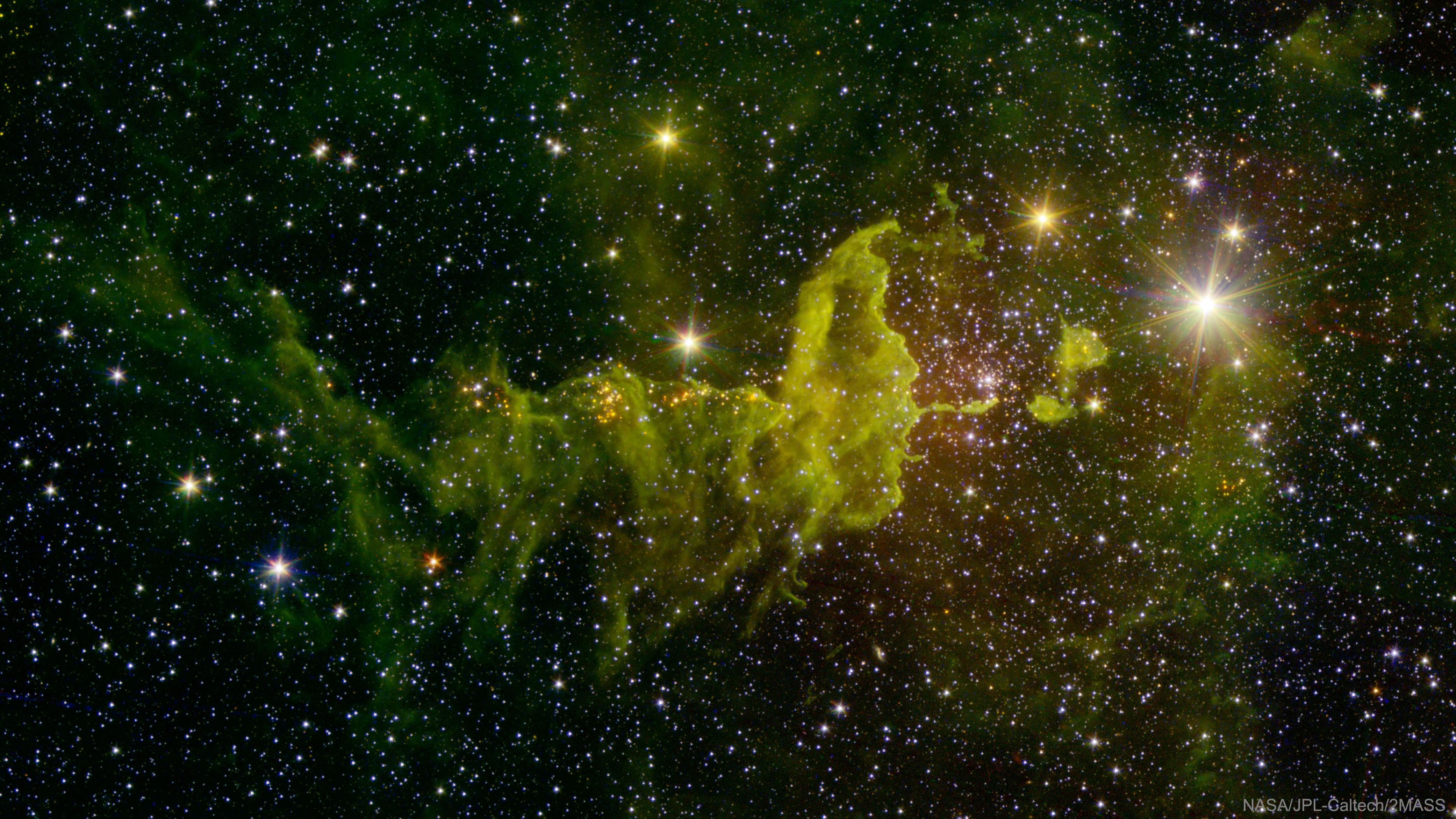
クモはハエを捕まえることができるだろうか?どちらもぎょしゃ座の方向にある大きな輝線星雲であれば無理だろう。左側のクモの形をしたガス雲は実際にはIC 417と名付けられた輝線星雲で、画像の左側にあるハエの形をした小さな雲はNGC 1931と呼ばれ、輝線星雲と反射星雲の両方である。約1万光年離れたところにある両方の星雲には、若い散開星団がある。スケールとして、よりコンパクトなNGC 1931(ハエ)は直径約10光年である。科学的に割り当てられた赤外線カラーで撮影された特集画像は、スピッツァー宇宙望遠鏡と2ミクロン全天サーベイ(2MASS)の画像を合成したものである。スピッツァーは、地球の近くで太陽を周回して16年目を迎えている。 APODは、アラビア語、カタルーニャ語、中国語(北京)、中国語(台湾)、クロアチア語、チェコ語、オランダ語、ペルシア語、フランス語、ドイツ語、ヘブライ語、インドネシア語、日本語、韓国語、モンテネグロ語、ポーランド語、ロシア語、セルビア語、スロベニア語、スペイン語、ウクライナ語でもご覧いただけます。
原文(English)
Will the spider ever catch the fly? Not if both are large emission nebulas toward the constellation of the Charioteer (Auriga). The spider-shaped gas cloud on the left is actually an emission nebula labelled IC 417, while a smaller fly-shaped cloud off the image to the left is dubbed NGC 1931 and is both an emission nebula and a reflection nebula. About 10,000 light-years distant, both nebulas harbor young, open star clusters. For scale, the more compact NGC 1931 (Fly) is about 10 light-years across. The featured picture in scientifically-assigned, infrared colors combines images from the Spitzer Space Telescope and the Two Micron All Sky Survey (2MASS). Spitzer is celebrating its 16th year orbiting the Sun near the Earth. APOD in other languages: Arabic, Catalan, Chinese (Beijing), Chinese (Taiwan), Croatian, Czech, Dutch, Farsi, French, French, German, Hebrew, Indonesian, Japanese, Korean, Montenegrin, Polish, Russian, Serbian, Slovenian, Spanish and Ukrainian
\ この感動を宇宙仲間にシェア /
宇宙をXでシェア
© NASA / APOD