
🚀 宇宙の記憶・カレンダー検索
🚀 象徴的な写真:
APOD第1回
🚀 創造の柱
🚀 スピリット火星着陸
🚀 ハッブル超深宇宙
🚀 地球へようこそ|ブルー・マーブル
🚀 エンケラドス
🚀 ベテルギウス
🚀 火星着陸
🚀 青い夕焼け
🚀 冥王星のハート
🚀 皆既日食
🚀 アースライズ再構築
🚀 ブラックホール
🚀 ウェッブ初画像
🚀 アポロ11着陸
APOD30周年(2025年6月16日)
へびつかい座ρ星のカラフルな雲
The Colorful Clouds of Rho Ophiuchi
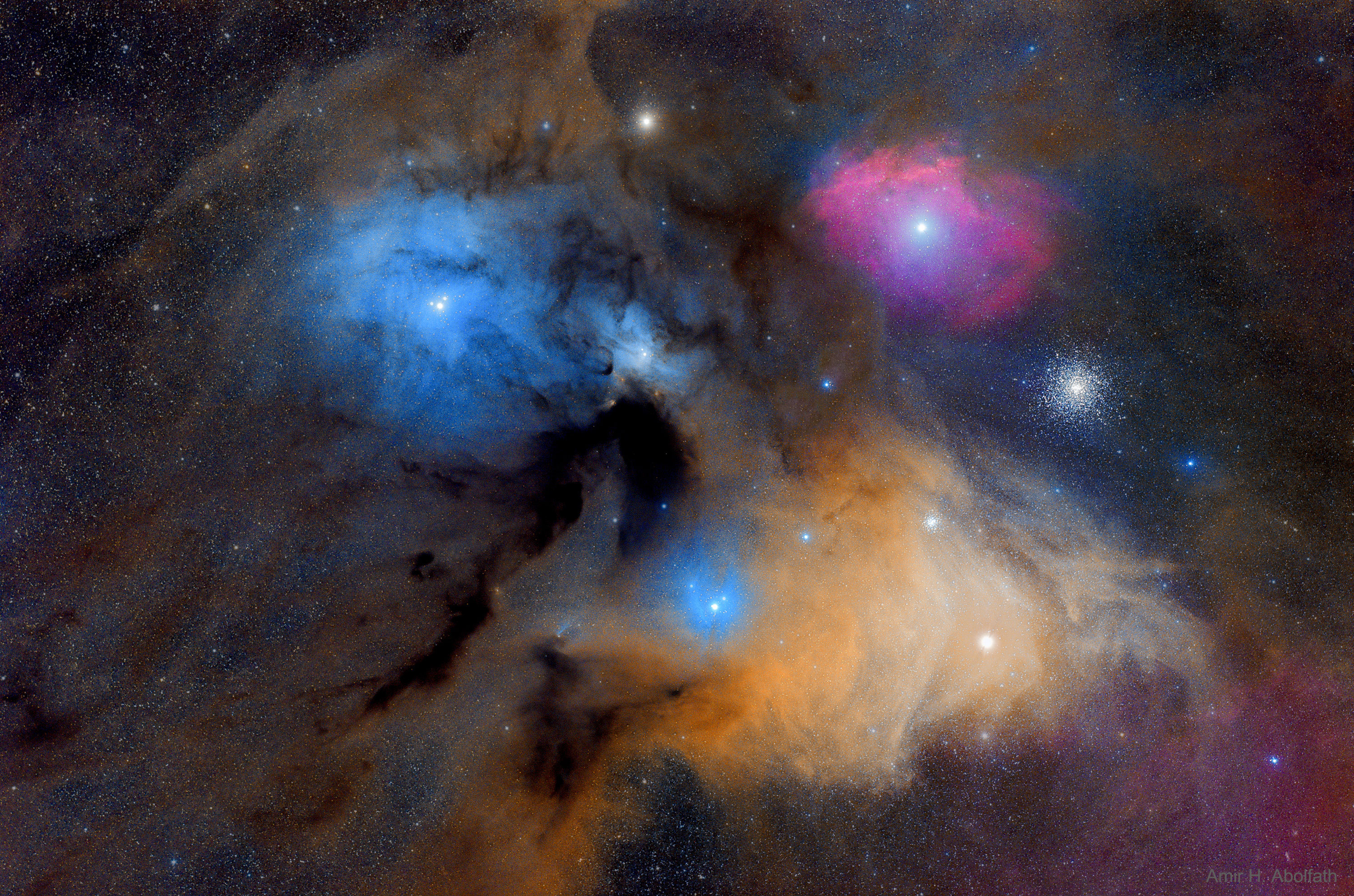
へびつかい座ρ星雲の数々の鮮やかな色彩は、そこで起こる多くのプロセスを際立たせています。青い領域は主に反射光によって輝いています。へびつかい座ρ星系や近隣の星からの青い光は、赤い光よりもこの星雲の部分でより効率的に反射されます。地球の昼間の空が青く見えるのも同じ理由です。赤と黄色の領域は主に星雲の原子ガスと分子ガスからの放射によって輝いています。近くの青い星からの光(明るい星アンタレスよりもエネルギーが高い)はガスから電子をはじき飛ばし、その後、電子がガスと再結合すると輝きます。暗い茶色の領域は、若い恒星大気で生まれた塵の粒子によって生じ、その背後から放出される光を効果的に遮断します。右上に見える球状星団M4のはるか手前にあるへびつかい座ρ星雲は、人間の目に見える以上に色彩豊かで、電波からガンマ線まであらゆる波長帯の光を放出しています。天体物理学者向け:天体物理学ソースコードライブラリで2,200以上のコードを閲覧できます。
原文(English)
The many spectacular colors of the Rho Ophiuchi (oh'-fee-yu-kee) clouds highlight the many processes that occur there. The blue regions shine primarily by reflected light. Blue light from the Rho Ophiuchi star system and nearby stars reflects more efficiently off this portion of the nebula than red light. The Earth's daytime sky appears blue for the same reason. The red and yellow regions shine primarily because of emission from the nebula's atomic and molecular gas. Light from nearby blue stars - more energetic than the bright star Antares - knocks electrons away from the gas, which then shines when the electrons recombine with the gas. The dark brown regions are caused by dust grains - born in young stellar atmospheres - which effectively block light emitted behind them. The Rho Ophiuchi star clouds, well in front of the globular cluster M4 visible here on the upper right, are even more colorful than humans can see - the clouds emits light in every wavelength band from the radio to the gamma-ray. Astrophysicists: Browse 2,200+ codes in the Astrophysics Source Code Library
\ この感動を宇宙仲間にシェア /
宇宙をXでシェア
© Amir H. Abolfath / APOD