
🚀 宇宙の記憶・カレンダー検索
🚀 象徴的な写真:
APOD第1回
🚀 創造の柱
🚀 スピリット火星着陸
🚀 ハッブル超深宇宙
🚀 地球へようこそ|ブルー・マーブル
🚀 エンケラドス
🚀 ベテルギウス
🚀 火星着陸
🚀 青い夕焼け
🚀 冥王星のハート
🚀 皆既日食
🚀 アースライズ再構築
🚀 ブラックホール
🚀 ウェッブ初画像
🚀 アポロ11着陸
APOD30周年(2025年6月16日)
惑星状星雲アベル78
Planetary Nebula Abell 78
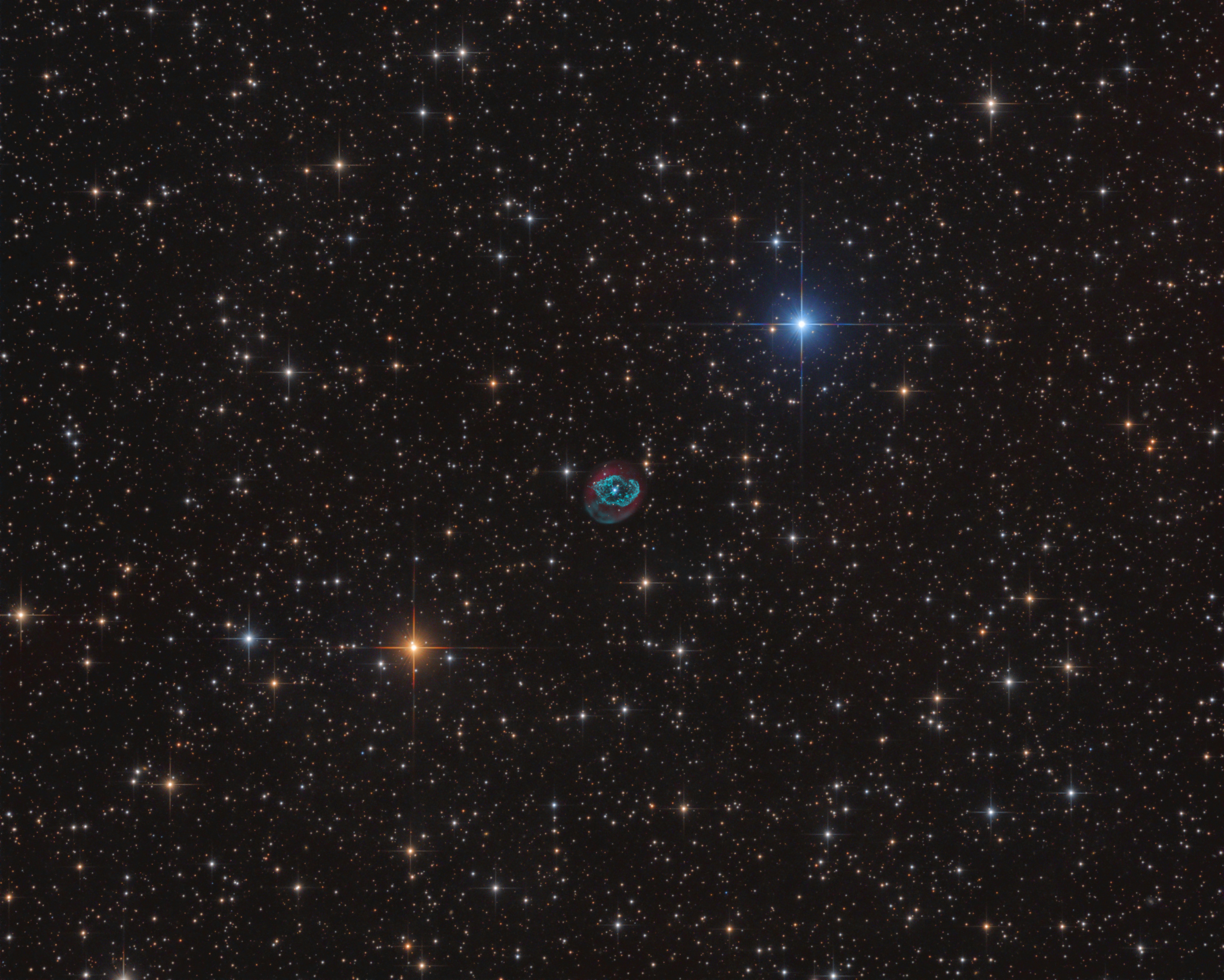
惑星状星雲アベル78は、この色彩豊かな望遠鏡で捉えた夜空の中でひときわ目立っています。実際、とがった形をした天の川の星々の色は、太陽よりも低温(黄色っぽい)と高温(青っぽい)の両方の表面温度によって決まります。しかし、アベル78は、非常に高温の中心星から剥ぎ取られた薄い物質の層にある電離原子の特徴的な放射によって輝いています。原子は、中心星の強力ながらも目に見えない紫外線によって電離され、電子が剥ぎ取られます。星雲の中心領域にあるループやフィラメントの目に見える青緑色の輝きは、二重に電離した酸素原子からの放射に対応しており、その周囲は水素原子と再結合する電子からの強い赤色の放射に囲まれています。はくちょう座の方向に約5,000光年離れたところにあるアベル78は、直径約3光年です。アベル78のような惑星状星雲は、恒星進化における非常に短い最終段階を表しており、私たちの太陽も約50億年後に同様の段階を経ることになるだろう。
原文(English)
Planetary nebula Abell 78 stands out in this colorful telescopic skyscape. In fact the colors of the spiky Milky Way stars depend on their surface temperatures, both cooler (yellowish) and hotter (bluish) than the Sun. But Abell 78 shines by the characteristic emission of ionized atoms in the tenuous shroud of material shrugged off from an intensely hot central star. The atoms are ionized, their electrons stripped away, by the central star's energetic but otherwise invisible ultraviolet light. The visible blue-green glow of loops and filaments in the nebula's central region corresponds to emission from doubly ionized oxygen atoms, surrounded by strong red emission from electrons recombining with hydrogen atoms. Some 5,000 light-years distant toward the constellation Cygnus, Abell 78 is about three light-years across. A planetary nebula like Abell 78 represents a very brief final phase in stellar evolution that our own Sun will experience ... in about 5 billion years.
\ この感動を宇宙仲間にシェア /
宇宙をXでシェア
© Bernhard Hubl / APOD