
🚀 宇宙の記憶・カレンダー検索
🚀 象徴的な写真:
APOD第1回
🚀 創造の柱
🚀 スピリット火星着陸
🚀 ハッブル超深宇宙
🚀 地球へようこそ|ブルー・マーブル
🚀 エンケラドス
🚀 ベテルギウス
🚀 火星着陸
🚀 青い夕焼け
🚀 冥王星のハート
🚀 皆既日食
🚀 アースライズ再構築
🚀 ブラックホール
🚀 ウェッブ初画像
🚀 アポロ11着陸
APOD30周年(2025年6月16日)
ペルセウス座の二重星団
The Double Cluster in Perseus
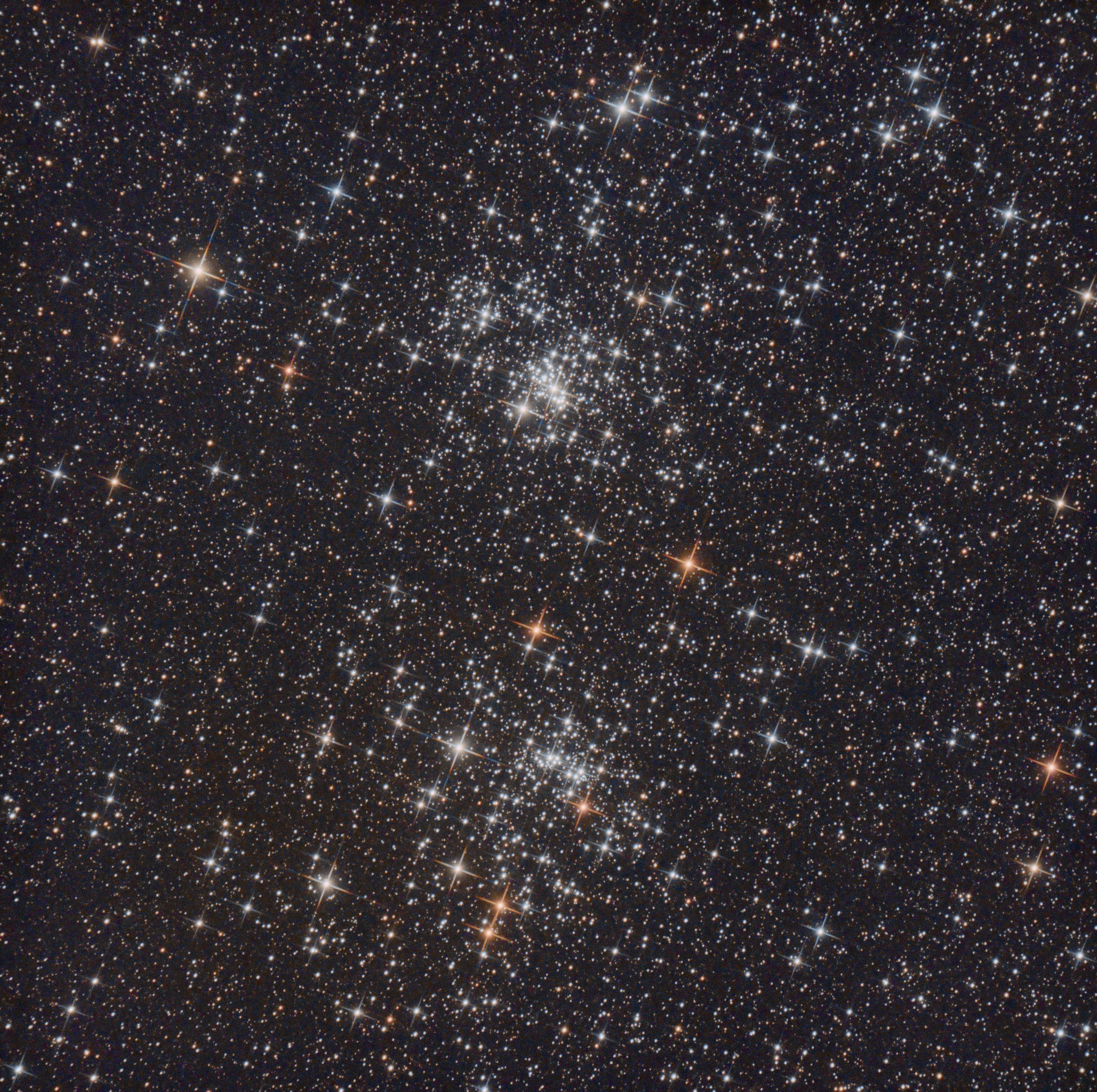
この美しい星空は、北半球の勇壮なペルセウス座を横切って、満月3個分(1.5度)ほどの広がりをみせています。有名な散開星団のペア、ペルセウス座h星団とペルセウス座υ星団がここにあります。NGC 869(上)とNGC 884としてもカタログ化されている両星団は、約7,000光年離れており、太陽よりもはるかに若く高温の星々を含んでいます。わずか数百光年しか離れていない両星団は、個々の星の年齢に基づくと、どちらも1,300万歳という若さで誕生しており、同じ星形成領域で形成された可能性が高いことを示しています。双眼鏡で見ると常に見応えのある二重星団ですが、暗い場所でも肉眼で見ることができます。しかし、この鮮やかな望遠鏡の眺めに写っている色鮮やかな星々には、ギターの弦で覆われた回折現象が見られます。グローバル・ムーン・パーティー:APODのベスト・ムーン画像を含む:10月9日(土)
原文(English)
This pretty starfield spans about three full moons (1.5 degrees) across the heroic northern constellation of Perseus. It holds the famous pair of open star clusters, h and Chi Persei. Also cataloged as NGC 869 (top) and NGC 884, both clusters are about 7,000 light-years away and contain stars much younger and hotter than the Sun. Separated by only a few hundred light-years, the clusters are both 13 million years young based on the ages of their individual stars, evidence that they were likely a product of the same star-forming region. Always a rewarding sight in binoculars, the Double Cluster is even visible to the unaided eye from dark locations. But a shroud of guitar strings was used to produce diffraction spikes on the colorful stars imaged in this vibrant telescopic view. Global Moon Party: Including APOD's Best Moon Images: Saturday, October 9
\ この感動を宇宙仲間にシェア /
宇宙をXでシェア
© Jack Groves / APOD