
🚀 宇宙の記憶・カレンダー検索
🚀 象徴的な写真:
APOD第1回
🚀 創造の柱
🚀 スピリット火星着陸
🚀 ハッブル超深宇宙
🚀 地球へようこそ|ブルー・マーブル
🚀 エンケラドス
🚀 ベテルギウス
🚀 火星着陸
🚀 青い夕焼け
🚀 冥王星のハート
🚀 皆既日食
🚀 アースライズ再構築
🚀 ブラックホール
🚀 ウェッブ初画像
🚀 アポロ11着陸
APOD30周年(2025年6月16日)
ルイーズ湖の上の火球
Fireball over Lake Louise
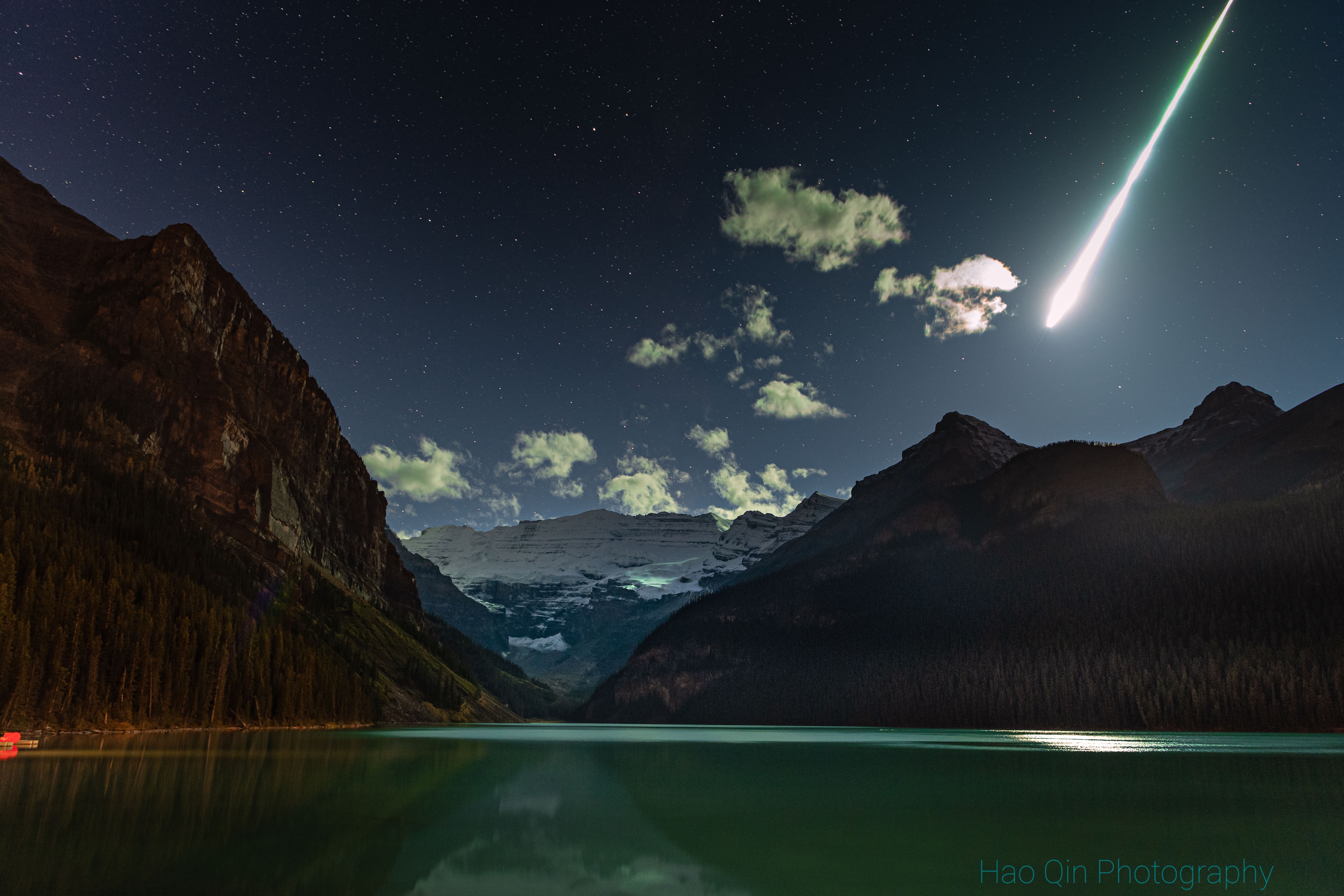
流星が火球と呼ばれる理由は何でしょうか。まず、火球が非常に明るい流星であることは誰もが認めるところです。さらに、国際天文学連合は、見かけの等級が-4より明るい流星を火球と定義しています。これは(おおよそ)どの惑星よりも明るく、かつ人間の目に見える影を落とすほど明るいことに相当します。写真は、長時間の空の写真撮影中に、偶然、今まで見た中で最も明るい流星を捉えた天体写真家です。明らかに火球であったこの崩壊中の宇宙岩石は非常に明るい軌跡を残し、今月初め、約2秒間、夜が昼に変わるほどでした。注目の画像では、カナダのアルバータ州にあるルイーズ湖を前景にするため、火球は人工的に暗くされています。火球はまれですが、幸運にも多くの人が見ています。火球を見た場合は、報告することができます。複数の人が画像を記録した場合、その火球は、それが放出された太陽系の天体まで遡ることができる可能性があります。
原文(English)
What makes a meteor a fireball? First of all, everyone agrees that a fireball is an exceptionally bright meteor. Past that, the International Astronomical Union defines a fireball as a meteor brighter than apparent magnitude -4, which corresponds (roughly) to being brighter than any planet -- as well as bright enough to cast a human-noticeable shadow. Pictured, an astrophotographer taking a long-duration sky image captured by accident the brightest meteor he had ever seen. Clearly a fireball, the disintegrating space-rock created a trail so bright it turned night into day for about two seconds earlier this month. The fireball has been artificially dimmed in the featured image to bring up foreground Lake Louise in Alberta, Canada. Although fireballs are rare, many people have been lucky enough to see them. If you see a fireball, you can report it. If more than one person recorded an image, the fireball might be traceable back to the Solar System body from which it was ejected.
\ この感動を宇宙仲間にシェア /
宇宙をXでシェア
© Hao Qin / APOD