
🚀 宇宙の記憶・カレンダー検索
🚀 象徴的な写真:
APOD第1回
🚀 創造の柱
🚀 スピリット火星着陸
🚀 ハッブル超深宇宙
🚀 地球へようこそ|ブルー・マーブル
🚀 エンケラドス
🚀 ベテルギウス
🚀 火星着陸
🚀 青い夕焼け
🚀 冥王星のハート
🚀 皆既日食
🚀 アースライズ再構築
🚀 ブラックホール
🚀 ウェッブ初画像
🚀 アポロ11着陸
APOD30周年(2025年6月16日)
ムーナ・リサ
The Moona Lisa
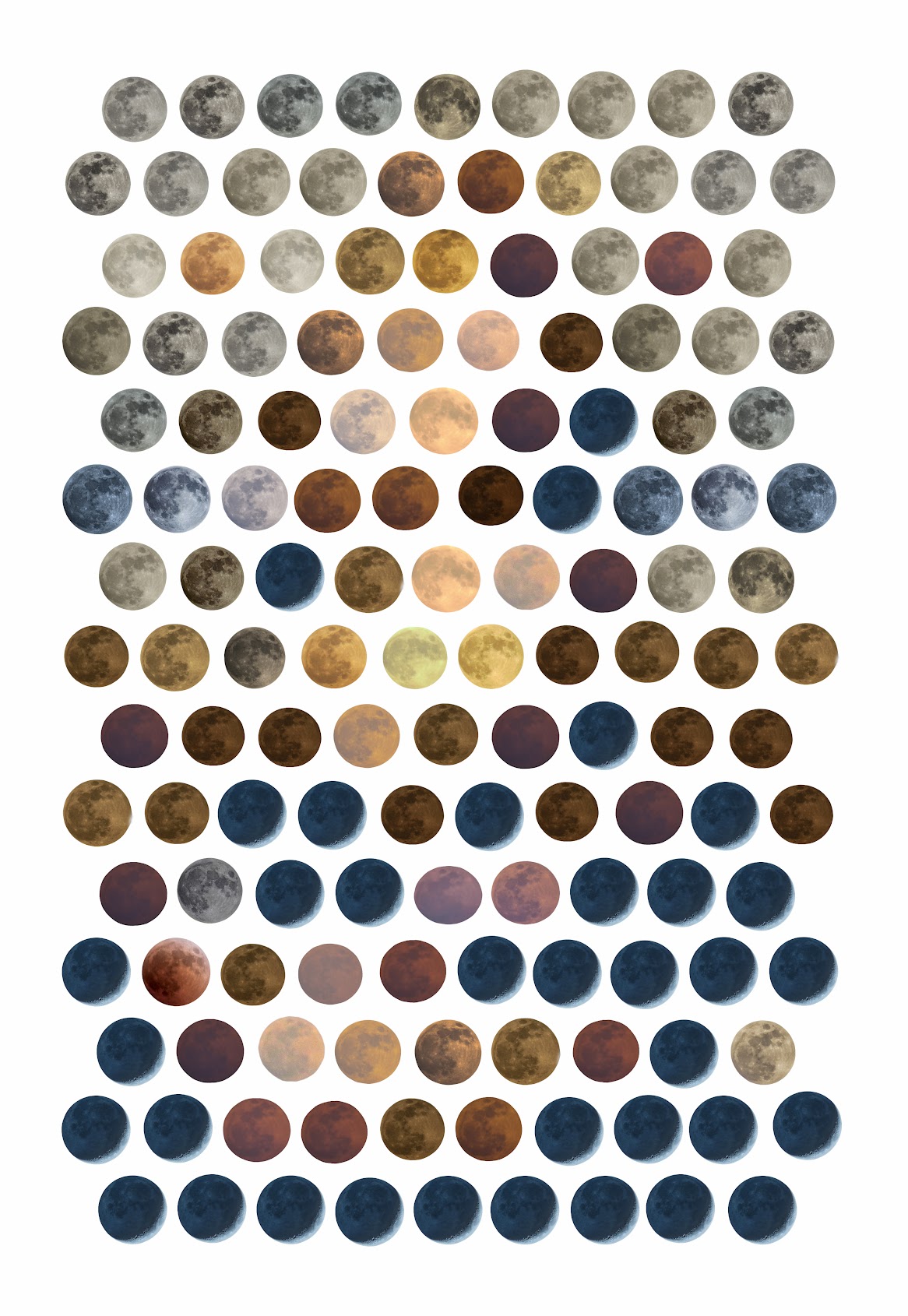
この独創的なビジュアルプレゼンテーションには、地球の空に映る月の自然な色彩のみが登場します。フレームに収められた画像の中でピクセルとして配置された月の円盤は、それぞれ異なる時期に撮影されたものです。その色合いの違いは、大気の状態の変化と月、地球、太陽の配置によって影響を受ける反射太陽光によるものです。ここで最も暗い月の円盤は、地球照の色です。地球照とは、地球の海面によって反射された太陽光が月の暗い表面を照らす現象であり、500年以上前にレオナルド・ダ・ヴィンチによって記述されました。しかし、モニターから少し離れて見るか、画像の小さなバージョンに目を向けてみてください。ダ・ヴィンチの最も有名な芸術作品の一つを目にするかもしれません。今夜:国際月観測の夜
原文(English)
Only natural colors of the Moon in planet Earth's sky appear in this creative visual presentation. Arranged as pixels in a framed image, the lunar disks were photographed at different times. Their varying hues are ultimately due to reflected sunlight affected by changing atmospheric conditions and the alignment geometry of Moon, Earth, and Sun. Here, the darkest lunar disks are the colors of earthshine. A description of earthshine, in terms of sunlight reflected by Earth's oceans illuminating the Moon's dark surface, was written over 500 years ago by Leonardo da Vinci. But stand farther back from your monitor or just shift your gaze to the smaller versions of the image. You might also see one of da Vinci's most famous works of art. Tonight: International Observe the Moon Night
\ この感動を宇宙仲間にシェア /
宇宙をXでシェア
© Gianni Sarcone / APOD