
🚀 宇宙の記憶・カレンダー検索
🚀 象徴的な写真:
APOD第1回
🚀 創造の柱
🚀 スピリット火星着陸
🚀 ハッブル超深宇宙
🚀 地球へようこそ|ブルー・マーブル
🚀 エンケラドス
🚀 ベテルギウス
🚀 火星着陸
🚀 青い夕焼け
🚀 冥王星のハート
🚀 皆既日食
🚀 アースライズ再構築
🚀 ブラックホール
🚀 ウェッブ初画像
🚀 アポロ11着陸
APOD30周年(2025年6月16日)
彗星と蟹
A Comet and a Crab
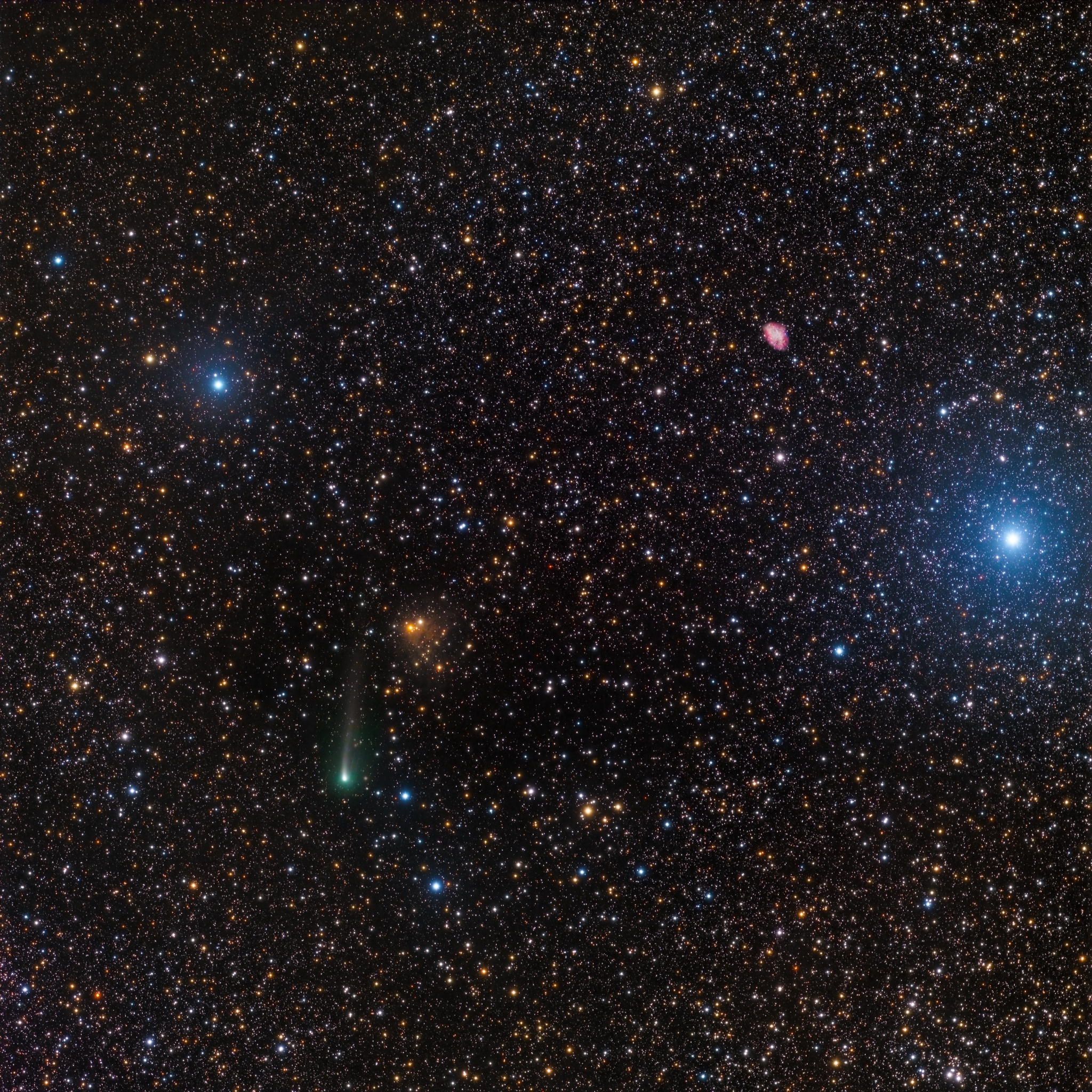
この美しい視野は、おうし座の方向にある星々で満たされた、空の2度、つまり満月4個分に及ぶ範囲に広がっています。フレームの中央より上、右には、かに星雲としても知られるメシエ1(M1)のぼんやりとした赤みがかった姿が見えます。M1は、18世紀の彗星ハンター、シャルル・メシエの有名な「間違いなく彗星ではないもの」カタログの最初の天体です。今年の10月11日に撮影された画像データから作成されたこの画像には、彗星が写っています。中央より下、左には、ロゼッタ彗星としても知られる周期彗星67Pチュリュモフ・ゲラシメンコの、かすかな緑がかったコマと塵の尾があります。21世紀には、地球から来たロボットの終着点となりました。ロゼッタ探査機が発見した彗星は現在、太陽系内側へと戻りつつあり、11月2日に次の近日点(太陽に最も接近する地点)を迎える予定です。肉眼では見えないほど暗いため、次の近地点(地球に最も接近する地点)は11月12日となります。
原文(English)
This pretty field of view spans over 2 degrees or 4 full moons on the sky, filled with stars toward the constellation Taurus, the Bull. Above and right of center in the frame you can spot the faint fuzzy reddish appearance of Messier 1 (M1), also known as the Crab Nebula. M1 is the first object in 18th century comet hunter Charles Messier's famous catalog of things which are definitely not comets. Made from image data captured this October 11, there is a comet in the picture though. Below center and left lies the faint greenish coma and dusty tail of periodic comet 67P Churyumov-Gerasimenko, also known as Rosetta's comet. In the 21st century, it became the final resting place of robots from planet Earth. Rosetta's comet is now returning to the inner solar system, sweeping toward its next perihelion or closest approach to the Sun, on November 2. Too faint to be seen by eye alone, the comet's next perigee or closest approach to Earth will be November 12.
\ この感動を宇宙仲間にシェア /
宇宙をXでシェア
© Jose Mtanous / APOD