
🚀 宇宙の記憶・カレンダー検索
🚀 象徴的な写真:
APOD第1回
🚀 創造の柱
🚀 スピリット火星着陸
🚀 ハッブル超深宇宙
🚀 地球へようこそ|ブルー・マーブル
🚀 エンケラドス
🚀 ベテルギウス
🚀 火星着陸
🚀 青い夕焼け
🚀 冥王星のハート
🚀 皆既日食
🚀 アースライズ再構築
🚀 ブラックホール
🚀 ウェッブ初画像
🚀 アポロ11着陸
APOD30周年(2025年6月16日)
星のない馬頭星雲領域
The Horsehead Nebula Region without Stars
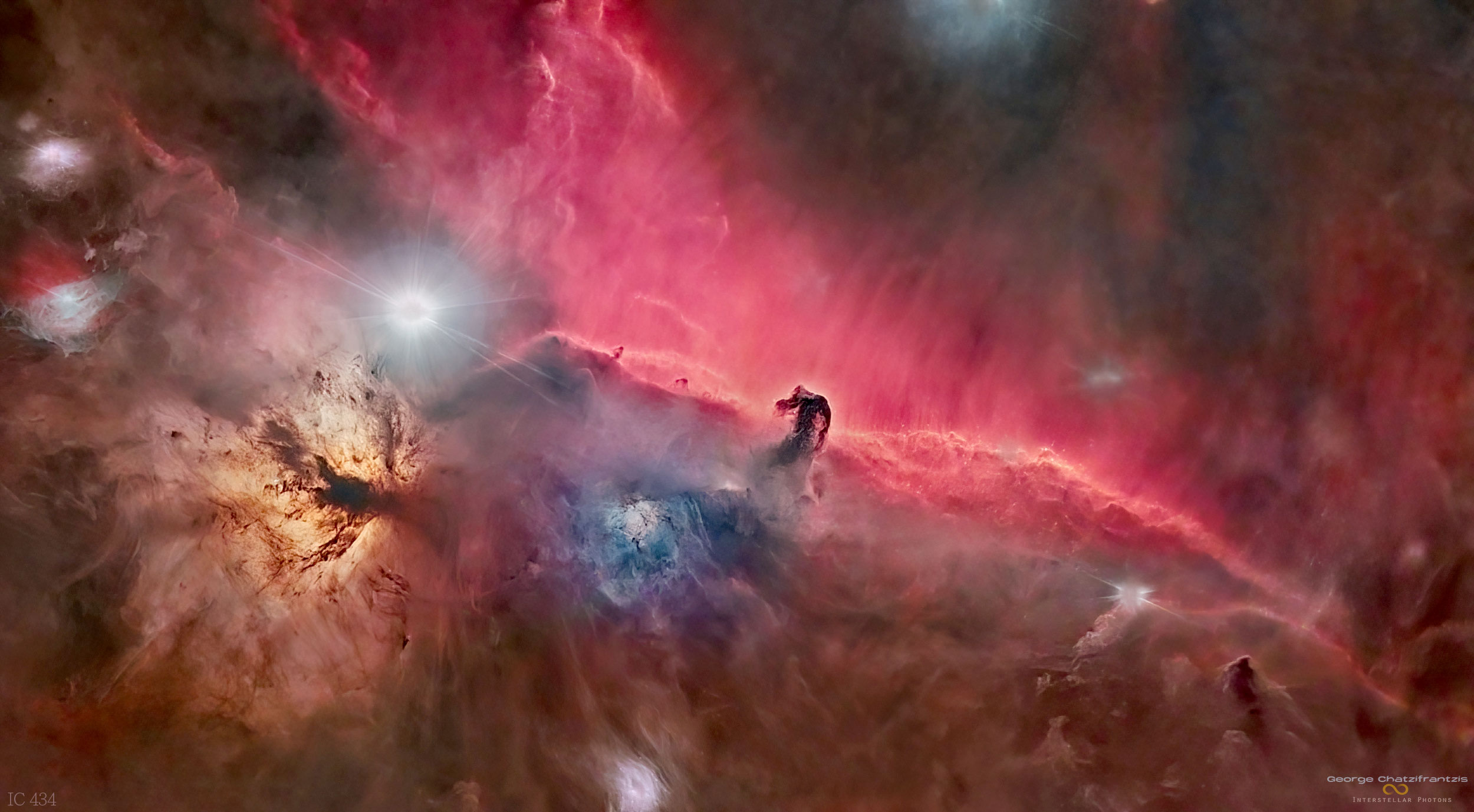
オリオン座の有名な馬頭星雲は、決して孤立した存在ではありません。深露光によって、中央やや右に見える暗く見慣れた形の窪みが、吸収性の塵と輝くガスの広大な複合体の一部であることが明らかになりました。この壮大な写真は、恒星風と古代の超新星爆発によって何億年もかけて形成され、形作られた、ガス状の筋と塵を含んだフィラメントの複雑なタペストリーを詳細に捉えています。炎星雲は、馬頭星雲のすぐ左にオレンジ色で見えます。塵とガスを強調するために、ほとんどの星はデジタル処理で除去されていますが、炎星雲のすぐ上にあるアルニタクは例外です。アルニタクは、オリオン座の有名な三つ星のベルトの中で最も右にある星です。馬頭星雲は、オリオン座の方向に1,500光年離れたところに位置しています。NASA報道:アルテミス1号月探査ミッション 教師と生徒:教室でAPODを活用するためのアイデア
原文(English)
The famous Horsehead Nebula in Orion is not alone. A deep exposure shows that the dark familiar shaped indentation, visible just right of center, is part of a vast complex of absorbing dust and glowing gas. The featured spectacular picture details an intricate tapestry of gaseous wisps and dust-laden filaments that were created and sculpted over eons by stellar winds and ancient supernovas. The Flame Nebula is visible in orange just to the Horsehead's left. To highlight the dust and gas, most of the stars have been digitally removed, although a notable exception is Alnitak, just above the Flame Nebula, which is the rightmost star in Orion's famous belt of three aligned stars. The Horsehead Nebula lies 1,500 light years distant towards the constellation of Orion. NASA Coverage: Artemis I Mission to the Moon Teachers & Students: Ideas for utilizing APOD in the classroom
\ この感動を宇宙仲間にシェア /
宇宙をXでシェア
© George Chatzifrantzis / APOD