
🚀 宇宙の記憶・カレンダー検索
🚀 象徴的な写真:
APOD第1回
🚀 創造の柱
🚀 スピリット火星着陸
🚀 ハッブル超深宇宙
🚀 地球へようこそ|ブルー・マーブル
🚀 エンケラドス
🚀 ベテルギウス
🚀 火星着陸
🚀 青い夕焼け
🚀 冥王星のハート
🚀 皆既日食
🚀 アースライズ再構築
🚀 ブラックホール
🚀 ウェッブ初画像
🚀 アポロ11着陸
APOD30周年(2025年6月16日)
M51:渦巻銀河
M51: The Whirlpool Galaxy
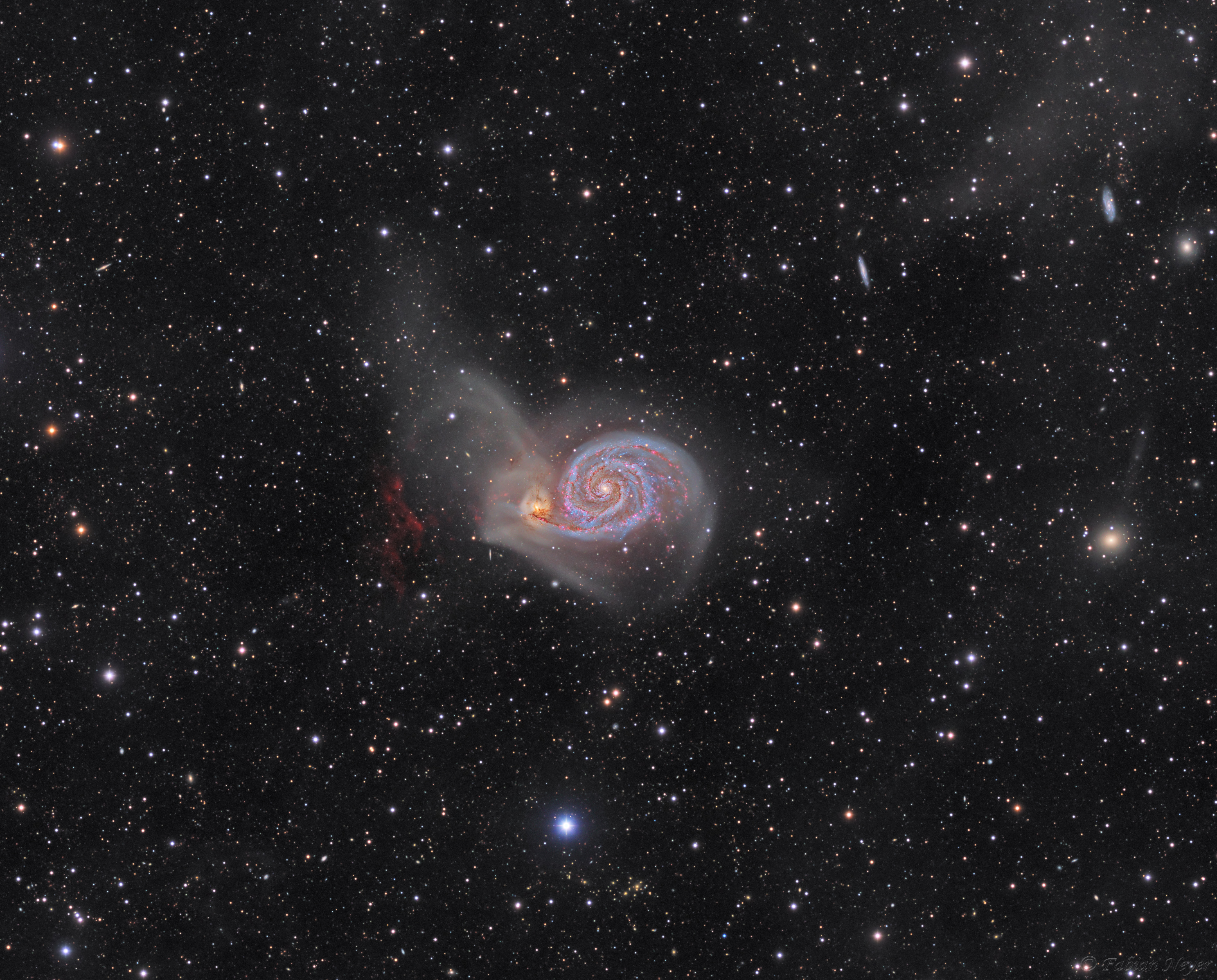
北斗七星を見つけて、柄を柄杓のくぼみから離れて、最後の明るい星までたどります。次に、望遠鏡を少し南西にスライドさせると、シャルル・メシエの有名なカタログの51番目のエントリである、この見事な相互作用銀河のペアが見つかります。おそらく最初の渦巻星雲である、明確な渦巻構造を持つ大きな銀河は、NGC 5194としてもカタログ化されています。その渦状腕とダストレーンは、伴銀河(左)NGC 5195の前をはっきりと掃いています。このペアは約3100万光年離れており、公式には小さな星座りょうけん座の角の範囲内にあります。望遠鏡で直接見ると、M51は肉眼ではかすかでぼやけて見えます。しかし、この驚くほど深い画像は、相互作用銀河の鮮やかな色と銀河潮汐残骸の詳細を示しています。この画像には、約90時間分の狭帯域データが含まれており、M51銀河系で発見された、赤みがかった電離水素ガスの巨大な輝く雲も写っている。
原文(English)
Find the Big Dipper and follow the handle away from the dipper's bowl until you get to the last bright star. Then, just slide your telescope a little south and west and you'll come upon this stunning pair of interacting galaxies, the 51st entry in Charles Messier's famous catalog. Perhaps the original spiral nebula, the large galaxy with well defined spiral structure is also cataloged as NGC 5194. Its spiral arms and dust lanes clearly sweep in front of its companion galaxy (left), NGC 5195. The pair are about 31 million light-years distant and officially lie within the angular boundaries of the small constellation Canes Venatici. In direct telescopic views, M51 looks faint and fuzzy to the eye. But this remarkably deep image shows off details of the interacting galaxy's striking colors and galactic tidal debris. The image includes nearly 90 hours of narrowband data that also reveals a vast glowing cloud of reddish ionized hydrogen gas discovered in the M51 system.
\ この感動を宇宙仲間にシェア /
宇宙をXでシェア
© Fabian Neyer / APOD