
🚀 宇宙の記憶・カレンダー検索
🚀 象徴的な写真:
APOD第1回
🚀 創造の柱
🚀 スピリット火星着陸
🚀 ハッブル超深宇宙
🚀 地球へようこそ|ブルー・マーブル
🚀 エンケラドス
🚀 ベテルギウス
🚀 火星着陸
🚀 青い夕焼け
🚀 冥王星のハート
🚀 皆既日食
🚀 アースライズ再構築
🚀 ブラックホール
🚀 ウェッブ初画像
🚀 アポロ11着陸
APOD30周年(2025年6月16日)
ウェブ社製タランチュラスターズ R136
Tarantula Stars R136 from Webb
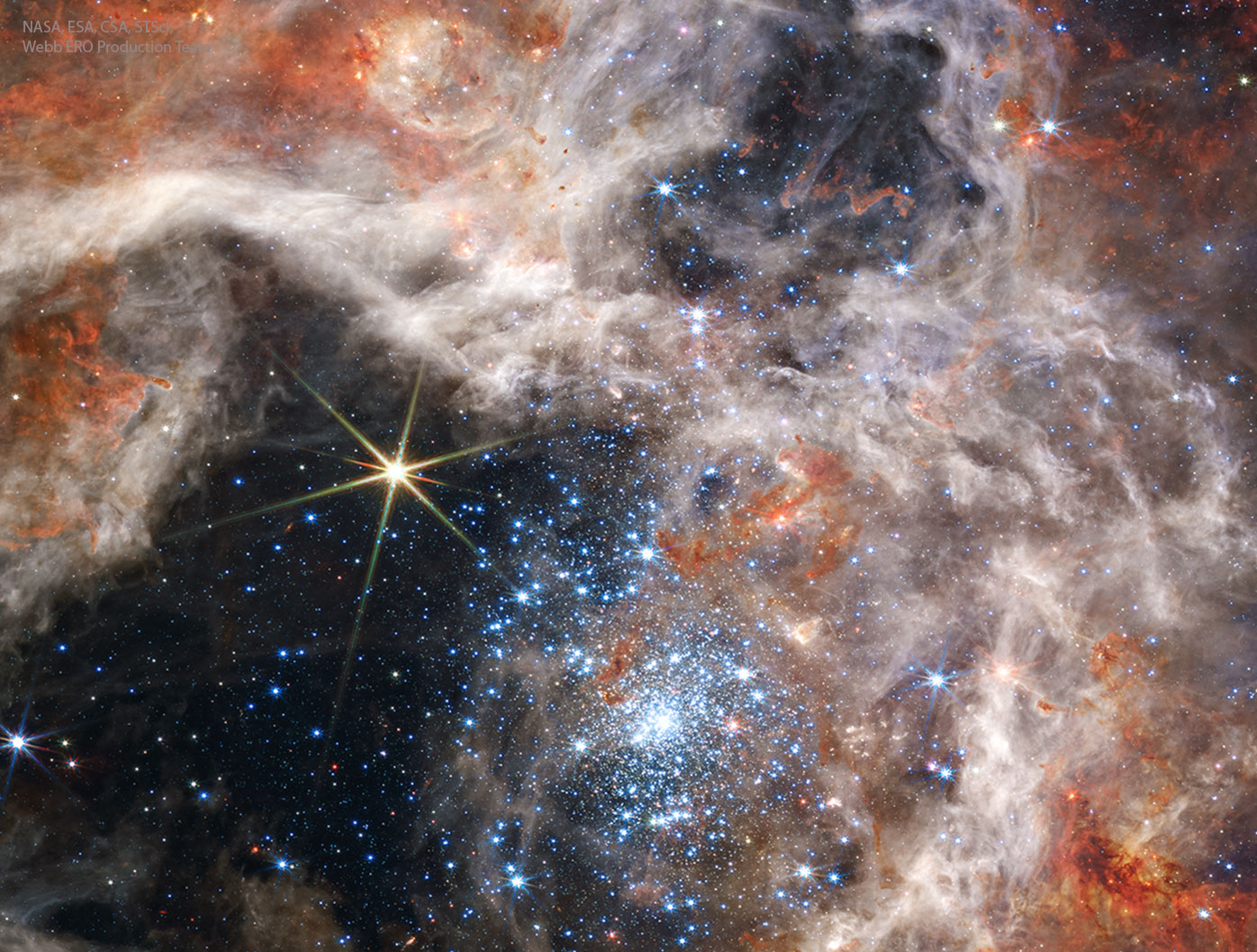
近くの星形成領域の中心付近には、既知の星の中で最大級かつ最も高温の星を含む巨大な星団が存在する。NGC 2070 星団として知られるこれらの星は、広大なタランチュラ星雲の一部であり、新しいウェッブ宇宙望遠鏡によって 2 種類の赤外線で撮影された。メイン画像は、NGC 2070 の中心にある R136 と呼ばれる星のグループを近赤外線で示したもので、人間の目にはわずかに赤みが強すぎる光である。対照的に、ロールオーバー画像は、星団の中心を中赤外線で捉えたもので、電波に近い光である。R136 の最も明るい星は近赤外線でより多くの光を放出するため、この画像でははるかに目立つ。この LMC 星団の巨大な星は、粒子風と高エネルギーの光を放出し、それらが形成されたガス雲を蒸発させている。昨日公開されたウェッブ宇宙望遠鏡の画像は、R136とその周辺のこれまで見たことのない詳細な様子を示しており、これらの詳細は、すべての恒星がどのように誕生し、進化し、そして死を迎えるのかを人類がより深く理解するのに役立つだろう。
原文(English)
Near the center of a nearby star-forming region lies a massive cluster containing some of the largest and hottest stars known. Collectively known as star cluster NGC 2070, these stars are part of the vast Tarantula Nebula and were captured in two kinds of infrared light by the new Webb Space Telescope. The main image shows the group of stars at NGC 2070's center -- known as R136 -- in near-infrared, light just a bit too red for humans to see. In contrast, the rollover image captures the cluster center in mid-infrared light, light closer to radio waves. Since R136's brightest stars emit more of their light in the near infrared, they are much more prominent on that image. This LMC cluster's massive stars emit particle winds and energetic light that are evaporating the gas cloud from which they formed. The Webb images, released yesterday, shows details of R136 and its surroundings that have never been seen before, details that are helping humanity to a better understanding of how all stars are born, evolve and die.
\ この感動を宇宙仲間にシェア /
宇宙をXでシェア
© NASA,
ESA,
CSA,
STScI,
Webb ERO Production Team / APOD