
🚀 宇宙の記憶・カレンダー検索
🚀 象徴的な写真:
APOD第1回
🚀 創造の柱
🚀 スピリット火星着陸
🚀 ハッブル超深宇宙
🚀 地球へようこそ|ブルー・マーブル
🚀 エンケラドス
🚀 ベテルギウス
🚀 火星着陸
🚀 青い夕焼け
🚀 冥王星のハート
🚀 皆既日食
🚀 アースライズ再構築
🚀 ブラックホール
🚀 ウェッブ初画像
🚀 アポロ11着陸
APOD30周年(2025年6月16日)
NGC 7331のクローズアップ
NGC 7331 Close Up
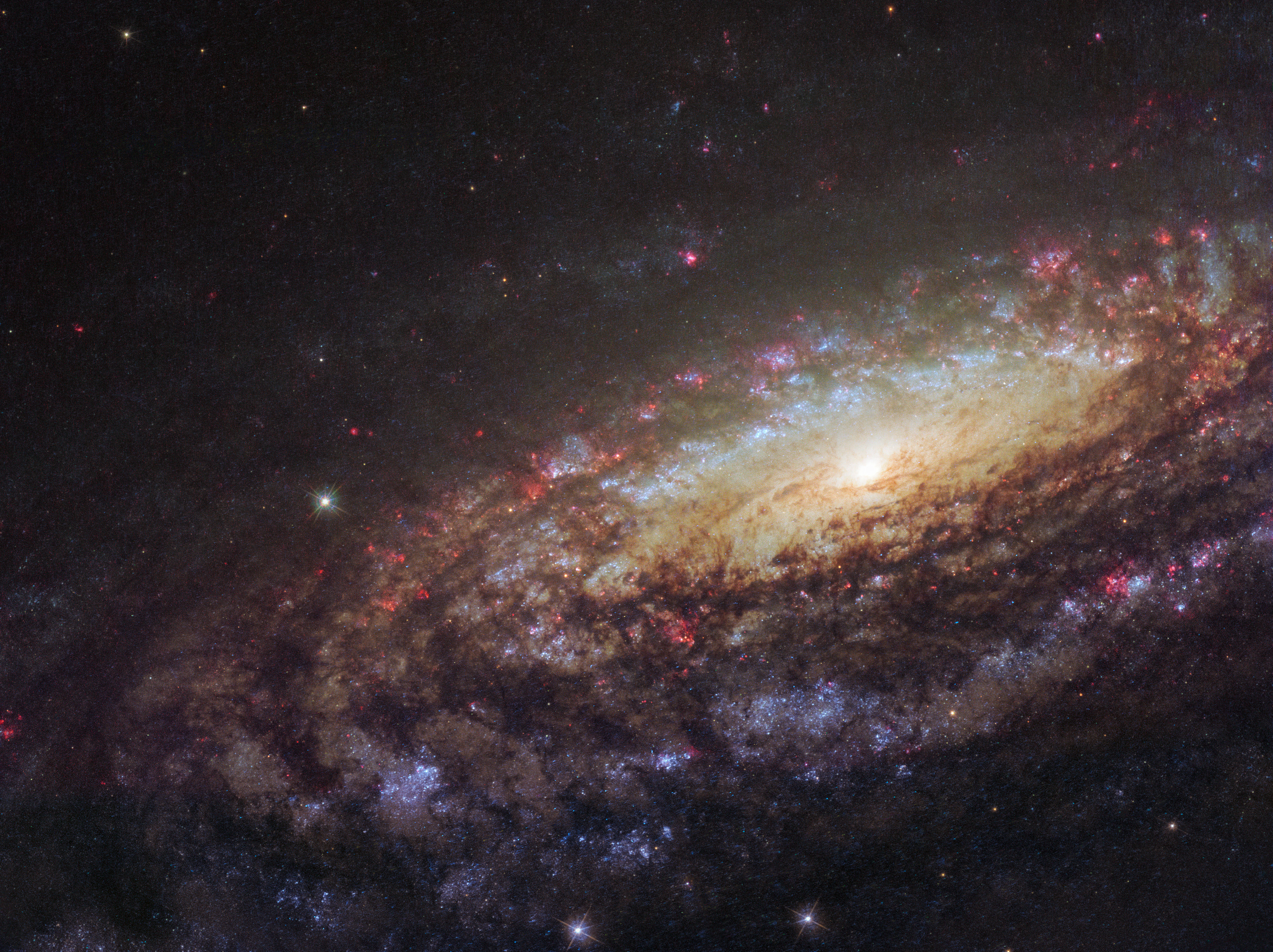
巨大で美しい渦巻銀河NGC 7331は、しばしば私たちの天の川銀河の類似例として挙げられます。北天のペガスス座に位置し、地球から約5000万光年離れたNGC 7331は、早くから渦巻星雲として認識されており、実際にはシャルル・メシエの有名な18世紀のカタログには含まれていない明るい銀河の1つです。銀河の円盤は私たちの視線に対して傾いているため、望遠鏡で長時間露光すると、強い奥行き感を喚起する画像が得られることがよくあります。ハッブル宇宙望遠鏡によるこのクローズアップ画像は、約4万光年の範囲を捉えています。銀河の壮大な渦状腕には、暗く視界を遮る塵の帯、明るい青みがかった大質量の若い星の集団、そして活発な星形成領域の特徴的な赤みがかった輝きが見られます。明るい黄色の中心領域には、より古く低温の星の集団が存在します。天の川銀河と同様に、渦巻銀河NGC 7331の中心にも超大質量ブラックホールが存在する。
原文(English)
Big, beautiful spiral galaxy NGC 7331 is often touted as an analog to our own Milky Way. About 50 million light-years distant in the northern constellation Pegasus, NGC 7331 was recognized early on as a spiral nebula and is actually one of the brighter galaxies not included in Charles Messier's famous 18th century catalog. Since the galaxy's disk is inclined to our line-of-sight, long telescopic exposures often result in an image that evokes a strong sense of depth. This Hubble Space Telescope close-up spans some 40,000 light-years. The galaxy's magnificent spiral arms feature dark obscuring dust lanes, bright bluish clusters of massive young stars, and the telltale reddish glow of active star forming regions. The bright yellowish central regions harbor populations of older, cooler stars. Like the Milky Way, a supermassive black hole lies at the core of spiral galaxy NGC 7331.
\ この感動を宇宙仲間にシェア /
宇宙をXでシェア
© NASA / APOD