
🚀 宇宙の記憶・カレンダー検索
🚀 象徴的な写真:
APOD第1回
🚀 創造の柱
🚀 スピリット火星着陸
🚀 ハッブル超深宇宙
🚀 地球へようこそ|ブルー・マーブル
🚀 エンケラドス
🚀 ベテルギウス
🚀 火星着陸
🚀 青い夕焼け
🚀 冥王星のハート
🚀 皆既日食
🚀 アースライズ再構築
🚀 ブラックホール
🚀 ウェッブ初画像
🚀 アポロ11着陸
APOD30周年(2025年6月16日)
月齢マトリックス
Lunation Matrix
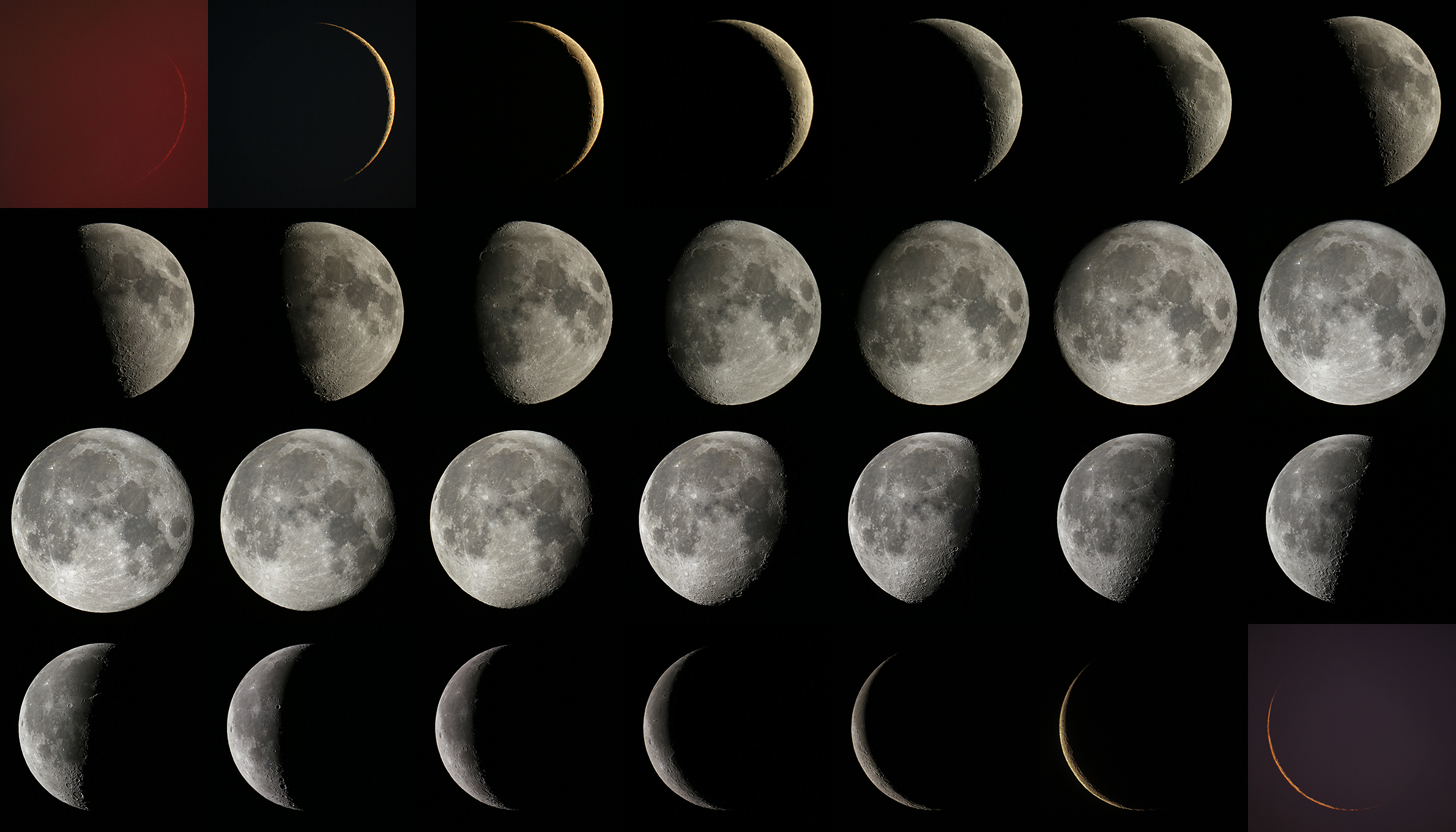
毎晩月を観察すると、太陽に照らされた月の見える部分が徐々に変化していくのがわかります。新月から満月、そして再び新月へと段階的に変化する月の周期、つまり朔望月は約 29.5 日で完了します。左上から右下にかけて、この 7x4 の望遠鏡画像のマトリックスは、ほぼ完全な朔望月の後、7 月 29 日の夕方から 8 月 26 日の朝までの 28 夜連続の月の満ち欠けの範囲を捉えています。新月の直後と直前の 24 時間ほどは、月の満ち欠けがせいぜい細い三日月で、太陽に近く、非常に見えにくいため、画像は撮影されていません。この月の周期プロジェクトを完了するには、地中海のほとんど晴れた空を見つけるために時折ロードトリップする必要があり、朔望月の前半は夕方、後半は夕方遅くから早朝にかけて撮影しました。すべての画像が同じ縮尺で登録されているため、このマトリックスを使用して、1 つの朔望月の間に月の見かけの大きさの変化を追跡できます。追加課題として、近地点に最も近い月の位相を見つけてください。今夜:国際月観測の夜
原文(English)
Observe the Moon every night and you'll see its visible sunlit portion gradually change. In phases progressing from New Moon to Full Moon to New Moon again, a lunar cycle or lunation is completed in about 29.5 days. Top left to bottom right, this 7x4 matrix of telescopic images captures the range of lunar phases for 28 consecutive nights, from the evening of July 29 to the morning of August 26, following an almost complete lunation. No image was taken 24 hours or so just after and just before New Moon, when the lunar phase is at best a narrow crescent, close to the Sun and really hard to see. Finding mostly clear Mediterranean skies required an occasional road trip to complete this lunar cycle project, imaging in early evening for the first half and late evening and early morning for the second half of the lunation. Since all the images are registered at the same scale you can use this matrix to track the change in the Moon's apparent size during the single lunation. For extra credit, find the lunar phase that occurred closest to perigee. Tonight: International Observe the Moon Night
\ この感動を宇宙仲間にシェア /
宇宙をXでシェア
© Tunc Tezel / APOD