
🚀 宇宙の記憶・カレンダー検索
🚀 象徴的な写真:
APOD第1回
🚀 創造の柱
🚀 スピリット火星着陸
🚀 ハッブル超深宇宙
🚀 地球へようこそ|ブルー・マーブル
🚀 エンケラドス
🚀 ベテルギウス
🚀 火星着陸
🚀 青い夕焼け
🚀 冥王星のハート
🚀 皆既日食
🚀 アースライズ再構築
🚀 ブラックホール
🚀 ウェッブ初画像
🚀 アポロ11着陸
APOD30周年(2025年6月16日)
繭星雲広視野
Cocoon Nebula Wide Field
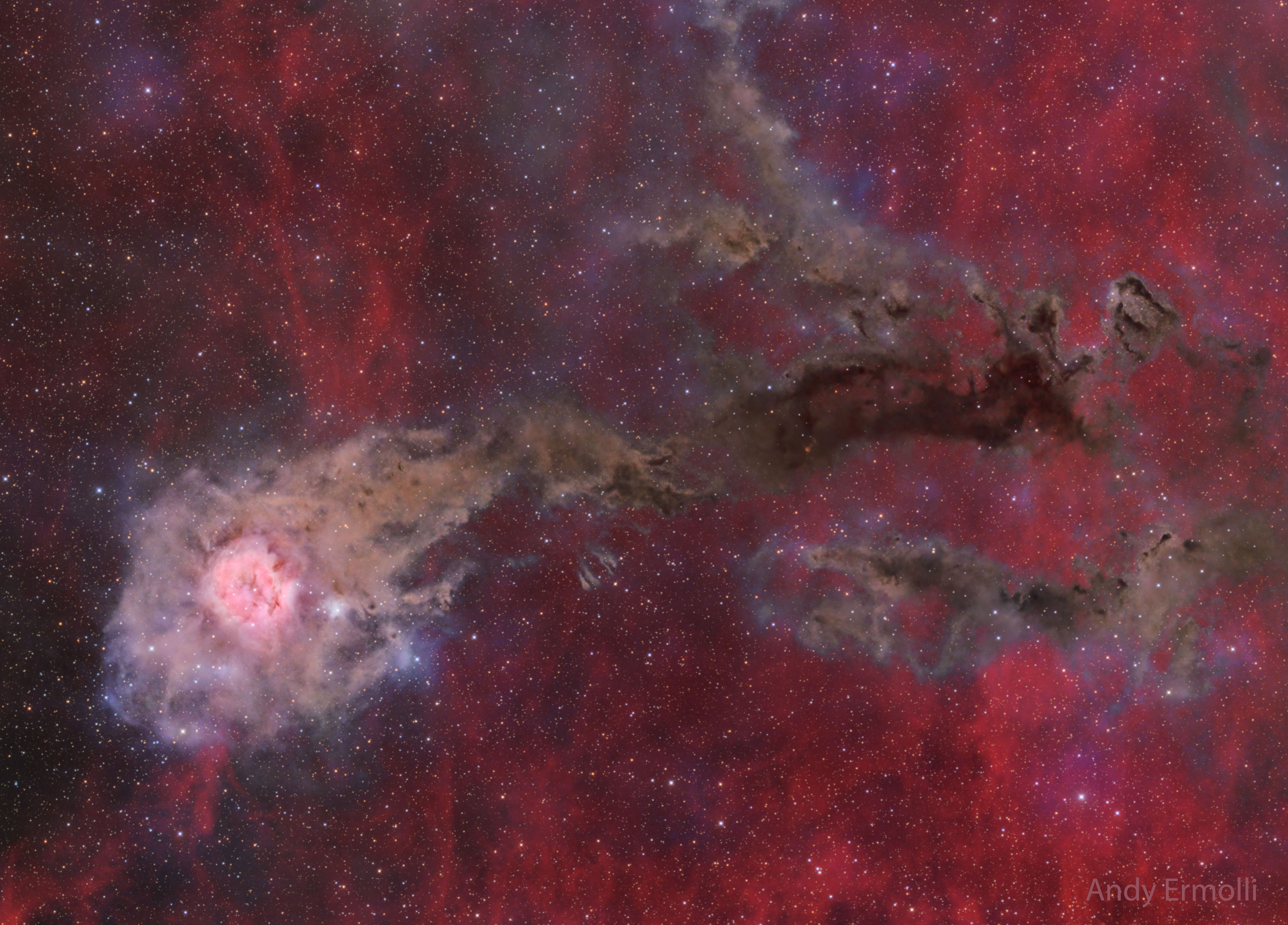
星雲が彗星のように見えるのはどんな時でしょうか?白鳥座(はくちょう座)の高空に広がるこの星雲群は、2度以上にわたって星が密集しており、その中でも繭星雲はひときわ目を引きます。コンパクトな星形成領域であるこの宇宙の繭星雲は、左側に明るく輝く星雲を際立たせ、右側には星間塵の雲が長く連なり、全体として彗星のように見えます。IC 5146としてカタログ化されているこの星雲の中心にある明るい頭部は約10光年、暗い塵の尾は約100光年に及びます。どちらも地球から約2,500光年離れたところに位置しています。明るい星雲の中心近くにある明るい星は、おそらく数十万歳ほどしか経っていないと考えられ、分子雲の星形成塵とガスの空洞を掃除するのを助けながら、星雲の輝きにエネルギーを供給しています。この可視光画像では暗く見えるものの、尾を構成する長く埃っぽいフィラメントの中には、形成過程にある星々が隠れており、それらの星々は赤外線波長で観測することができる。
原文(English)
When does a nebula look like a comet? In this crowded starfield, covering over two degrees within the high flying constellation of the Swan (Cygnus), the eye is drawn to the Cocoon Nebula. A compact star forming region, the cosmic Cocoon punctuates a nebula bright in emission and reflection on the left, with a long trail of interstellar dust clouds to the right, making the entire complex appear a bit like a comet. Cataloged as IC 5146, the central bright head of the nebula spans about 10 light years, while the dark dusty tail spans nearly 100 light years. Both are located about 2,500 light years away. The bright star near the bright nebula's center, likely only a few hundred thousand years old, supplies power to the nebular glow as it helps clear out a cavity in the molecular cloud's star forming dust and gas. The long dusty filaments of the tail, although dark in this visible light image, are themselves hiding stars in the process of formation, stars that can be seen at infrared wavelengths.
\ この感動を宇宙仲間にシェア /
宇宙をXでシェア
© Andy Ermolli / APOD