
🚀 宇宙の記憶・カレンダー検索
🚀 象徴的な写真:
APOD第1回
🚀 創造の柱
🚀 スピリット火星着陸
🚀 ハッブル超深宇宙
🚀 地球へようこそ|ブルー・マーブル
🚀 エンケラドス
🚀 ベテルギウス
🚀 火星着陸
🚀 青い夕焼け
🚀 冥王星のハート
🚀 皆既日食
🚀 アースライズ再構築
🚀 ブラックホール
🚀 ウェッブ初画像
🚀 アポロ11着陸
APOD30周年(2025年6月16日)
オリオン座から見た地球
Planet Earth from Orion
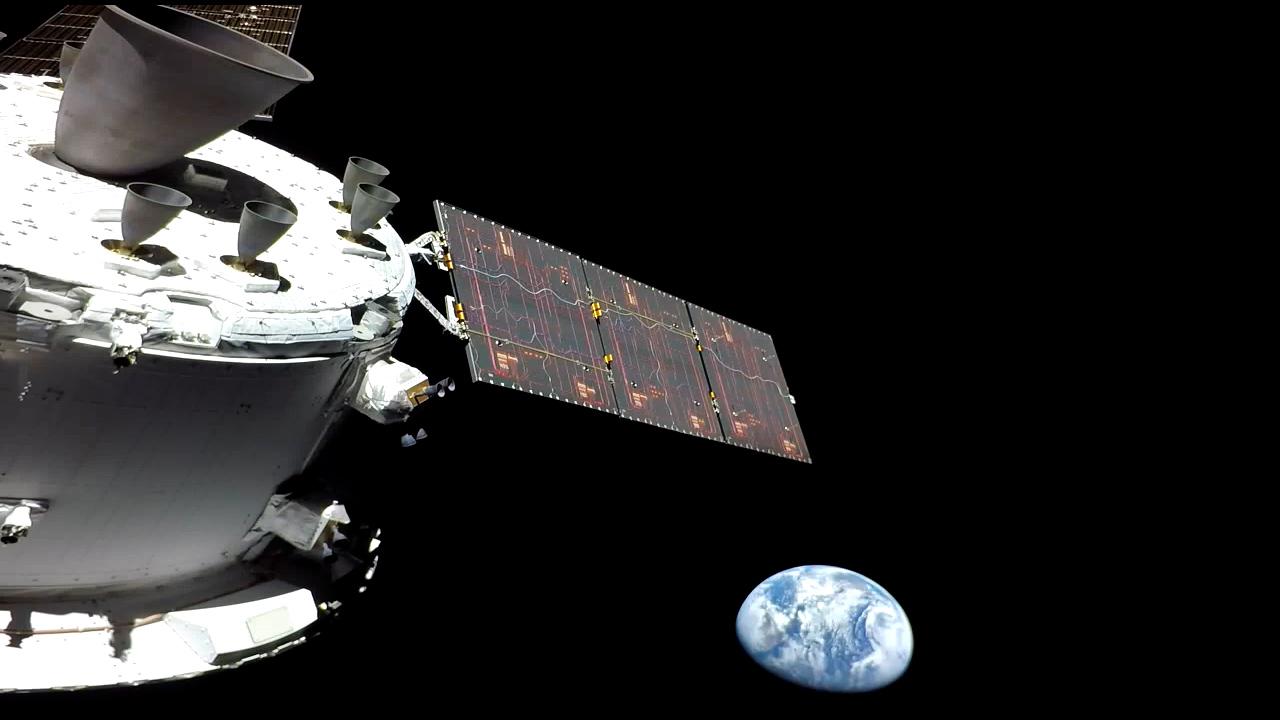
スペース・ローンチ・システム(SLS)ロケットは、NASAの深宇宙探査システムの初の統合試験となるアルテミス1ミッションでオリオン宇宙船を搭載し、11月16日水曜日午前1時47分(米国東部標準時)に地球を出発しました。ケネディ宇宙センターの歴史的な発射台39Bからの打ち上げから1時間以上後、オリオンの外部ビデオカメラの1つが、宇宙からの新たな視点を捉えました。手前には、欧州サービスモジュールの底部にあるオリオンの軌道マニューバリングシステム(OMS)エンジンと補助エンジンが見えます。モジュールの7メートル長の拡張型太陽電池パネルの向こうには、宇宙船の美しい故郷である月が広がっています。アルテミス1ミッションは4週間近く続き、月と火星への有人探査を可能にするための能力を試験します。無人オリオン宇宙船は11月21日に月をフライバイし、月面への接近飛行を行った後、月面から7万キロメートル離れた逆行軌道に入る予定です。
原文(English)
A Space Launch System rocket left planet Earth on Wednesday, November 16 at 1:47am EST carrying the Orion spacecraft on the Artemis 1 mission, the first integrated test of NASA’s deep space exploration systems. Over an hour after liftoff from Kennedy Space Center's historic Launch Complex 39B, one of Orion's external video cameras captured this view of its new perspective from space. In the foreground are Orion's Orbital Maneuvering System engine and auxillary engines, at the bottom of the European Service Module. Beyond one of the module's 7-meter long extended solar array wings lies the spacecraft's beautiful home world. The Artemis 1 mission will last almost four weeks, testing capabilities to enable human exploration of the Moon and Mars. The uncrewed Orion spacecraft is expected to fly by the Moon on November 21, performing a close approach to the lunar surface on its way to a retrograde orbit 70,000 kilometers beyond the Moon.
\ この感動を宇宙仲間にシェア /
宇宙をXでシェア
© NASA / APOD