
🚀 宇宙の記憶・カレンダー検索
🚀 象徴的な写真:
APOD第1回
🚀 創造の柱
🚀 スピリット火星着陸
🚀 ハッブル超深宇宙
🚀 地球へようこそ|ブルー・マーブル
🚀 エンケラドス
🚀 ベテルギウス
🚀 火星着陸
🚀 青い夕焼け
🚀 冥王星のハート
🚀 皆既日食
🚀 アースライズ再構築
🚀 ブラックホール
🚀 ウェッブ初画像
🚀 アポロ11着陸
APOD30周年(2025年6月16日)
ハッブル宇宙望遠鏡が捉えた蝶星雲
The Butterfly Nebula from Hubble
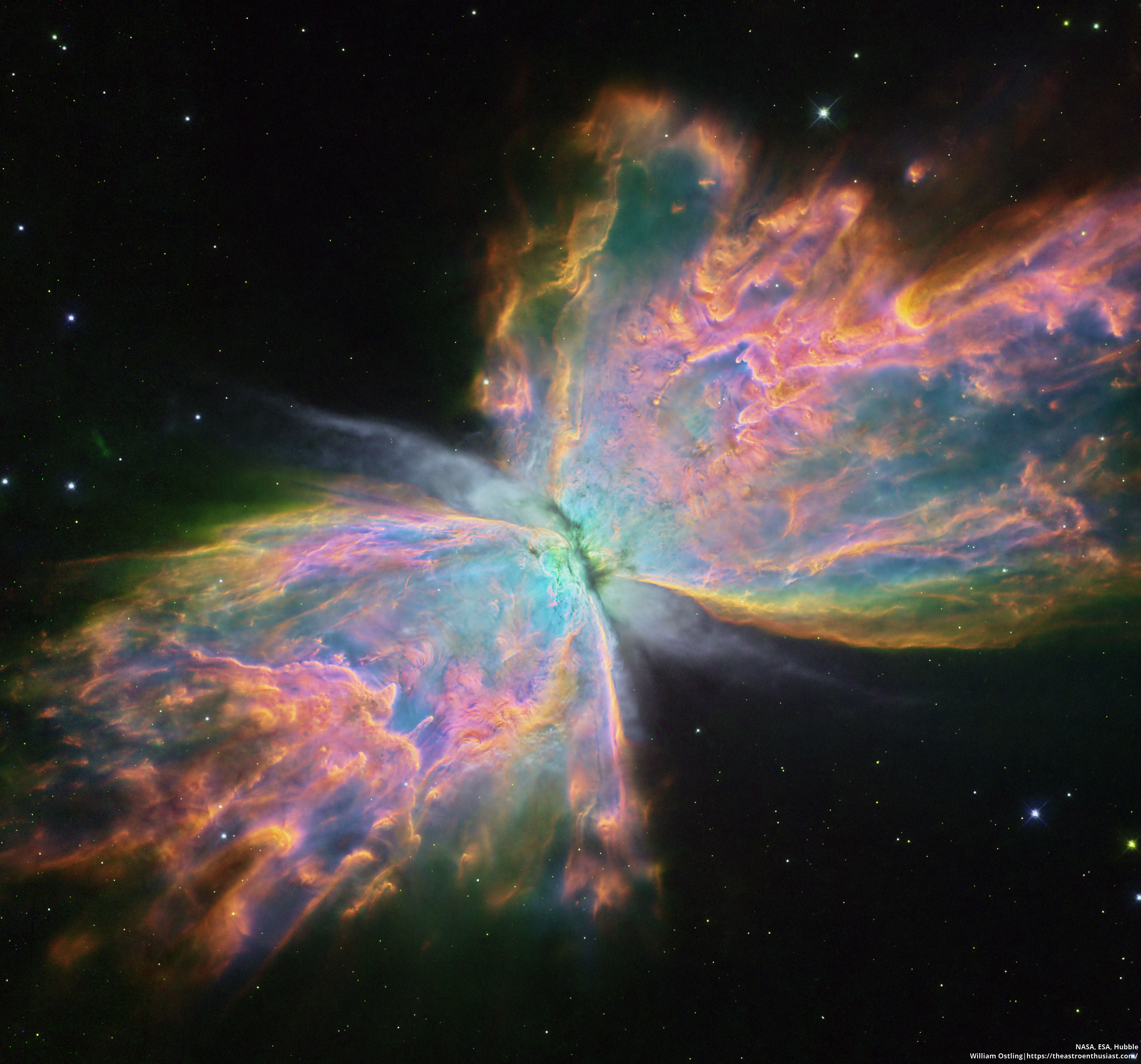
星は歳を重ねるにつれて、花や昆虫に似た美しい模様を作り出すことがあります。NGC 6302、蝶星雲はその顕著な例です。そのガス状の翼は3光年以上に渡り、表面温度は20万℃を超えると推定されていますが、NGC 6302の中心にある老齢の星は、非常に高温になり、可視光線と紫外線で明るく輝いていますが、濃密な塵のトーラスによって直接見ることができません。この鮮明なクローズアップ画像はハッブル宇宙望遠鏡によって撮影され、複雑な惑星状星雲の驚くべき詳細を示すために処理されています。特に、酸素(青)、水素(緑)、窒素(赤)から放出される光が強調されています。NGC 6302は、さそり座(Scorpius)の、地球から約3,500光年離れた場所に位置しています。惑星状星雲は、太陽のような恒星の外層大気から進化するが、通常は約2万年で消滅する。
原文(English)
Stars can make beautiful patterns as they age -- sometimes similar to flowers or insects. NGC 6302, the Butterfly Nebula, is a notable example. Though its gaseous wingspan covers over 3 light-years and its estimated surface temperature exceeds 200,000 degrees C, the aging central star of NGC 6302, the featured planetary nebula, has become exceptionally hot, shining brightly in visible and ultraviolet light but hidden from direct view by a dense torus of dust. This sharp close-up was recorded by the Hubble Space Telescope and is processed here to show off remarkable details of the complex planetary nebula, highlighting in particular light emitted by oxygen (shown as blue), hydrogen (green), and nitrogen (red). NGC 6302 lies about 3,500 light-years away in the arachnologically correct constellation of the Scorpion (Scorpius). Planetary nebulas evolve from outer atmospheres of stars like our Sun, but usually fade in about 20,000 years.
\ この感動を宇宙仲間にシェア /
宇宙をXでシェア
© NASA / APOD