
🚀 宇宙の記憶・カレンダー検索
🚀 象徴的な写真:
APOD第1回
🚀 創造の柱
🚀 スピリット火星着陸
🚀 ハッブル超深宇宙
🚀 地球へようこそ|ブルー・マーブル
🚀 エンケラドス
🚀 ベテルギウス
🚀 火星着陸
🚀 青い夕焼け
🚀 冥王星のハート
🚀 皆既日食
🚀 アースライズ再構築
🚀 ブラックホール
🚀 ウェッブ初画像
🚀 アポロ11着陸
APOD30周年(2025年6月16日)
衝付近の火星のステレオ画像
Stereo Mars near Opposition
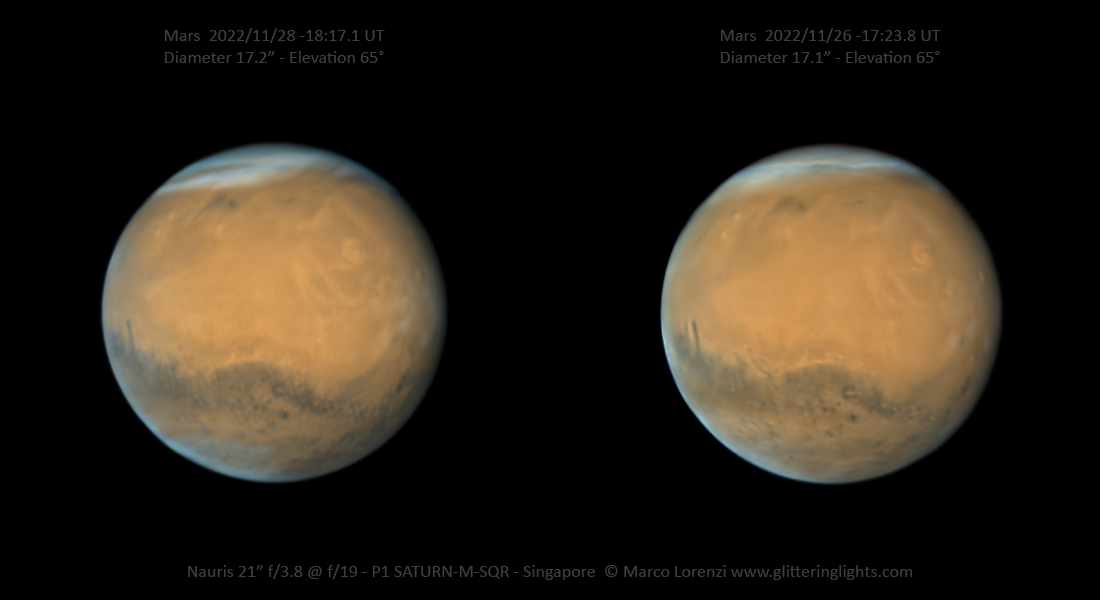
地球のシンガポールから11月下旬に撮影された、屋上望遠鏡で撮影された2枚の火星の画像には、火星が鮮明に写っている。当時、火星はシンガポールから約8200万キロメートル離れており、12月8日に地球の空で太陽の反対側に位置する衝に近づいていた。タルシス山脈地域最大の火山(太陽系で知られている最大の火山)であるオリンポス山は、火星の西端付近にある。両方の画像で、右上の白っぽいドーナツ状の形がそれである。中央付近に見える暗い領域はテラ・シレヌム地域であり、惑星の東端に最も近い長く暗い半島はシヌス・ゴメルである。その先端付近には、2012年にキュリオシティ探査車が着陸したゲール・クレーターがある。シヌス・ゴメルの上にある白い斑点は、エリシウム地域の他の火山である。惑星の最上部には、氷と雲に覆われた北極冠がある。約2日間隔で撮影されたこれらの画像は、同じ火星の半球を写したもので、ステレオペアを形成しています。画面中央を見つめ、目を交差させて別々の画像が重なり合うまで調整すると、火星が立体的に見えます。
原文(English)
Mars looks sharp in these two rooftop telescope views captured in late November from Singapore, planet Earth. At the time, Mars was about 82 million kilometers from Singapore and approaching its opposition, opposite the Sun in planet Earth's sky on December 8. Olympus Mons, largest of the volcanoes in the Tharsis Montes region (and largest known volcano in the Solar System), is near Mars' western limb. In both images it's the whitish donut-shape at the upper right. The dark area visible near center is the Terra Sirenum region while the long dark peninsula closest to the planet's eastern limb is Sinus Gomer. Near its tip is Gale crater, the Curiosity rover's landing site in 2012. Above Sinus Gomer, white spots are other volcanoes in the Elysium region. At the top of the planet is the north polar cap covered with ice and clouds. Taken about two days apart, these images of the same martian hemisphere form a stereo pair. Look at the center of the frame and cross your eyes until the separate images come together to see the Red Planet in 3D.
\ この感動を宇宙仲間にシェア /
宇宙をXでシェア
© Marco Lorenzi / APOD