
🚀 宇宙の記憶・カレンダー検索
🚀 象徴的な写真:
APOD第1回
🚀 創造の柱
🚀 スピリット火星着陸
🚀 ハッブル超深宇宙
🚀 地球へようこそ|ブルー・マーブル
🚀 エンケラドス
🚀 ベテルギウス
🚀 火星着陸
🚀 青い夕焼け
🚀 冥王星のハート
🚀 皆既日食
🚀 アースライズ再構築
🚀 ブラックホール
🚀 ウェッブ初画像
🚀 アポロ11着陸
APOD30周年(2025年6月16日)
ふたご座
The Geminid
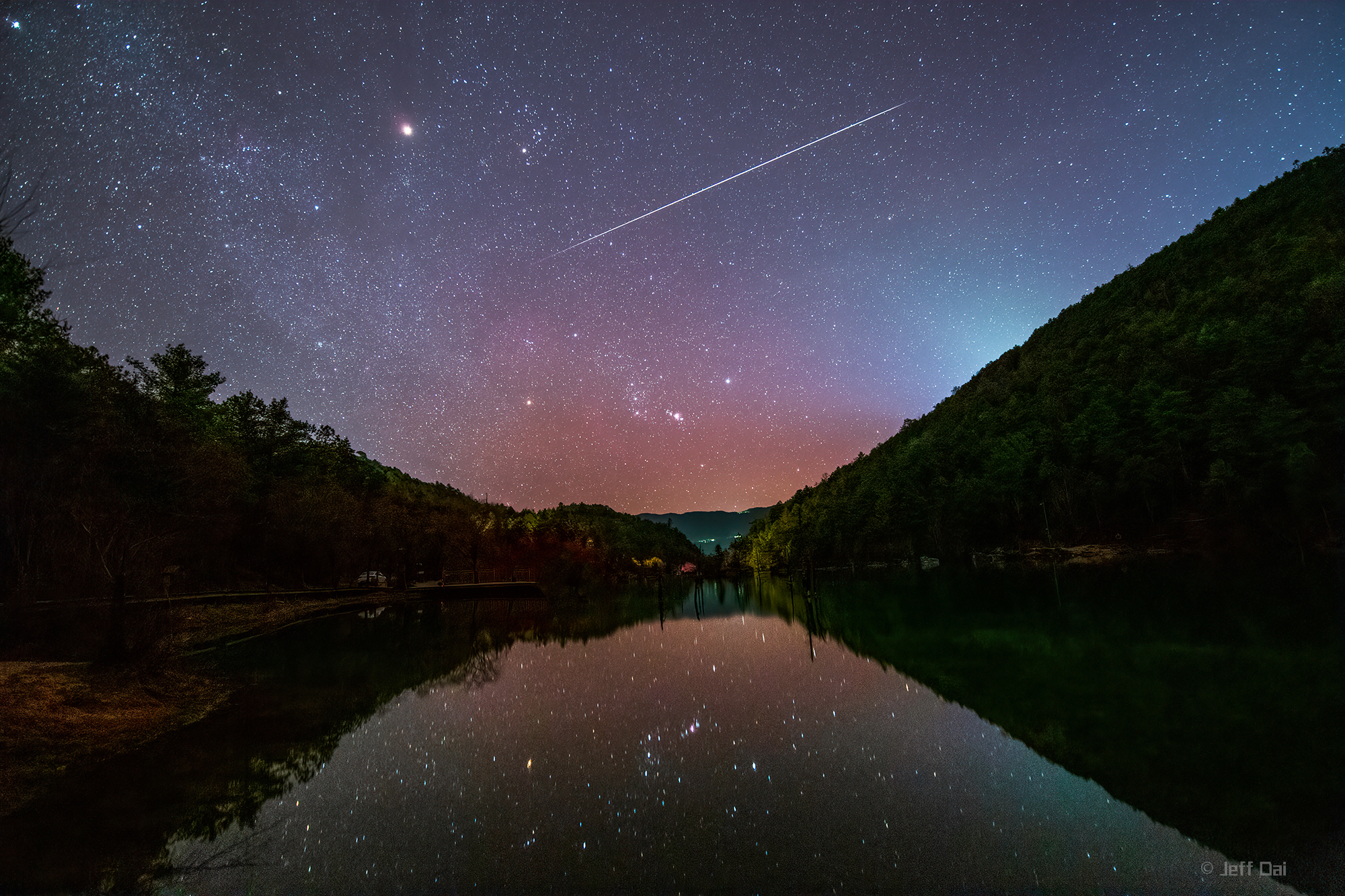
月の彼方から帰還したオリオン探査機は、12月11日に秒速約11キロメートルで地球の大気圏に突入しました。これは、12月13日に大気圏に突入した際にこの長い火球流星を作り出した塵の粒の速度の半分です。この日は、毎年恒例のふたご座流星群のピーク付近でした。私たちの美しい惑星が、謎の小惑星3200ファエトンの塵の軌跡を毎年通過するにつれて、ふたご座流星群のすべての平行な軌跡は、ふたご座の一点から放射状に広がっているように見えます。しかし、ふたご座の双子の星は、中国雲南省の美しいブルームーンバレーのこの夜空の風景の左側の木々のすぐ後ろに隠れています。山の湖の静かな水面に映るオリオン座の星は、中央付近で昇っています。月の出前に撮影されたこのまばゆい火星は、依然としてこのシーンで最も明るい天体の灯台です。
原文(English)
Returning from beyond the Moon, on December 11 the Orion spacecraft entered Earth's atmosphere at almost 11 kilometers per second. That's half the speed of the grain of dust that created this long fireball meteor when it entered the atmosphere on December 13, near the peak of the annual Geminid meteor shower. As our fair planet makes its yearly pass through the dust trail of mysterious asteroid 3200 Phaethon, the parallel tracks of all Geminid meteors appear to radiate from a point in the constellation Gemini. But the twin stars of Gemini hide just behind the trees on the left in this night skyscape from the beautiful Blue Moon Valley, Yunnan, China. Reflected in the still waters of the mountain lake, stars of the constellation Orion are rising near center. Captured before moonrise, dazzling Mars is still the brightest celestial beacon in the scene.
\ この感動を宇宙仲間にシェア /
宇宙をXでシェア
© Jeff Dai / APOD