
🚀 宇宙の記憶・カレンダー検索
🚀 象徴的な写真:
APOD第1回
🚀 創造の柱
🚀 スピリット火星着陸
🚀 ハッブル超深宇宙
🚀 地球へようこそ|ブルー・マーブル
🚀 エンケラドス
🚀 ベテルギウス
🚀 火星着陸
🚀 青い夕焼け
🚀 冥王星のハート
🚀 皆既日食
🚀 アースライズ再構築
🚀 ブラックホール
🚀 ウェッブ初画像
🚀 アポロ11着陸
APOD30周年(2025年6月16日)
彗星ZTFの尾
Tails of Comet ZTF
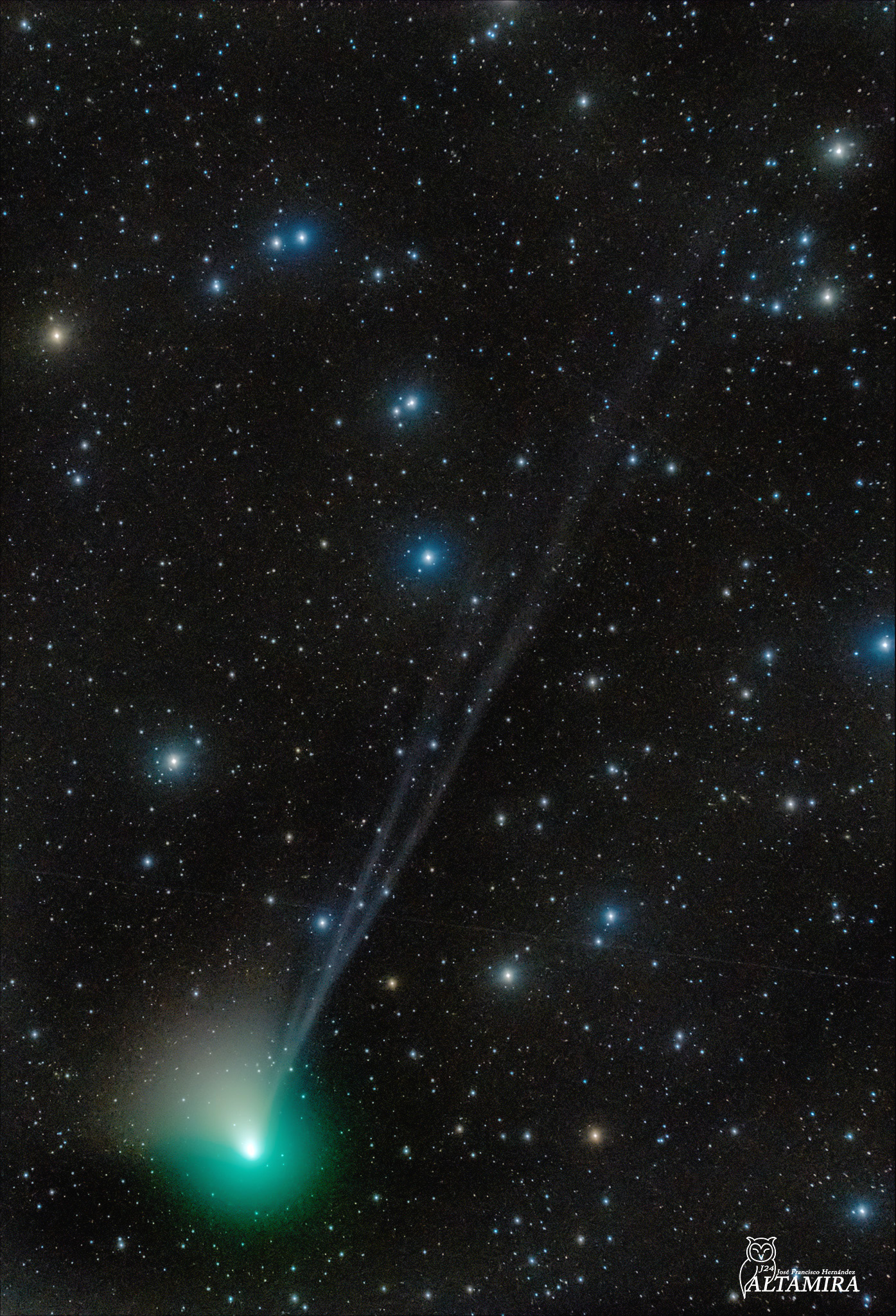
ZTF彗星が肉眼で見えるようになるかもしれません。昨年初めに発見されたこの巨大な雪玉は、太陽と地球に近づくにつれて明るさを増しています。C/2022 E3 (ZTF)は今週後半に太陽に最も接近し、晴れて暗い空であれば北半球の観測者であれば双眼鏡なしでも見えるようになるかもしれません。ただし、彗星が太陽に近づくにつれて明るさが変化するのは非常に予測が難しいことで知られています。先週、美しい星空を背景に撮影された写真では、3本の青いイオンの尾が右上に伸びています。これはおそらく、氷の彗星核から放出されたイオンに対する変動する太陽風の影響によるものです。彗星の白い塵の尾は左上に見え、こちらははるかに短くなっています。緑色の光は、炭素ガスの発光によって引き起こされる彗星のコマです。ZTF彗星は2月初旬に地球に最も接近すると予想されており、その後は劇的に暗くなるはずです。発見+アウトリーチ:APODの大学院生研究員を募集中
原文(English)
Comet ZTF may become visible to the unaided eye. Discovered early last year, this massive snowball has been brightening as it approaches the Sun and the Earth. C/2022 E3 (ZTF) will be closest to the Sun later this week, at which time it may become visible even without binoculars to northern observers with a clear and dark sky. As they near the Sun, comet brightnesses are notoriously hard to predict, though. In the featured image taken last week in front of a picturesque star field, three blue ion tails extend to the upper right, likely the result of a variable solar wind on ions ejected by the icy comet nucleus. The comet's white dust tail is visible to the upper left and much shorter. The green glow is the comet's coma, caused by glowing carbon gas. Comet ZTF is expected to pass nearest the Earth in early February, after which it should dim dramatically. Discovery + Outreach: Graduate student research position open for APOD
\ この感動を宇宙仲間にシェア /
宇宙をXでシェア
© Jose Francisco Hernández / APOD