
🚀 宇宙の記憶・カレンダー検索
🚀 象徴的な写真:
APOD第1回
🚀 創造の柱
🚀 スピリット火星着陸
🚀 ハッブル超深宇宙
🚀 地球へようこそ|ブルー・マーブル
🚀 エンケラドス
🚀 ベテルギウス
🚀 火星着陸
🚀 青い夕焼け
🚀 冥王星のハート
🚀 皆既日食
🚀 アースライズ再構築
🚀 ブラックホール
🚀 ウェッブ初画像
🚀 アポロ11着陸
APOD30周年(2025年6月16日)
活動銀河NGC 1275
Active Galaxy NGC 1275
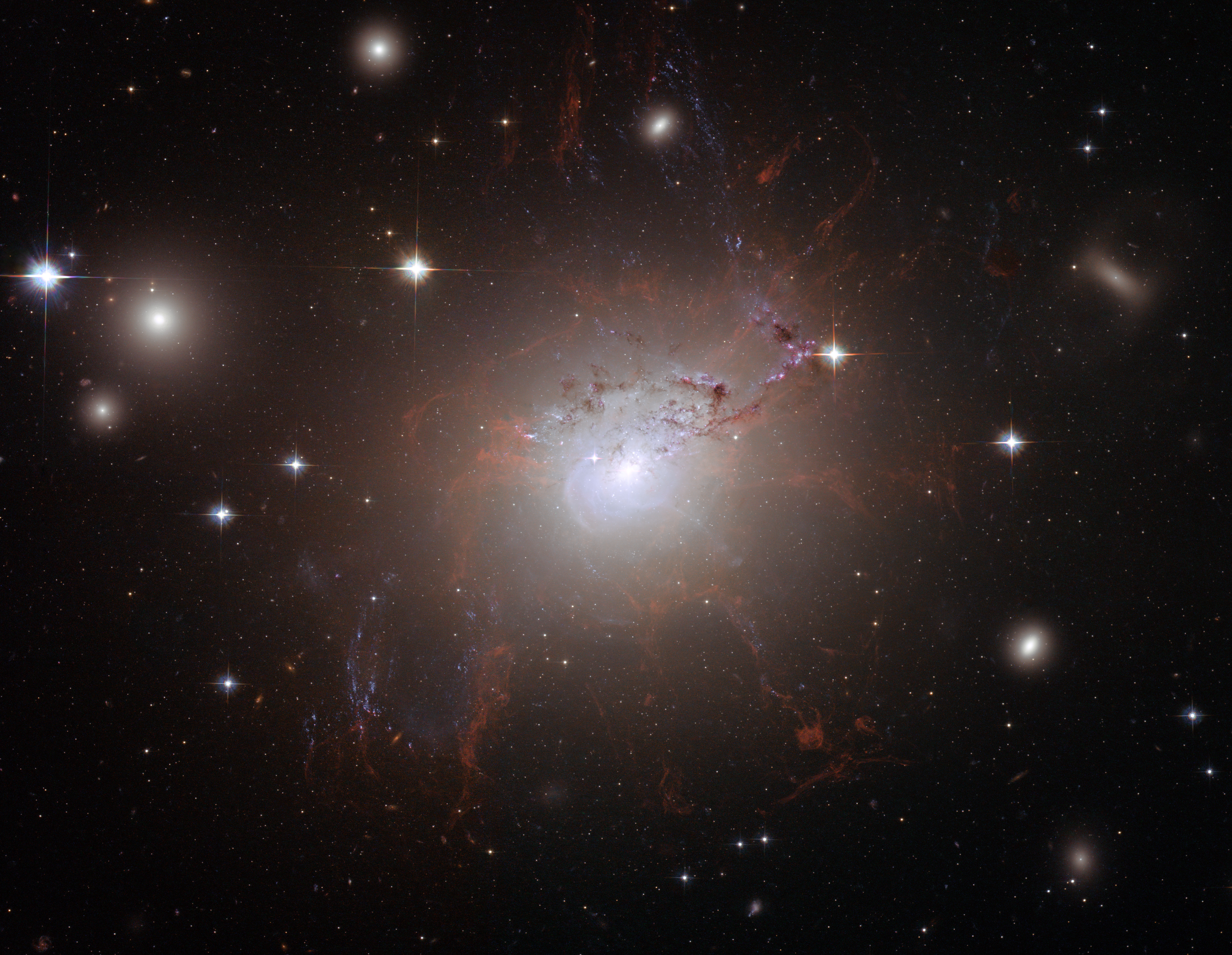
活動銀河NGC 1275は、比較的近くに位置する大きなペルセウス座銀河団の中心に位置する、最も支配的な銀河です。可視光線では荒々しい姿を見せるこの活動銀河は、X線や電波の放射源としても非常に強力です。NGC 1275は、銀河全体が落下してくることで物質を集積し、最終的には銀河の中心にある超大質量ブラックホールへと流れ込みます。このカラー合成画像は、2006年にハッブル宇宙望遠鏡で記録されたデータから作成されました。画像には、結果として生じた銀河の残骸や、最大で2万光年にも及ぶ輝くガスのフィラメントが強調されています。銀河衝突の激しさによって破壊されるはずのフィラメントは、NGC 1275に存在し続けています。では、何がフィラメントを繋ぎ止めているのでしょうか?観測によると、ブラックホールの活動によって銀河の中心から押し出されたこれらの構造は、磁場によって繋ぎ止められているようです。ペルセウスAとしても知られるNGC 1275は、10万光年以上にわたって広がり、地球から約2億3000万光年離れた場所に位置している。
原文(English)
Active galaxy NGC 1275 is the central, dominant member of the large and relatively nearby Perseus Cluster of Galaxies. Wild-looking at visible wavelengths, the active galaxy is also a prodigious source of x-rays and radio emission. NGC 1275 accretes matter as entire galaxies fall into it, ultimately feeding a supermassive black hole at the galaxy's core. This color composite image made from Hubble Space Telescope data recorded during 2006. It highlights the resulting galactic debris and filaments of glowing gas, some up to 20,000 light-years long. The filaments persist in NGC 1275, even though the turmoil of galactic collisions should destroy them. What keeps the filaments together? Observations indicate that the structures, pushed out from the galaxy's center by the black hole's activity, are held together by magnetic fields. Also known as Perseus A, NGC 1275 spans over 100,000 light years and lies about 230 million light years away.
\ この感動を宇宙仲間にシェア /
宇宙をXでシェア
© NASA / APOD