
🚀 宇宙の記憶・カレンダー検索
🚀 象徴的な写真:
APOD第1回
🚀 創造の柱
🚀 スピリット火星着陸
🚀 ハッブル超深宇宙
🚀 地球へようこそ|ブルー・マーブル
🚀 エンケラドス
🚀 ベテルギウス
🚀 火星着陸
🚀 青い夕焼け
🚀 冥王星のハート
🚀 皆既日食
🚀 アースライズ再構築
🚀 ブラックホール
🚀 ウェッブ初画像
🚀 アポロ11着陸
APOD30周年(2025年6月16日)
彗星と二つの北斗七星
A Comet and Two Dippers
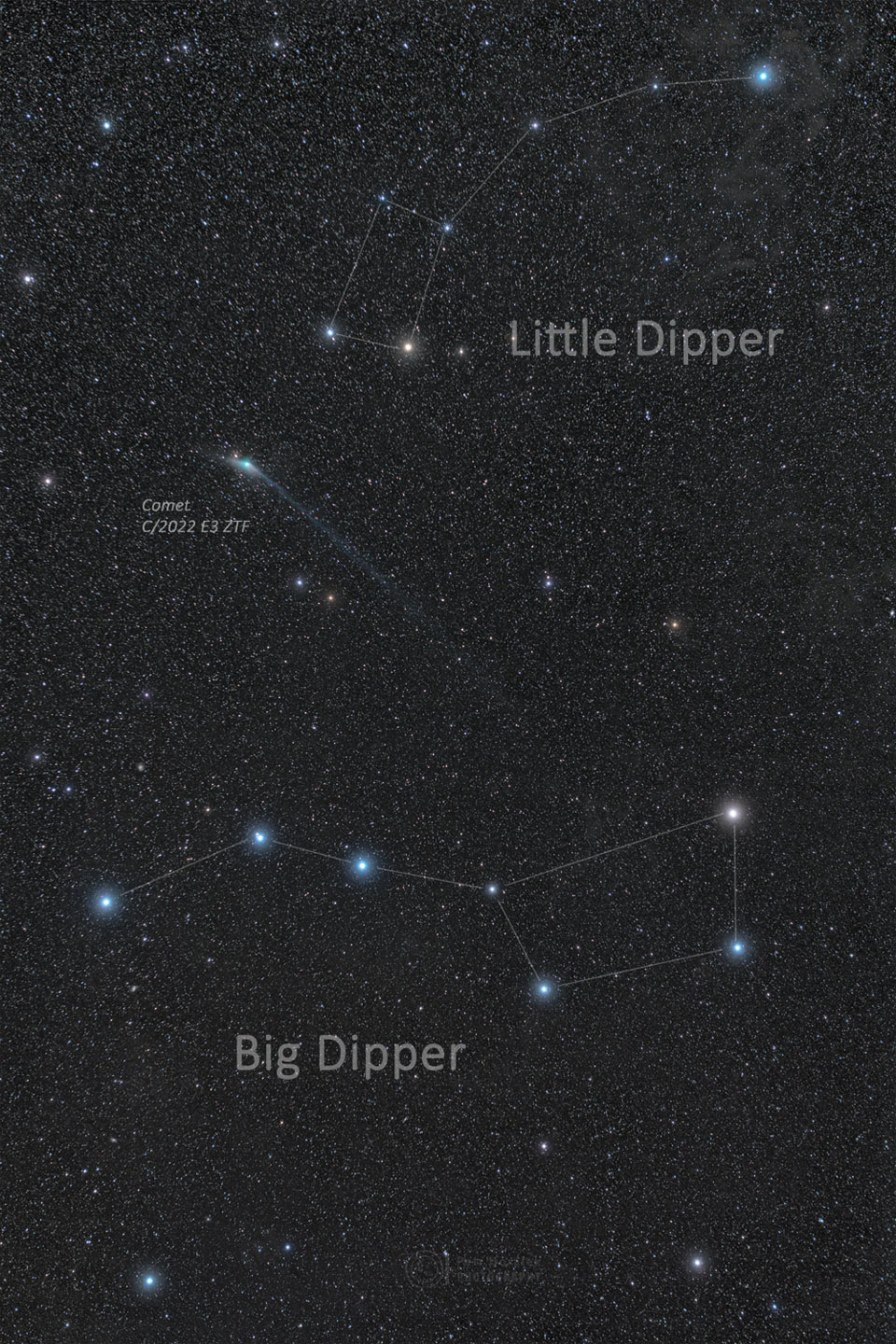
彗星はまだ見えますか?はい。C/2022 E3 (ZTF) は徐々に暗くなってきていますが、見るべき場所と時間を知っていれば、まだ見ることができます。幾何学的に見ると、ZTF 彗星は太陽と地球に最も接近した地点を通過し、現在は太陽系の外縁部に向かっています。太陽の周りを公転する軌道は、先月北極星と北斗七星、小熊座の近くを通過した後、今月は北の空を横切って移動します。写真の ZTF 彗星は、1 月下旬に北斗七星と小熊座の間で撮影されたもので、10 度以上伸びるイオンの尾を伴っていました。肉眼では見えなくなりましたが、双眼鏡や小型望遠鏡と良い星図があれば、ZTF 彗星を見つけることができます。今後 1 週間で彗星を見るのに最適な時間は、日没後、月が昇る前です。数日後には、彗星は火星のほぼ手前を通過します。彗星 ZTF ギャラリー:APOD への注目すべき投稿
原文(English)
Can you still see the comet? Yes. Even as C/2022 E3 (ZTF) fades, there is still time to see it if you know where and when to look. Geometrically, Comet ZTF has passed its closest to both the Sun and the Earth and is now headed back to the outer Solar System. Its orbit around the Sun has it gliding across the northern sky all month, after passing near Polaris and both the Big and Little Dippers last month. Pictured, Comet ZTF was photographed between the two dippers in late January while sporting an ion tail that extended over 10 degrees. Now below naked-eye visibility, Comet ZTF can be found with binoculars or a small telescope and a good sky map. A good time to see the comet over the next week is after the Sun sets -- but before the Moon rises. The comet will move nearly in front of Mars in a few days Comet ZTF Gallery: Notable Submissions to APOD
\ この感動を宇宙仲間にシェア /
宇宙をXでシェア
© Petr Horalek /
Institute of Physics in Opava / APOD