
🚀 宇宙の記憶・カレンダー検索
🚀 象徴的な写真:
APOD第1回
🚀 創造の柱
🚀 スピリット火星着陸
🚀 ハッブル超深宇宙
🚀 地球へようこそ|ブルー・マーブル
🚀 エンケラドス
🚀 ベテルギウス
🚀 火星着陸
🚀 青い夕焼け
🚀 冥王星のハート
🚀 皆既日食
🚀 アースライズ再構築
🚀 ブラックホール
🚀 ウェッブ初画像
🚀 アポロ11着陸
APOD30周年(2025年6月16日)
深宇宙探査:大マゼラン雲
Deep Field: The Large Magellanic Cloud
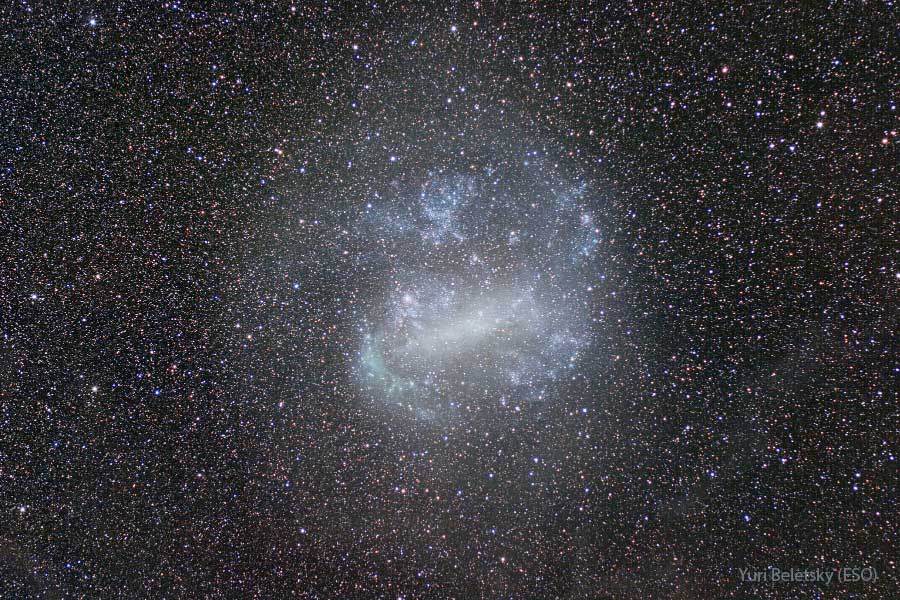
これは渦巻銀河でしょうか? いいえ。実際には、これは大マゼラン雲 (LMC) であり、私たちの天の川銀河最大の伴銀河です。LMC は通常、混沌とした外観をしているため、矮小不規則銀河に分類されます。しかし、この深く広い露光では、LMC の全容が見えるようになります。驚くべきことに、長時間露光すると、LMC は棒渦巻銀河に似てきます。大マゼラン雲は、シイラ座 (ドラド) の方向にわずか約 18 万光年離れたところにあります。約 15,000 光年に広がる LMC は、現代で最も明るく最も近い超新星 SN1987A の発生場所でした。小マゼラン雲 (SMC) とともに、LMC は地球の南半球で肉眼で見ることができます。あなたの空のサプライズ: あなたの誕生日に APOD で紹介された写真はどれですか? (1995年以降)
原文(English)
Is this a spiral galaxy? No. Actually, it is the Large Magellanic Cloud (LMC), the largest satellite galaxy of our own Milky Way Galaxy. The LMC is classified as a dwarf irregular galaxy because of its normally chaotic appearance. In this deep and wide exposure, however, the full extent of the LMC becomes visible. Surprisingly, during longer exposures, the LMC begins to resemble a barred spiral galaxy. The Large Magellanic Cloud lies only about 180,000 light-years distant towards the constellation of the Dolphinfish (Dorado). Spanning about 15,000 light-years, the LMC was the site of SN1987A, the brightest and closest supernova in modern times. Together with the Small Magellanic Cloud (SMC), the LMC can be seen in Earth's southern hemisphere with the unaided eye. Your Sky Surprise: What picture did APOD feature on your birthday? (post 1995)
\ この感動を宇宙仲間にシェア /
宇宙をXでシェア
© Yuri Beletsky
(Carnegie
Las Campanas Observatory,
TWAN) / APOD