
🚀 宇宙の記憶・カレンダー検索
🚀 象徴的な写真:
APOD第1回
🚀 創造の柱
🚀 スピリット火星着陸
🚀 ハッブル超深宇宙
🚀 地球へようこそ|ブルー・マーブル
🚀 エンケラドス
🚀 ベテルギウス
🚀 火星着陸
🚀 青い夕焼け
🚀 冥王星のハート
🚀 皆既日食
🚀 アースライズ再構築
🚀 ブラックホール
🚀 ウェッブ初画像
🚀 アポロ11着陸
APOD30周年(2025年6月16日)
北極星:ポラリスと周囲の塵
North Star: Polaris and Surrounding Dust
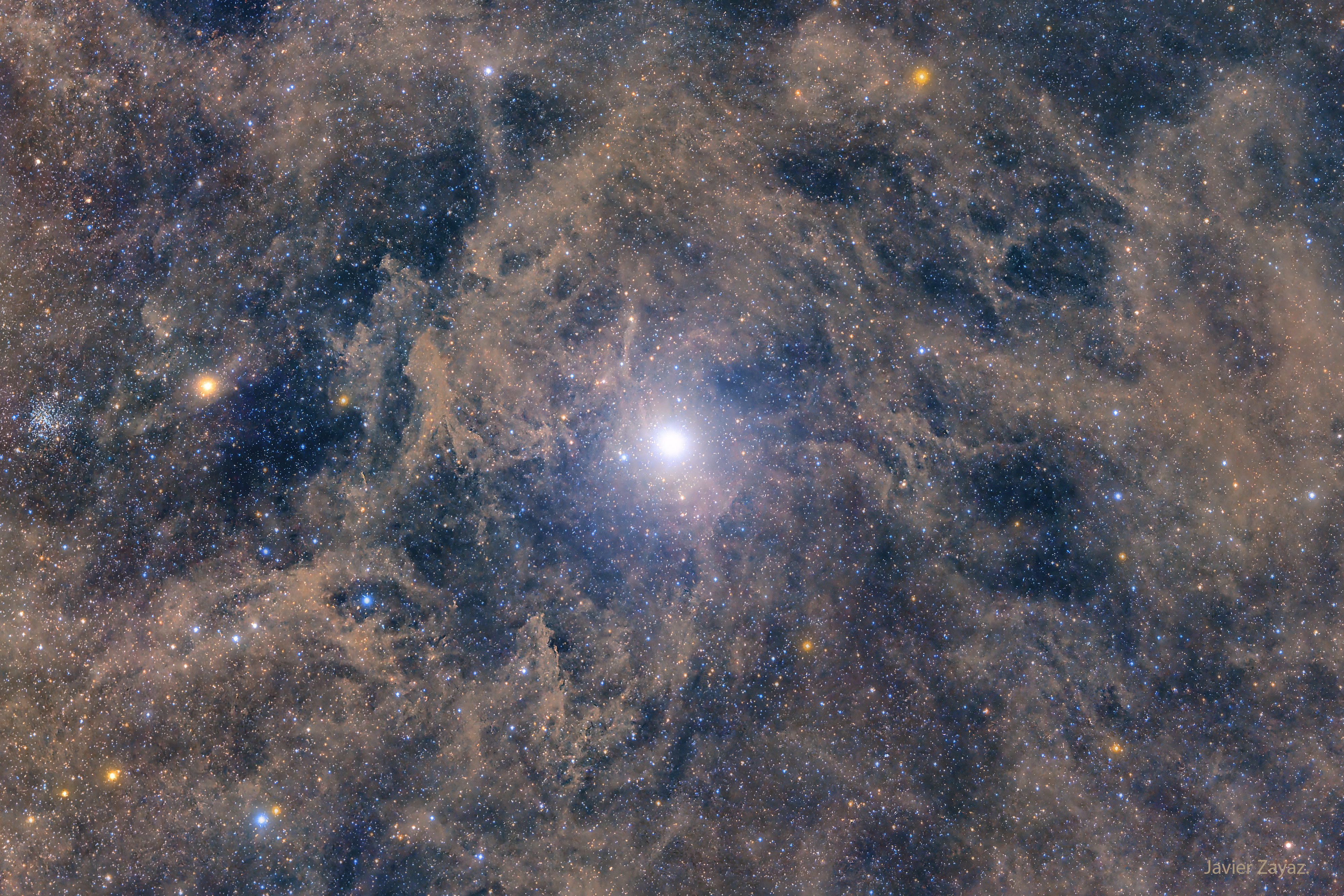
なぜポラリスは北極星と呼ばれるのでしょうか? まず、ポラリスは地球の北の自転軸に最も近い明るい星です。そのため、地球が自転すると、星はポラリスの周りを回っているように見えますが、ポラリス自体は常に同じ北の方向にとどまるため、北極星となります。地球の南の自転軸の近くには明るい星がないため、現在、明るい南の星はありません。数千年前、地球の自転軸はわずかに異なる方向を向いていたため、ベガが北極星でした。ポラリスは空で最も明るい星ではありませんが、北斗七星の2つの星とほぼ一直線上に並んでいるため、簡単に見つけることができます。ポラリスは、8度の広角特集画像の中央付近にあります。この画像は、数百枚の露出をデジタル合成したもので、フレーム全体に統合フラックス星雲(IFN)のかすかなガスと塵、そして左端には球状星団NGC 188が写っています。ケフェイド・ポラリスの表面はゆっくりと脈動し、この有名な星の明るさが数日かけて数パーセント変化します。宇宙を探検しよう:ランダムAPODジェネレーター
原文(English)
Why is Polaris called the North Star? First, Polaris is the nearest bright star toward the north spin axis of the Earth. Therefore, as the Earth turns, stars appear to revolve around Polaris, but Polaris itself always stays in the same northerly direction -- making it the North Star. Since no bright star is near the south spin axis of the Earth, there is currently no bright South Star. Thousands of years ago, Earth's spin axis pointed in a slightly different direction so that Vega was the North Star. Although Polaris is not the brightest star on the sky, it is easily located because it is nearly aligned with two stars in the cup of the Big Dipper. Polaris is near the center of the eight-degree wide featured image, a digital composite of hundreds of exposures that brings out faint gas and dust of the Integrated Flux Nebula (IFN) all over the frame as well as the globular star cluster NGC 188 on the far left. The surface of Cepheid Polaris slowly pulsates, causing the famous star to change its brightness by a few percent over the course of a few days. Explore Your Universe: Random APOD Generator
\ この感動を宇宙仲間にシェア /
宇宙をXでシェア
© Javier Zayaz / APOD