
🚀 宇宙の記憶・カレンダー検索
🚀 象徴的な写真:
APOD第1回
🚀 創造の柱
🚀 スピリット火星着陸
🚀 ハッブル超深宇宙
🚀 地球へようこそ|ブルー・マーブル
🚀 エンケラドス
🚀 ベテルギウス
🚀 火星着陸
🚀 青い夕焼け
🚀 冥王星のハート
🚀 皆既日食
🚀 アースライズ再構築
🚀 ブラックホール
🚀 ウェッブ初画像
🚀 アポロ11着陸
APOD30周年(2025年6月16日)
火星のフラットロックヒルズ
Flat Rock Hills on Mars
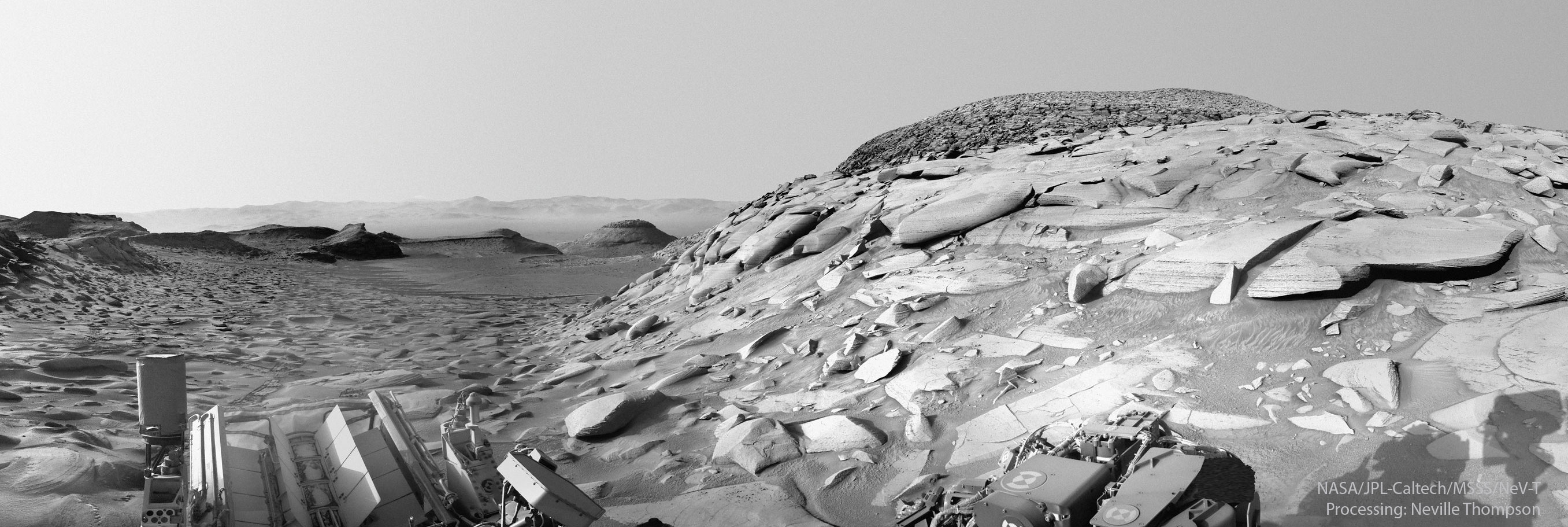
火星にはなぜ平らな岩がこんなに多いのでしょうか?火星の平原や丘陵地帯を撮影した写真には、地球の岩石と比べて異常に平らな岩が多数写っています。その理由の一つは、火星と地球に共通する侵食作用です。火星の二酸化炭素の風は、ざらざらした火星の砂を吹き飛ばすと、まるでサンドペーパーのように作用します。この砂によって、岩石の表面が滑らかになる一方で、長期間露出している他の岩石の頂上が削られるという、不均一な侵食が生じるのです。平らな頂上の岩で覆われた丘陵地帯を捉えたこの写真は、先月、NASAの火星探査車キュリオシティによって撮影されました。この探査車は火星を10年間走り続け、地球の隣の惑星である火星の湿潤で風の強い過去の多くの詳細を明らかにするのに役立ってきました。この写真や他の写真を撮影した後、キュリオシティは岩や滑りやすい砂を慎重に避けながらマーカーバンド渓谷を登りました。
原文(English)
Why are there so many flat rocks on Mars? Some views of plains and hills on Mars show many rocks that are unusually flat when compared to rocks on Earth. One reason for this is a process that is common to both Mars and Earth: erosion. The carbon-dioxide wind on Mars can act like sandpaper when it blows around gritty Martian sand. This sand can create differential erosion, smoothing over some rocks, while wearing down the tops of other long-exposed stones. The featured image capturing several hills covered with flat-topped rocks was taken last month by NASA's Curiosity Rover on Mars. This robotic rover has now been rolling across Mars for ten years and has helped uncover many details of the wet and windy past of Earth's planetary neighbor. After taking this and other images, Curiosity carefully navigated stones and slippery sand to climb up Marker Band Valley.
\ この感動を宇宙仲間にシェア /
宇宙をXでシェア
© NASA,
JPL-Caltech,
MSSS;
Processing: Neville Thompson / APOD