
🚀 宇宙の記憶・カレンダー検索
🚀 象徴的な写真:
APOD第1回
🚀 創造の柱
🚀 スピリット火星着陸
🚀 ハッブル超深宇宙
🚀 地球へようこそ|ブルー・マーブル
🚀 エンケラドス
🚀 ベテルギウス
🚀 火星着陸
🚀 青い夕焼け
🚀 冥王星のハート
🚀 皆既日食
🚀 アースライズ再構築
🚀 ブラックホール
🚀 ウェッブ初画像
🚀 アポロ11着陸
APOD30周年(2025年6月16日)
ShadowCamのシャックルトン
Shackleton from ShadowCam
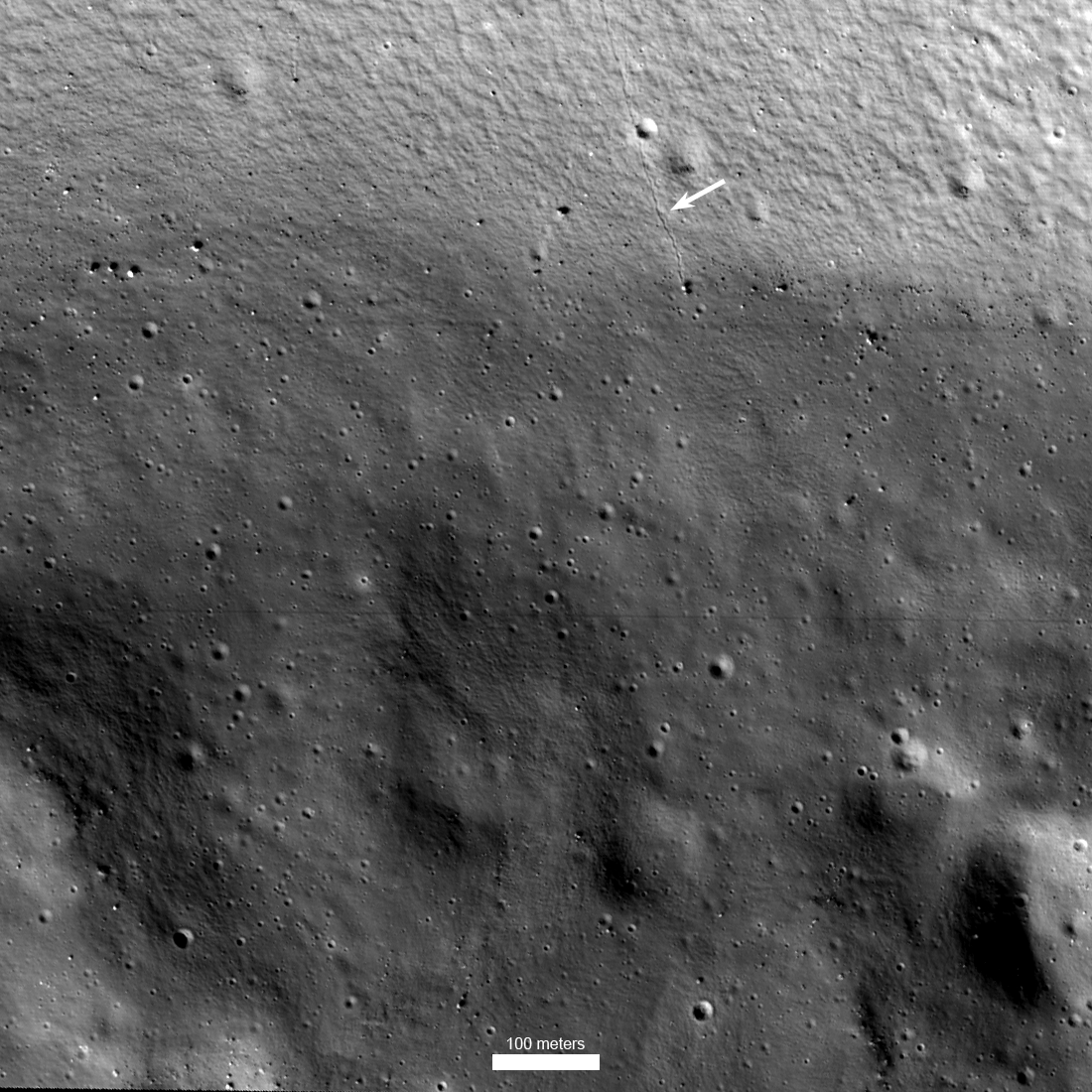
シャクルトン・クレーターは月の南極に位置しています。直径21キロメートルのこのクレーターの縁に沿って並ぶ山々は日光に当たっていますが、クレーターの底は永久に暗い影に覆われています。それでも、このシャクルトン・クレーターの影になった縁の壁と底の画像は、2022年8月に打ち上げられた韓国探査機KPLOに搭載されたNASAのShadowCamによって撮影されました。例えば、月探査機LROの狭角カメラよりも約200倍感度が高いShadowCamは、月面の永久影領域を撮影するために設計されました。直射日光を避けるこれらの領域は、古代の彗星衝突によって堆積した水氷やその他の揮発性物質の貯蔵庫であり、将来の月探査ミッションに役立つと期待されています。もちろん、永久影領域も、近くの月の地形からの太陽光の反射によって照らされています。この驚くほど詳細なShadowCam画像では、矢印がシャクルトン・クレーターの壁を転がり落ちた一つの岩の軌跡を示しています。画像の縮尺はフレームの下部に表示されています。
原文(English)
Shackleton crater lies at the lunar south pole. Peaks along the rim of the 21 kilometer diameter crater are in sunlight, but Shackleton's floor is in dark permanent shadow. Still, this image of the shadowed rim wall and floor of Shackleton crater was captured from NASA's ShadowCam, an instrument on board the Korea Pathfinder Lunar Orbiter (KPLO) launched in August 2022. About 200 times more sensitive than, for example, the Lunar Reconnaissance Orbiter's Narrow Angle Camera, ShadowCam was designed to image the permanently shadowed regions of the lunar surface. Avoiding direct sunlight, those regions are expected to be reservoirs of water-ice and other volatiles deposited by ancient cometary impacts and useful to future Moon missions. Of course, the permanently shadowed regions are still illuminated by reflections of sunlight from nearby lunar terrain. In this stunningly detailed ShadowCam image, an arrow marks the track made by a single boulder rolling down Shackleton crater's wall. The image scale is indicated at the bottom of the frame.
\ この感動を宇宙仲間にシェア /
宇宙をXでシェア
© NASA / APOD