
🚀 宇宙の記憶・カレンダー検索
🚀 象徴的な写真:
APOD第1回
🚀 創造の柱
🚀 スピリット火星着陸
🚀 ハッブル超深宇宙
🚀 地球へようこそ|ブルー・マーブル
🚀 エンケラドス
🚀 ベテルギウス
🚀 火星着陸
🚀 青い夕焼け
🚀 冥王星のハート
🚀 皆既日食
🚀 アースライズ再構築
🚀 ブラックホール
🚀 ウェッブ初画像
🚀 アポロ11着陸
APOD30周年(2025年6月16日)
キャッツアイ ワイド アンド ディープ
Cat's Eye Wide and Deep
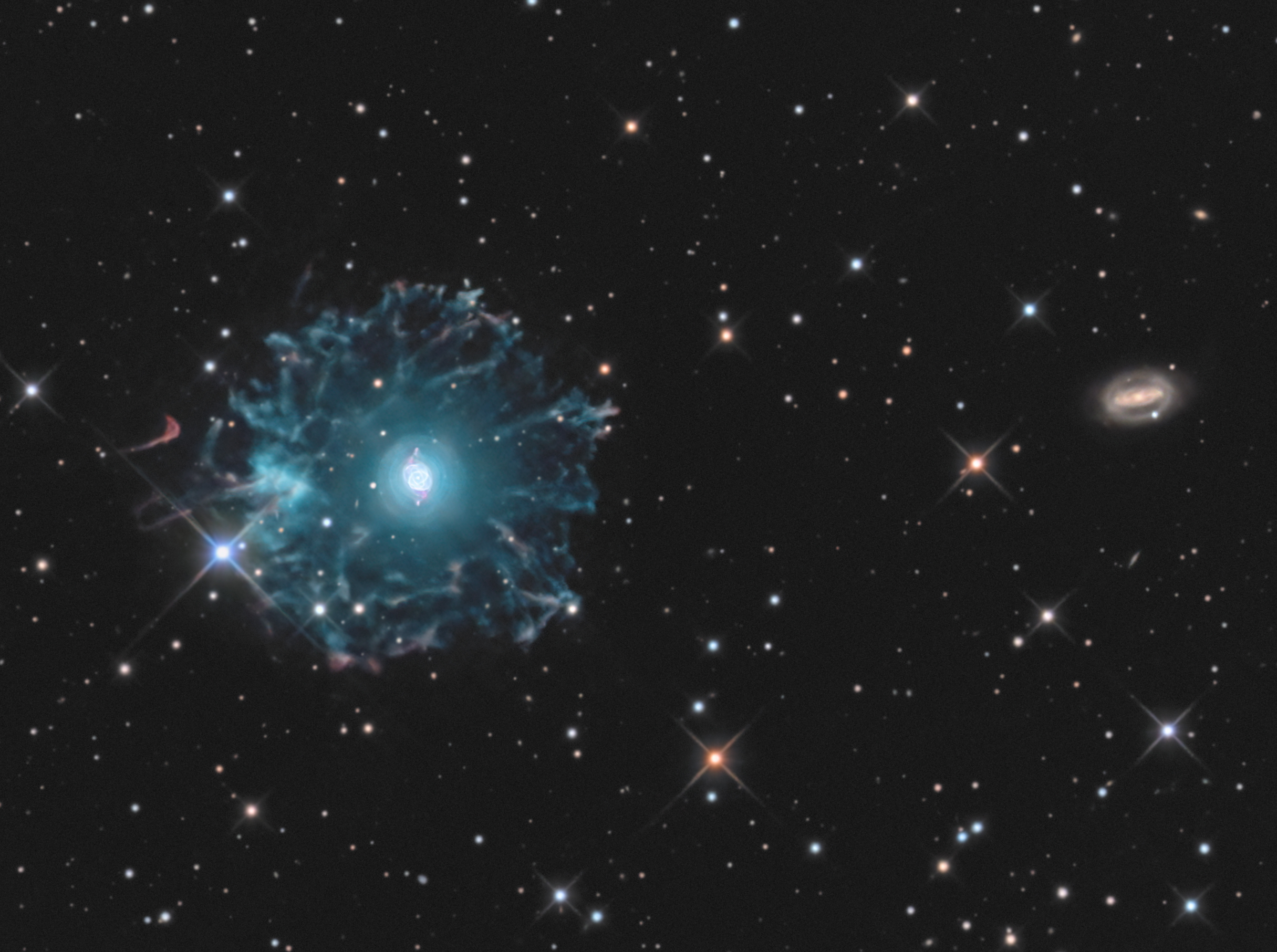
キャッツアイ星雲(NGC 6543)は、空で最もよく知られている惑星状星雲の1つです。この印象的な広角画像では、星雲の明るい中心領域に、そのよく知られた輪郭が見られます。しかし、2つの望遠鏡のデータを組み合わせたこの広くて深い画像では、非常に淡い外側のハローも明らかになっています。推定距離3,000光年にある淡い外側のハローは、5光年以上の広がりがあります。惑星状星雲は、太陽のような恒星の生涯の最終段階として長い間認識されてきました。最近では、いくつかの惑星状星雲には、恒星の進化の初期段階で剥ぎ取られた物質で形成されたと思われる、このハローのようなものがあることがわかっています。惑星状星雲の段階は約10,000年続くと考えられていますが、天文学者は、このハローの外側のフィラメント状の部分の年齢を50,000年から90,000年と推定しています。右側に見えるのは、注意深く見守る惑星状星雲の約5000万光年先に、渦巻銀河NGC 6552が存在する。
原文(English)
The Cat's Eye Nebula (NGC 6543) is one of the best known planetary nebulae in the sky. Its more familiar outlines are seen in the brighter central region of the nebula in this impressive wide-angle view. But this wide and deep image combining data from two telescopes also reveals its extremely faint outer halo. At an estimated distance of 3,000 light-years, the faint outer halo is over 5 light-years across. Planetary nebulae have long been appreciated as a final phase in the life of a sun-like star. More recently, some planetary nebulae are found to have halos like this one, likely formed of material shrugged off during earlier episodes in the star's evolution. While the planetary nebula phase is thought to last for around 10,000 years, astronomers estimate the age of the outer filamentary portions of this halo to be 50,000 to 90,000 years. Visible on the right, some 50 million light-years beyond the watchful planetary nebula, lies spiral galaxy NGC 6552.
\ この感動を宇宙仲間にシェア /
宇宙をXでシェア
© Jean-François Bax / APOD