
🚀 宇宙の記憶・カレンダー検索
🚀 象徴的な写真:
APOD第1回
🚀 創造の柱
🚀 スピリット火星着陸
🚀 ハッブル超深宇宙
🚀 地球へようこそ|ブルー・マーブル
🚀 エンケラドス
🚀 ベテルギウス
🚀 火星着陸
🚀 青い夕焼け
🚀 冥王星のハート
🚀 皆既日食
🚀 アースライズ再構築
🚀 ブラックホール
🚀 ウェッブ初画像
🚀 アポロ11着陸
APOD30周年(2025年6月16日)
エベレスト山の上にある金星帯
The Belt of Venus over Mount Everest
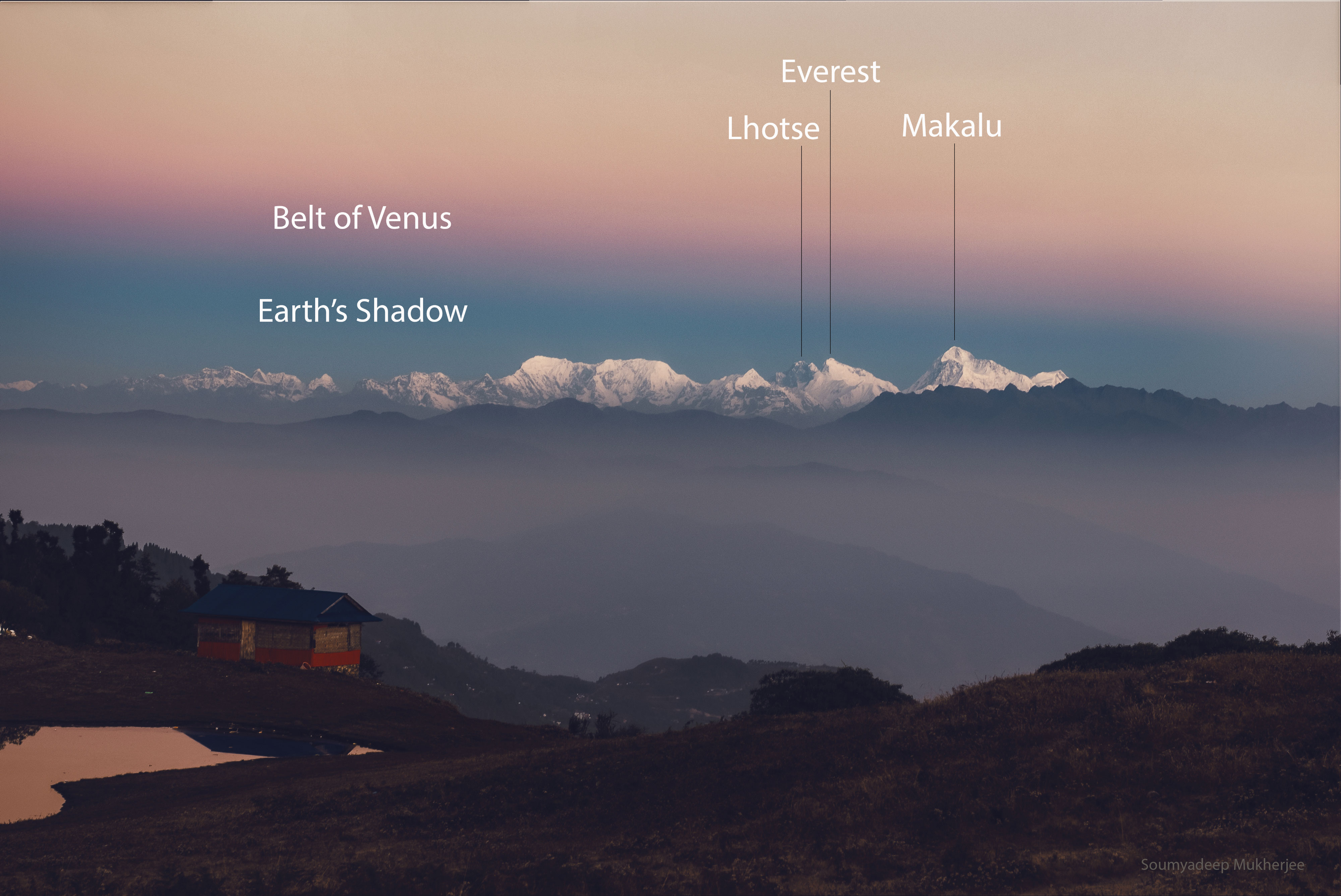
きっと見たことがあるでしょうが、気づいていないかもしれません。雲のない薄明時、日の出直前または日没直後、地平線上の大気の一部がわずかに暗く、色が違って見えます。金星帯と呼ばれるこの暗い日食後の空と明るい昼間の空の間の移行帯は、太陽の反対方向で最も顕著に見られます。真上の青い空は、大気から反射した通常の太陽光ですが、地平線付近の澄んだ空はオレンジ色や赤色に見えることがあります。金星帯では、大気は沈む(または昇る)太陽からの光をより多く反射するため、より赤く見えます。ここに掲載されている金星帯は、地球上で最も高い山であるエベレスト山(右から2番目)を含む、いくつかのヒマラヤ山脈の上空で撮影されました。通常は言及されませんが、金星帯は他の写真にも偶然写り込んでいることがよくあります。
原文(English)
You've surely seen it, but you might not have noticed it. During a cloudless twilight, just before sunrise or after sunset, part of the atmosphere above the horizon appears slightly dark and off-color. Called the Belt of Venus, this transitional band between the dark eclipsed sky and the bright day sky can be seen most prominently in the direction opposite the Sun. Straight above, blue sky is normal sunlight reflecting off the atmosphere, while near the horizon the clear sky can appear more orange or red. In the Belt of Venus, the atmosphere reflects more light from the setting (or rising) Sun and so appears more red. Featured here, the Belt of Venus was photographed over several Himalayan mountains including, second from the right, Mount Everest, the tallest mountain on Earth. Although usually not mentioned, the belt is frequently caught by accident in other photographs.
\ この感動を宇宙仲間にシェア /
宇宙をXでシェア
© Soumyadeep Mukherjee / APOD