
🚀 宇宙の記憶・カレンダー検索
🚀 象徴的な写真:
APOD第1回
🚀 創造の柱
🚀 スピリット火星着陸
🚀 ハッブル超深宇宙
🚀 地球へようこそ|ブルー・マーブル
🚀 エンケラドス
🚀 ベテルギウス
🚀 火星着陸
🚀 青い夕焼け
🚀 冥王星のハート
🚀 皆既日食
🚀 アースライズ再構築
🚀 ブラックホール
🚀 ウェッブ初画像
🚀 アポロ11着陸
APOD30周年(2025年6月16日)
火星上空のフォボス
Phobos over Mars
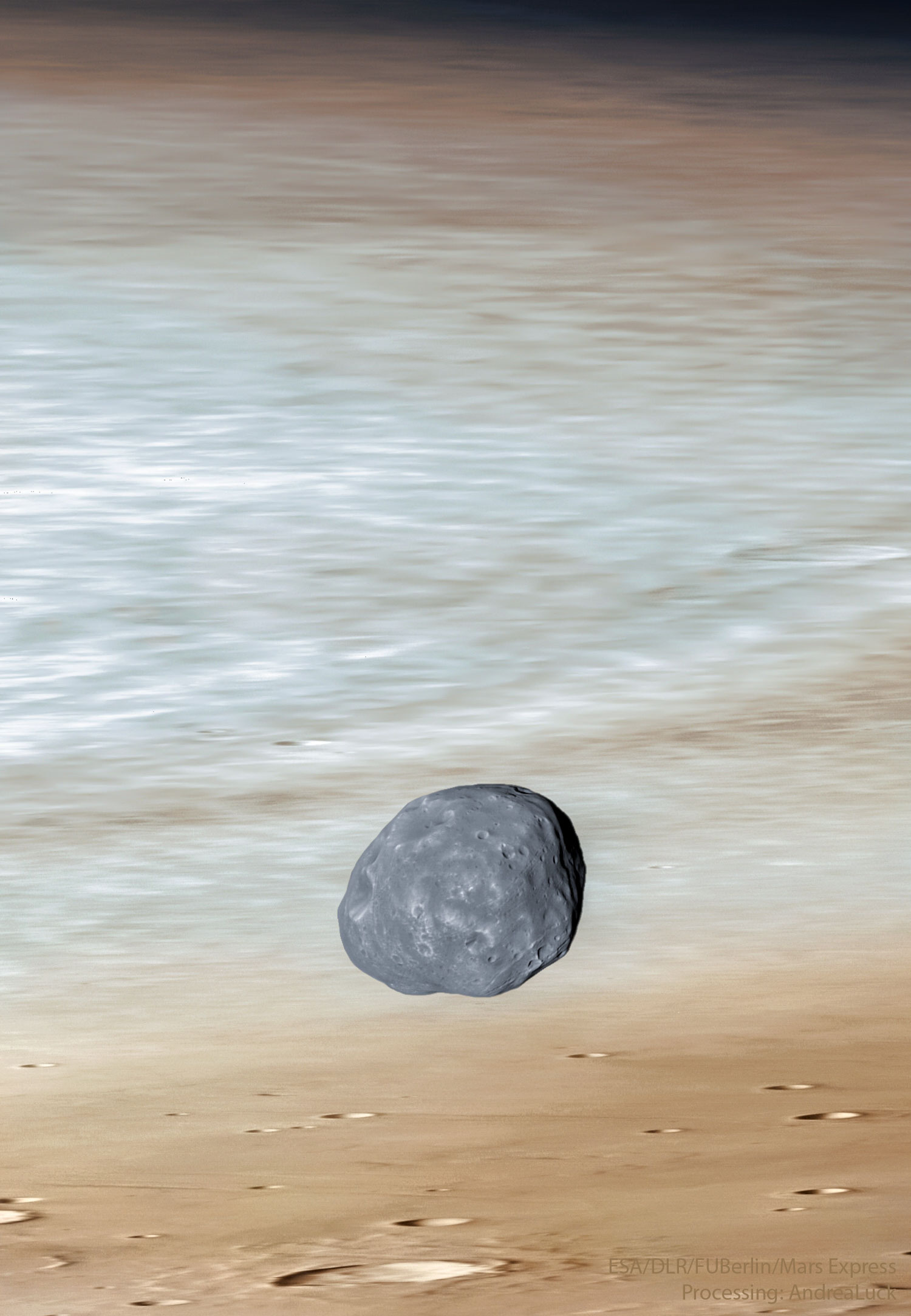
フォボスはなぜこんなに暗いのでしょうか? 火星の2つの衛星のうち、最も大きく、最も内側にあるフォボスは、太陽系全体で最も暗い衛星です。その特異な軌道と色は、氷と暗い岩石の混合物で構成された捕獲された小惑星である可能性を示唆しています。火星の縁付近にあるフォボスのカラー画像は、現在火星を周回しているESAのロボット探査機マーズ・エクスプレスによって2021年後半に撮影されました。フォボスはクレーターだらけの不毛な衛星で、最大のクレーターは裏側にあります。このような画像から、フォボスは恐らく1メートルほどの緩い塵で覆われていると判断されています。フォボスは火星に非常に近い軌道を周回しているため、場所によっては1日に2回昇り沈むように見えますが、他の場所では全く見えません。フォボスの火星周回軌道は絶えず減衰しており、約5000万年後には破片が火星の表面に落下する可能性が高いです。あなたの誕生日にAPOD(今日の写真)に掲載された写真は何ですか?(1995年以降生まれの方対象)
原文(English)
Why is Phobos so dark? Phobos, the largest and innermost of the two Martian moons, is the darkest moon in the entire Solar System. Its unusual orbit and color indicate that it may be a captured asteroid composed of a mixture of ice and dark rock. The featured assigned-color picture of Phobos near the edge of Mars was captured in late 2021 by ESA's robot spacecraft Mars Express, currently orbiting Mars. Phobos is a heavily cratered and barren moon, with its largest crater located on the far side. From images like this, Phobos has been determined to be covered by perhaps a meter of loose dust. Phobos orbits so close to Mars that from some places it would appear to rise and set twice a day, while from other places it would not be visible at all. Phobos' orbit around Mars is continually decaying -- it will likely break up with pieces crashing to the Martian surface in about 50 million years. Your Sky Surprise: What picture did APOD feature on your birthday? (post 1995)
\ この感動を宇宙仲間にシェア /
宇宙をXでシェア
© NASA / APOD