
🚀 宇宙の記憶・カレンダー検索
🚀 象徴的な写真:
APOD第1回
🚀 創造の柱
🚀 スピリット火星着陸
🚀 ハッブル超深宇宙
🚀 地球へようこそ|ブルー・マーブル
🚀 エンケラドス
🚀 ベテルギウス
🚀 火星着陸
🚀 青い夕焼け
🚀 冥王星のハート
🚀 皆既日食
🚀 アースライズ再構築
🚀 ブラックホール
🚀 ウェッブ初画像
🚀 アポロ11着陸
APOD30周年(2025年6月16日)
パックマン星雲における星形成
Star Formation in the Pacman Nebula
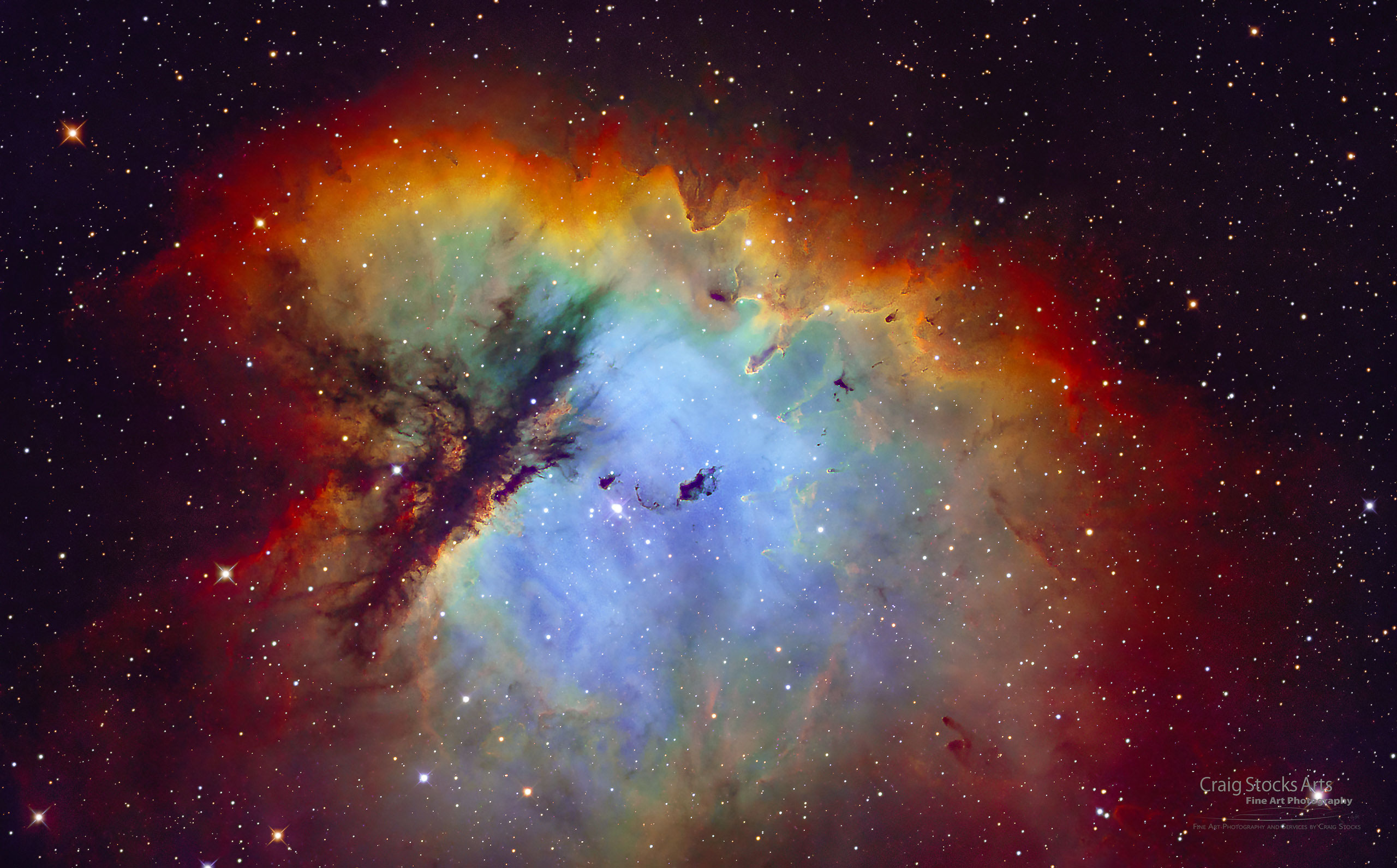
NGC 281としてカタログ化されている宇宙雲を覗き込むと、散開星団IC 1590の星々を見逃してしまうかもしれません。星雲内で形成されたこの星団の若くて大質量の星々が、最終的に星雲全体に広がる輝きのエネルギー源となっています。NGC 281の特集画像に写っている目を引く形状は、星団の高温の星々からの激しい風と放射線によって侵食された、彫刻された塵の柱と高密度のボック球状体で、シルエットとして現れています。これらの塵の構造が十分に長く存在すれば、将来の星形成の場となる可能性もあります。全体的な形状からパックマン星雲と冗談めかして呼ばれるNGC 281は、カシオペヤ座の方向に約1万光年離れたところにあります。この鮮明な合成画像は狭帯域フィルターを通して作成されました。星雲の水素原子と酸素原子からの放射を組み合わせて、赤、緑、青の色を合成しています。この光景は、NGC 281の推定距離で80光年以上にも及ぶ範囲に広がっている。
原文(English)
Look through the cosmic cloud cataloged as NGC 281 and you might miss the stars of open cluster IC 1590. Formed within the nebula, that cluster's young, massive stars ultimately power the pervasive nebular glow. The eye-catching shapes looming in the featured portrait of NGC 281 are sculpted dusty columns and dense Bok globules seen in silhouette, eroded by intense, energetic winds and radiation from the hot cluster stars. If they survive long enough, the dusty structures could also be sites of future star formation. Playfully called the Pacman Nebula because of its overall shape, NGC 281 is about 10,000 light-years away in the constellation Cassiopeia. This sharp composite image was made through narrow-band filters. It combines emission from the nebula's hydrogen and oxygen atoms to synthesize red, green, and blue colors. The scene spans well over 80 light-years at the estimated distance of NGC 281.
\ この感動を宇宙仲間にシェア /
宇宙をXでシェア
© Craig Stocks / APOD