
🚀 宇宙の記憶・カレンダー検索
🚀 象徴的な写真:
APOD第1回
🚀 創造の柱
🚀 スピリット火星着陸
🚀 ハッブル超深宇宙
🚀 地球へようこそ|ブルー・マーブル
🚀 エンケラドス
🚀 ベテルギウス
🚀 火星着陸
🚀 青い夕焼け
🚀 冥王星のハート
🚀 皆既日食
🚀 アースライズ再構築
🚀 ブラックホール
🚀 ウェッブ初画像
🚀 アポロ11着陸
APOD30周年(2025年6月16日)
西村彗星が成長
Comet Nishimura Grows
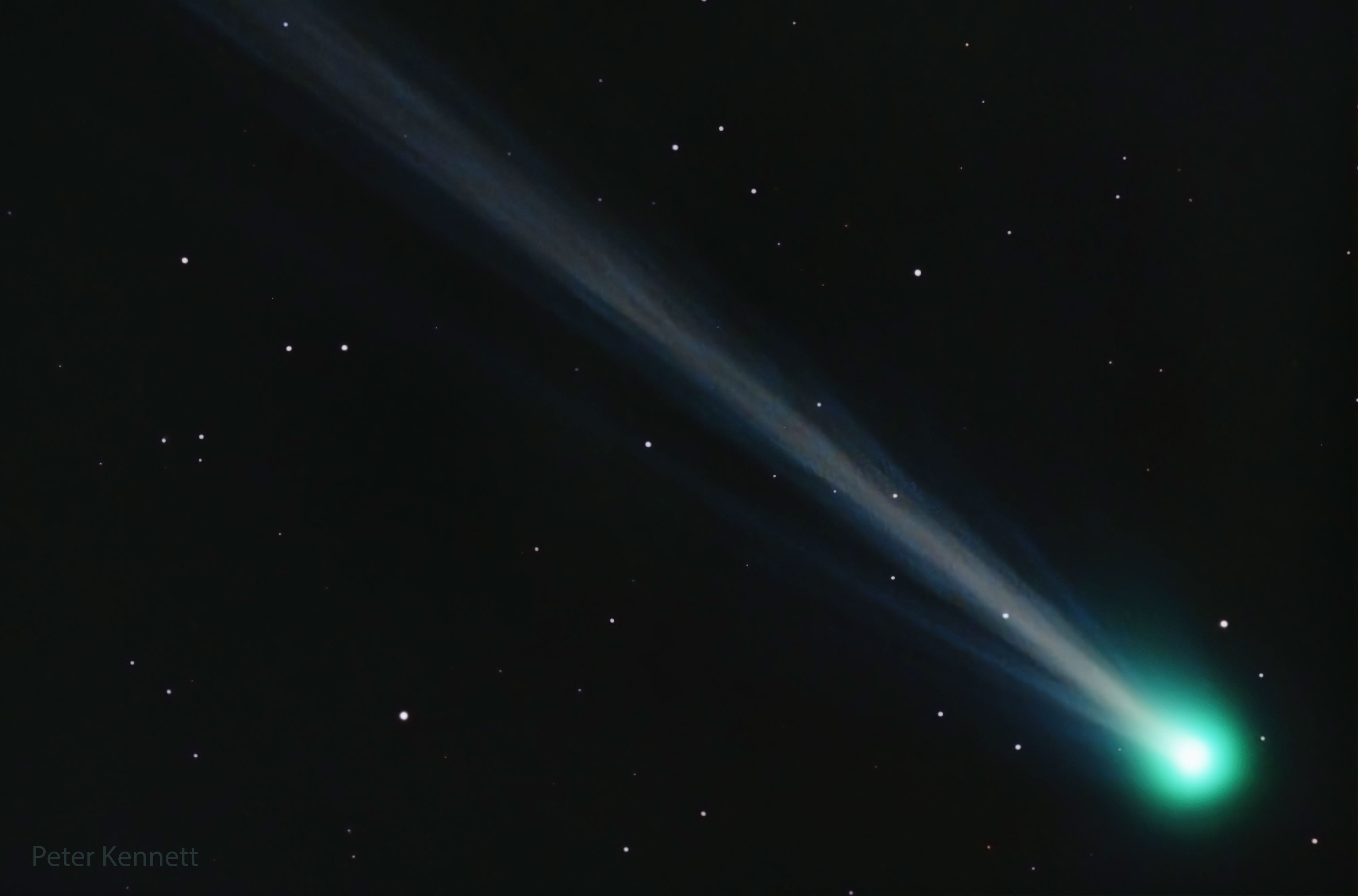
西村彗星は成長している。より正確には、太陽に近づくにつれて、C/2023 P1 (西村) の尾が伸びている。先月発見されたばかりのこの彗星は、現在地球の軌道の内側を移動しており、すでに肉眼で見えるほどの明るさになっている。この彗星は来週地球に最も接近するが、その翌週、9月17日に太陽に最も接近する。西村彗星が前回太陽系内側を訪れた際に放出された氷と塵が、毎年12月にピークを迎えるシグマ・ハイドリッド流星群を生み出したのではないかという憶測がある。もしそうであれば、この流星群は新たな彗星の残骸によって活性化され、より活発になる可能性がある。写真は、4日前、アメリカ合衆国ニューメキシコ州エッジウッドで撮影された西村彗星で、太陽風との相互作用によって形成された長いイオンの尾が写っている。今後数日間は日の出直前の東の地平線付近でこの彗星を探してみてください。来週は日没直後の西の地平線付近で非常に近くで見られるでしょう。彗星のコマはますます明るくなり、尾も伸び続けています。ギャラリー:APODに投稿された西村彗星の厳選画像
原文(English)
Comet Nishimura is growing. More precisely, the tails C/2023 P1 (Nishimura) are growing as it nears the Sun. Discovered only last month, the comet is already near naked eye brightness as it now moves inside the Earth's orbit. The comet will be nearest the Earth next week, but nearest the Sun the week after -- on September 17. Speculation holds that expelled ice and dust from Comet Nishimura's last visit to the inner Solar System may have created the Sigma Hydrids meteor shower which peaks yearly in December. If so, then this meteor shower may become more active, refreshed with new comet debris. Pictured, Comet Nishimura was captured from Edgewood, New Mexico, USA four nights ago, showing a long ion tail structured by interactions with the Sun's wind. Look for this comet near your eastern horizon just before sunrise for the next few mornings, but very near your western horizon just after sunset next week -- as its coma continues to brighten and its tails continue to grow. Gallery: Selected Comet Nishimura images submitted to APOD
\ この感動を宇宙仲間にシェア /
宇宙をXでシェア
© Peter Kennett / APOD