
🚀 宇宙の記憶・カレンダー検索
🚀 象徴的な写真:
APOD第1回
🚀 創造の柱
🚀 スピリット火星着陸
🚀 ハッブル超深宇宙
🚀 地球へようこそ|ブルー・マーブル
🚀 エンケラドス
🚀 ベテルギウス
🚀 火星着陸
🚀 青い夕焼け
🚀 冥王星のハート
🚀 皆既日食
🚀 アースライズ再構築
🚀 ブラックホール
🚀 ウェッブ初画像
🚀 アポロ11着陸
APOD30周年(2025年6月16日)
翻訳エラー: Exception: 1 日にサービス translate を実行した回数が多すぎます。
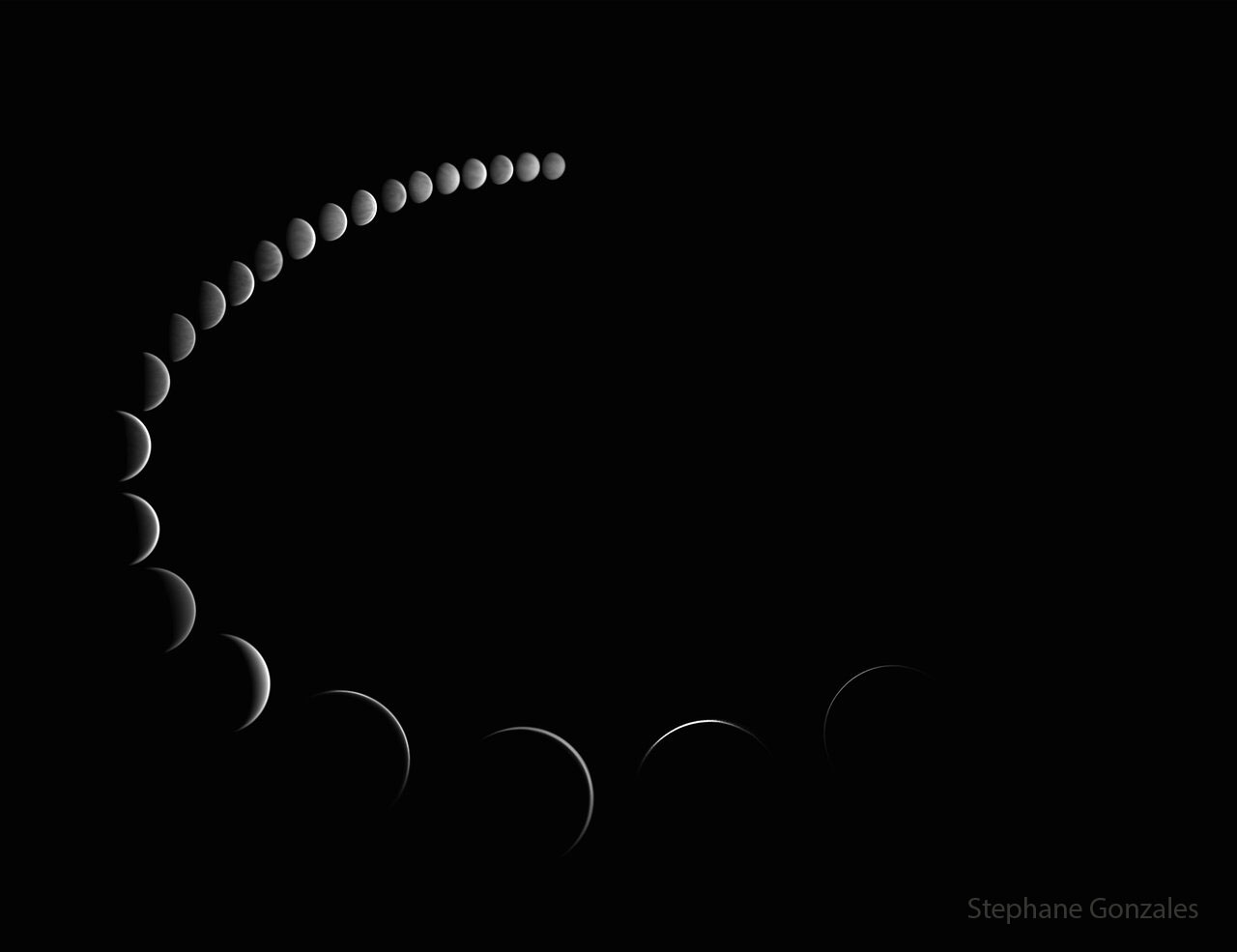
The Phases of Venus
翻訳エラー: Exception: 1 日にサービス translate を実行した回数が多すぎます。
原文(English)
Venus goes through phases. Just like our Moon, Venus can appear as a full circular disk, a thin crescent, or anything in between. Venus, frequently the brightest object in the post-sunset or pre-sunrise sky, appears so small, however, that it usually requires binoculars or a small telescope to clearly see its current phase. The featured time-lapse sequence was taken over the course of six months in 2015 from Surgères, Charente-Maritime, France, and shows not only how Venus changes phase, but changes angular size as well. When Venus is on the far side of the Sun from the Earth, it appears angularly smallest and nearest to full phase, while when Venus and Earth are on the same side of the Sun, Venus appears larger, but as a crescent. This month Venus rises before dawn in waxing gibbous phases. Free APOD Lecture: January 9, 2024 to the Amateur Astronomers of Association of New York
\ この感動を宇宙仲間にシェア /
宇宙をXでシェア
© NASA / APOD