
🚀 宇宙の記憶・カレンダー検索
🚀 象徴的な写真:
APOD第1回
🚀 創造の柱
🚀 スピリット火星着陸
🚀 ハッブル超深宇宙
🚀 地球へようこそ|ブルー・マーブル
🚀 エンケラドス
🚀 ベテルギウス
🚀 火星着陸
🚀 青い夕焼け
🚀 冥王星のハート
🚀 皆既日食
🚀 アースライズ再構築
🚀 ブラックホール
🚀 ウェッブ初画像
🚀 アポロ11着陸
APOD30周年(2025年6月16日)
翻訳エラー: Exception: 1 日にサービス translate を実行した回数が多すぎます。
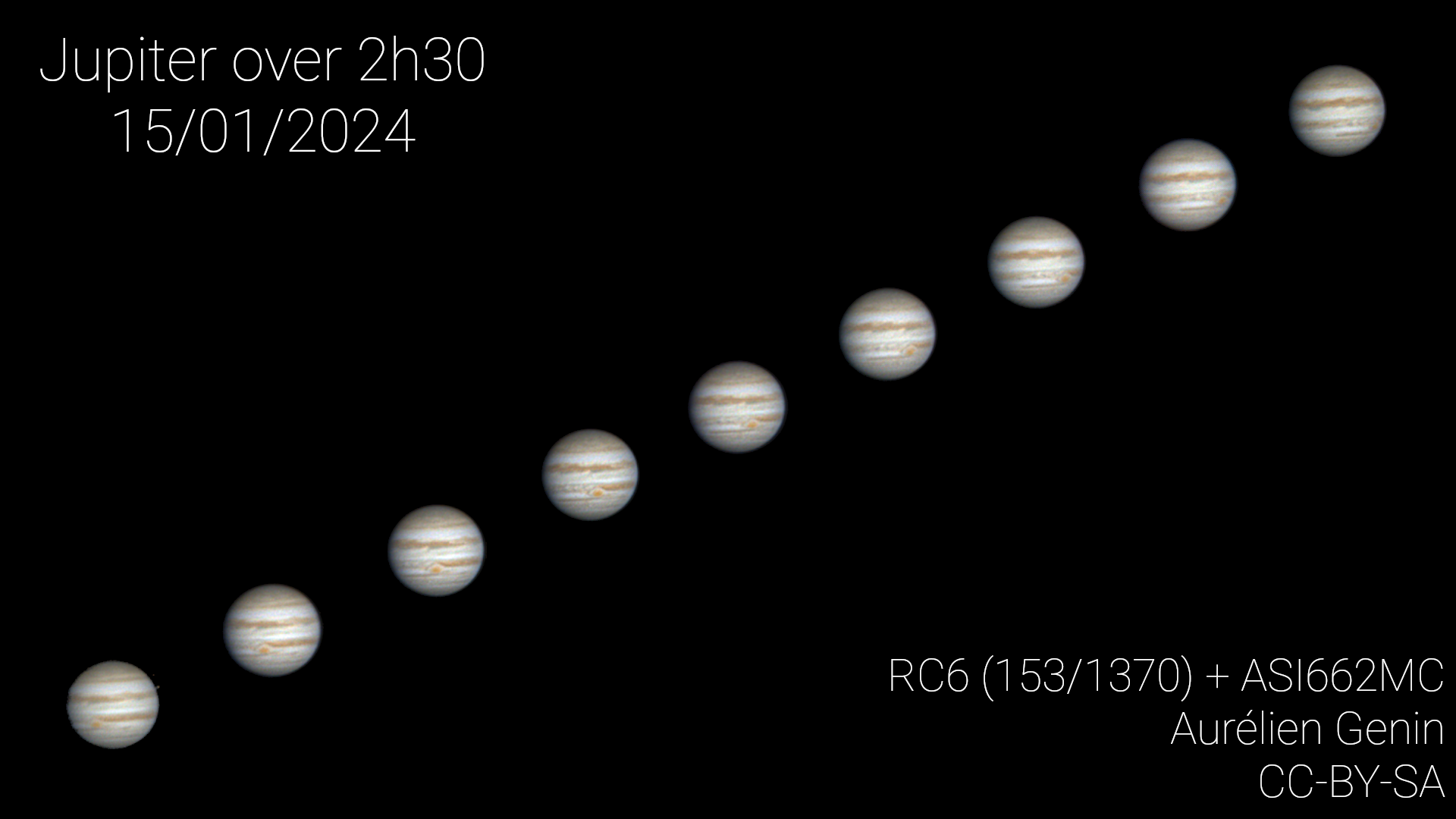
Jupiter over 2 Hours and 30 Minutes
翻訳エラー: Exception: 1 日にサービス translate を実行した回数が多すぎます。
原文(English)
Jupiter, our Solar System's ruling gas giant, is also the fastest spinning planet, rotating once in less than 10 hours. The gas giant doesn't rotate like a solid body though. A day on Jupiter is about 9 hours and 56 minutes long at the poles, decreasing to 9 hours and 50 minutes near the equator. The giant planet's fast rotation creates strong jet streams, separating its clouds into planet girdling bands of dark belts and bright zones. You can easily follow Jupiter's rapid rotation in this sharp sequence of images from the night of January 15, all taken with a camera and small telescope outside of Paris, France. Located just south of the equator, the giant planet's giant storm system, also known as the Great Red Spot, can be seen moving left to right with the planet's rotation. From lower left to upper right, the sequence spans about 2 hours and 30 minutes.
\ この感動を宇宙仲間にシェア /
宇宙をXでシェア
© NASA / APOD