
🚀 宇宙の記憶・カレンダー検索
🚀 象徴的な写真:
APOD第1回
🚀 創造の柱
🚀 スピリット火星着陸
🚀 ハッブル超深宇宙
🚀 地球へようこそ|ブルー・マーブル
🚀 エンケラドス
🚀 ベテルギウス
🚀 火星着陸
🚀 青い夕焼け
🚀 冥王星のハート
🚀 皆既日食
🚀 アースライズ再構築
🚀 ブラックホール
🚀 ウェッブ初画像
🚀 アポロ11着陸
APOD30周年(2025年6月16日)
翻訳エラー: Exception: 1 日にサービス translate を実行した回数が多すぎます。
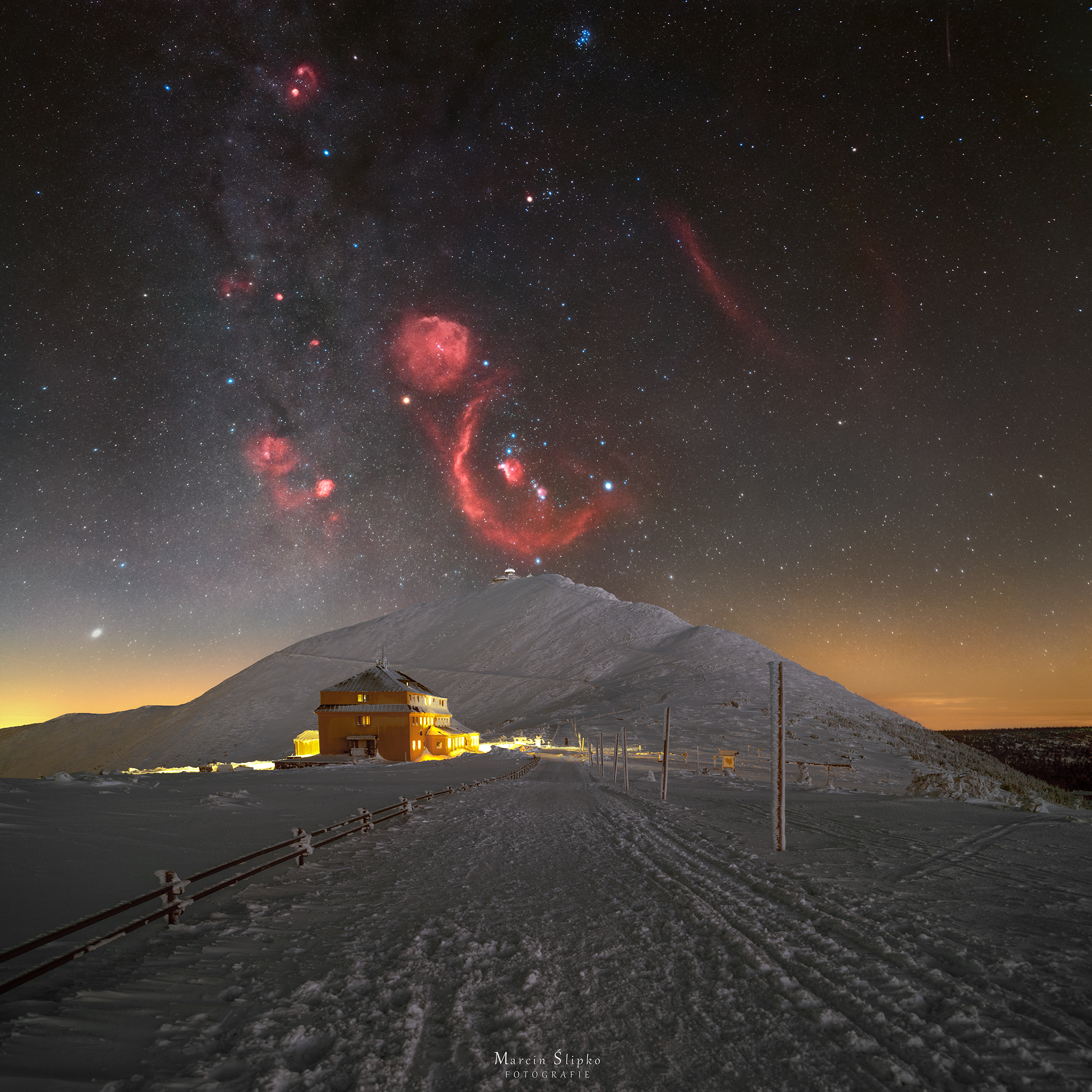
Camera Orion Rising
翻訳エラー: Exception: 1 日にサービス translate を実行した回数が多すぎます。
原文(English)
What does Orion rising look like to a camera? During this time of the year, the famous constellation is visible to the southeast just after sunset. From most Earthly locations, Orion's familiar star pattern, highlighted by the three-stars-in-a-row belt stars, rises sideways. An entire section of the night sky that includes Orion was photographed rising above Śnieżka, a mountain on the border between Poland and the Czech Republic. The long duration exposure sequence brings up many faint features including the Orion and Flame Nebulas, both encompassed by the curving Barnard's Loop. The featured wide-angle camera composite also captured night sky icons including the blue Pleiades star cluster at the image top and the red Rosette Nebula to the left of Orion. Famous stars in the frame include Procyon, Betelgeuse, Rigel and Aldebaran. Orion will appear successively higher in the sky at sunset during the coming months.
\ この感動を宇宙仲間にシェア /
宇宙をXでシェア
©
Marcin Ślipko
/ APOD