
🚀 宇宙の記憶・カレンダー検索
🚀 象徴的な写真:
APOD第1回
🚀 創造の柱
🚀 スピリット火星着陸
🚀 ハッブル超深宇宙
🚀 地球へようこそ|ブルー・マーブル
🚀 エンケラドス
🚀 ベテルギウス
🚀 火星着陸
🚀 青い夕焼け
🚀 冥王星のハート
🚀 皆既日食
🚀 アースライズ再構築
🚀 ブラックホール
🚀 ウェッブ初画像
🚀 アポロ11着陸
APOD30周年(2025年6月16日)
翻訳エラー: Exception: 1 日にサービス translate を実行した回数が多すぎます。
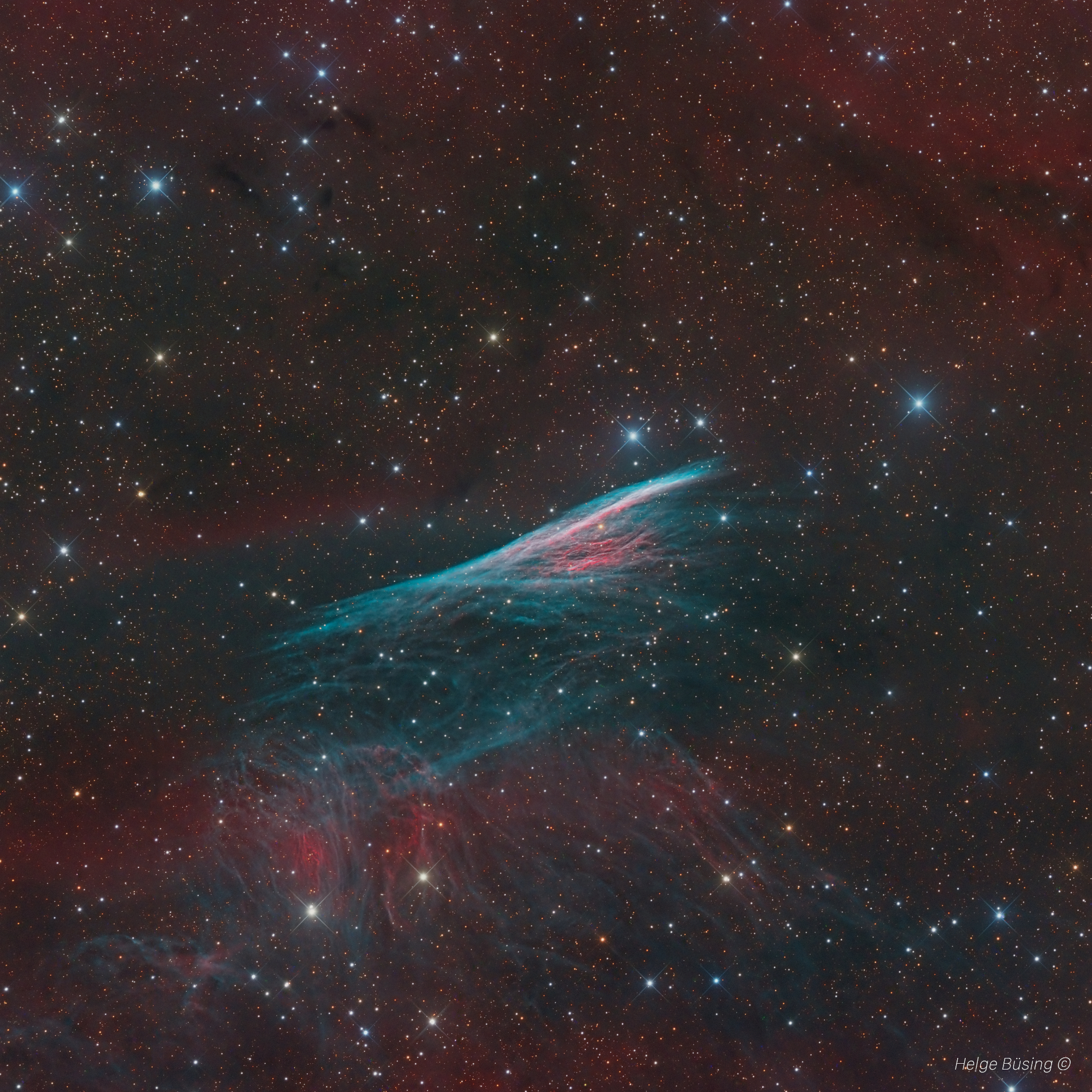
The Pencil Nebula Supernova Shock Wave
翻訳エラー: Exception: 1 日にサービス translate を実行した回数が多すぎます。
原文(English)
This supernova shock wave plows through interstellar space at over 500,000 kilometers per hour. Centered and moving upward in the sharply detailed color composite its thin, bright, braided filaments are actually long ripples in a cosmic sheet of glowing gas seen almost edge-on. Discovered in the 1840s by Sir John Herschel, the narrow-looking nebula is sometimes known as Herschel's Ray. Cataloged as NGC 2736, its pointed appearance suggests its modern popular name, the Pencil Nebula. The Pencil Nebula is about 800 light-years away. Nearly 5 light-years long it represents only a small part of the Vela supernova remnant though. The enormous Vela remnant itself is around 100 light-years in diameter, the expanding debris cloud of a star that was seen to explode about 11,000 years ago. Initially, the section of the shock wave seen as the Pencil nebula was moving at millions of kilometers per hour but has slowed considerably, sweeping up surrounding interstellar material.
\ この感動を宇宙仲間にシェア /
宇宙をXでシェア
© Helge Buesing / APOD