
🚀 宇宙の記憶・カレンダー検索
🚀 象徴的な写真:
APOD第1回
🚀 創造の柱
🚀 スピリット火星着陸
🚀 ハッブル超深宇宙
🚀 地球へようこそ|ブルー・マーブル
🚀 エンケラドス
🚀 ベテルギウス
🚀 火星着陸
🚀 青い夕焼け
🚀 冥王星のハート
🚀 皆既日食
🚀 アースライズ再構築
🚀 ブラックホール
🚀 ウェッブ初画像
🚀 アポロ11着陸
APOD30周年(2025年6月16日)
翻訳エラー: Exception: 1 日にサービス translate を実行した回数が多すぎます。
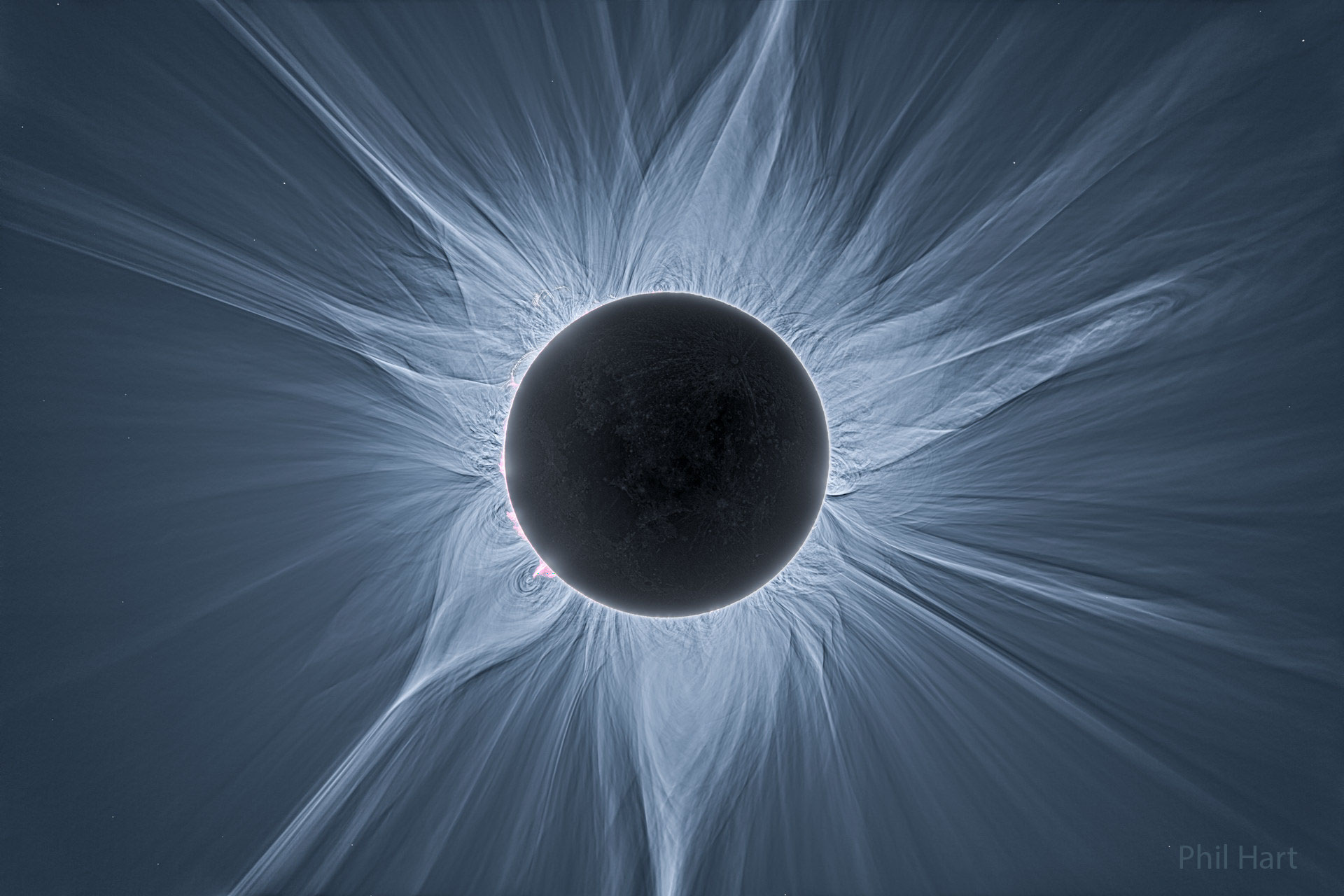
Detailed View of a Solar Eclipse Corona
翻訳エラー: Exception: 1 日にサービス translate を実行した回数が多すぎます。
原文(English)
Only in the fleeting darkness of a total solar eclipse is the light of the solar corona easily visible. Normally overwhelmed by the bright solar disk, the expansive corona, the sun's outer atmosphere, is an alluring sight. But the subtle details and extreme ranges in the corona's brightness, although discernible to the eye, are notoriously difficult to photograph. Pictured here, however, using multiple images and digital processing, is a detailed image of the Sun's corona taken during the April 20, 2023 total solar eclipse from Exmouth, Australia. Clearly visible are intricate layers and glowing caustics of an ever changing mixture of hot gas and magnetic fields. Bright looping prominences appear pink just around the Sun's limb. A similar solar corona might be visible through clear skies in a narrow swath across the North America during the total solar eclipse that occurs just six days from today NASA Coverage: Total Solar Eclipse of 2024 April 8
\ この感動を宇宙仲間にシェア /
宇宙をXでシェア
©
Phil Hart
/ APOD