
🚀 宇宙の記憶・カレンダー検索
🚀 象徴的な写真:
APOD第1回
🚀 創造の柱
🚀 スピリット火星着陸
🚀 ハッブル超深宇宙
🚀 地球へようこそ|ブルー・マーブル
🚀 エンケラドス
🚀 ベテルギウス
🚀 火星着陸
🚀 青い夕焼け
🚀 冥王星のハート
🚀 皆既日食
🚀 アースライズ再構築
🚀 ブラックホール
🚀 ウェッブ初画像
🚀 アポロ11着陸
APOD30周年(2025年6月16日)
ポンスブルックス彗星のイオン尾の変化
The Changing Ion Tail of Comet Pons-Brooks
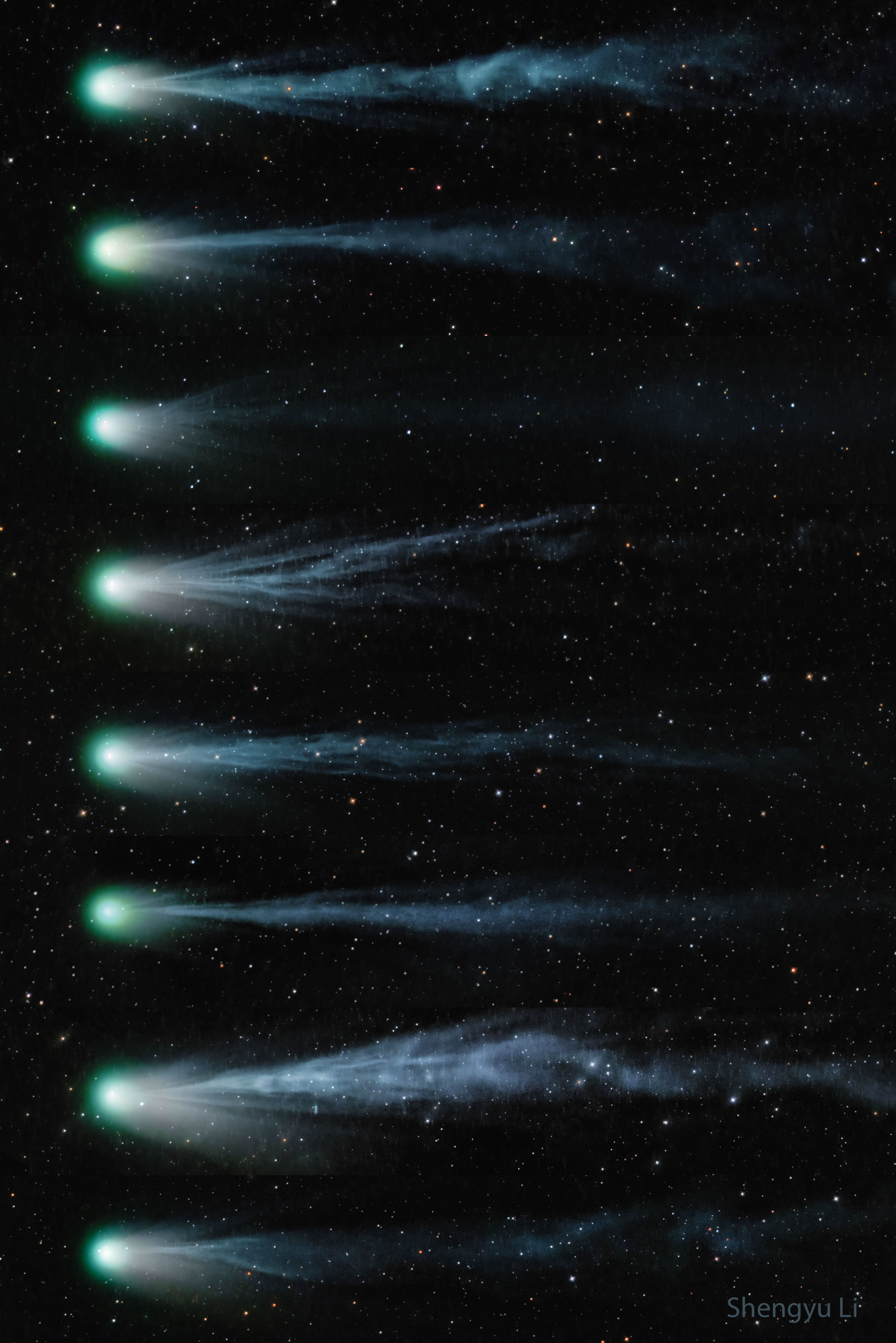
彗星の尾はどのように変化するのでしょうか?それは彗星によって異なります。12P/ポンズ・ブルックス彗星のイオン尾は、3月6日から14日までの9日間(上から下)の連続画像で詳細に説明されているように、著しく変化しています。イオン尾が比較的長く複雑な日もありましたが、毎日ではありませんでした。尾が変化する理由としては、彗星の核から放出される物質の速度、通過する太陽風の強さと複雑さ、そして彗星の自転速度などが挙げられます。1週間の間に、地球からの視点も変化するなど、明らかな変化が見られます。一般的に、彗星のイオン尾は、放出されたガスが太陽風によって押し出されるため、太陽とは反対方向を向きます。今日、ポンズ・ブルックス彗星は、月によって太陽が完全に隠されるのを見ることができる人々にとって、真昼間に突然見える珍しい彗星になるかもしれません。 NASA報道:今日の皆既日食 皆既日食画像:APODへの注目投稿
原文(English)
How does a comet tail change? It depends on the comet. The ion tail of Comet 12P/Pons–Brooks has been changing markedly, as detailed in the featured image sequenced over nine days from March 6 to 14 (top to bottom). On some days, the comet's ion tail was relatively long and complex, but not every day. Reasons for tail changes include the rate of ejection of material from the comet's nucleus, the strength and complexity of the passing solar wind, and the rotation rate of the comet. Over the course of a week, apparent changes even include a change of perspective from the Earth. In general, a comet's ion tail will point away from the Sun, as gas expelled is pushed out by the Sun's wind. Today, Pons-Brooks may become a rare comet suddenly visible in the middle of the day for those able to see the Sun totally eclipsed by the Moon. NASA Coverage: Today's Total Solar Eclipse Total Eclipse Imagery: Notable Submissions to APOD
\ この感動を宇宙仲間にシェア /
宇宙をXでシェア
©
Shengyu Li & Shaining
/ APOD