
🚀 宇宙の記憶・カレンダー検索
🚀 象徴的な写真:
APOD第1回
🚀 創造の柱
🚀 スピリット火星着陸
🚀 ハッブル超深宇宙
🚀 地球へようこそ|ブルー・マーブル
🚀 エンケラドス
🚀 ベテルギウス
🚀 火星着陸
🚀 青い夕焼け
🚀 冥王星のハート
🚀 皆既日食
🚀 アースライズ再構築
🚀 ブラックホール
🚀 ウェッブ初画像
🚀 アポロ11着陸
APOD30周年(2025年6月16日)
GK Per: 新星と惑星状星雲
GK Per: Nova and Planetary Nebula
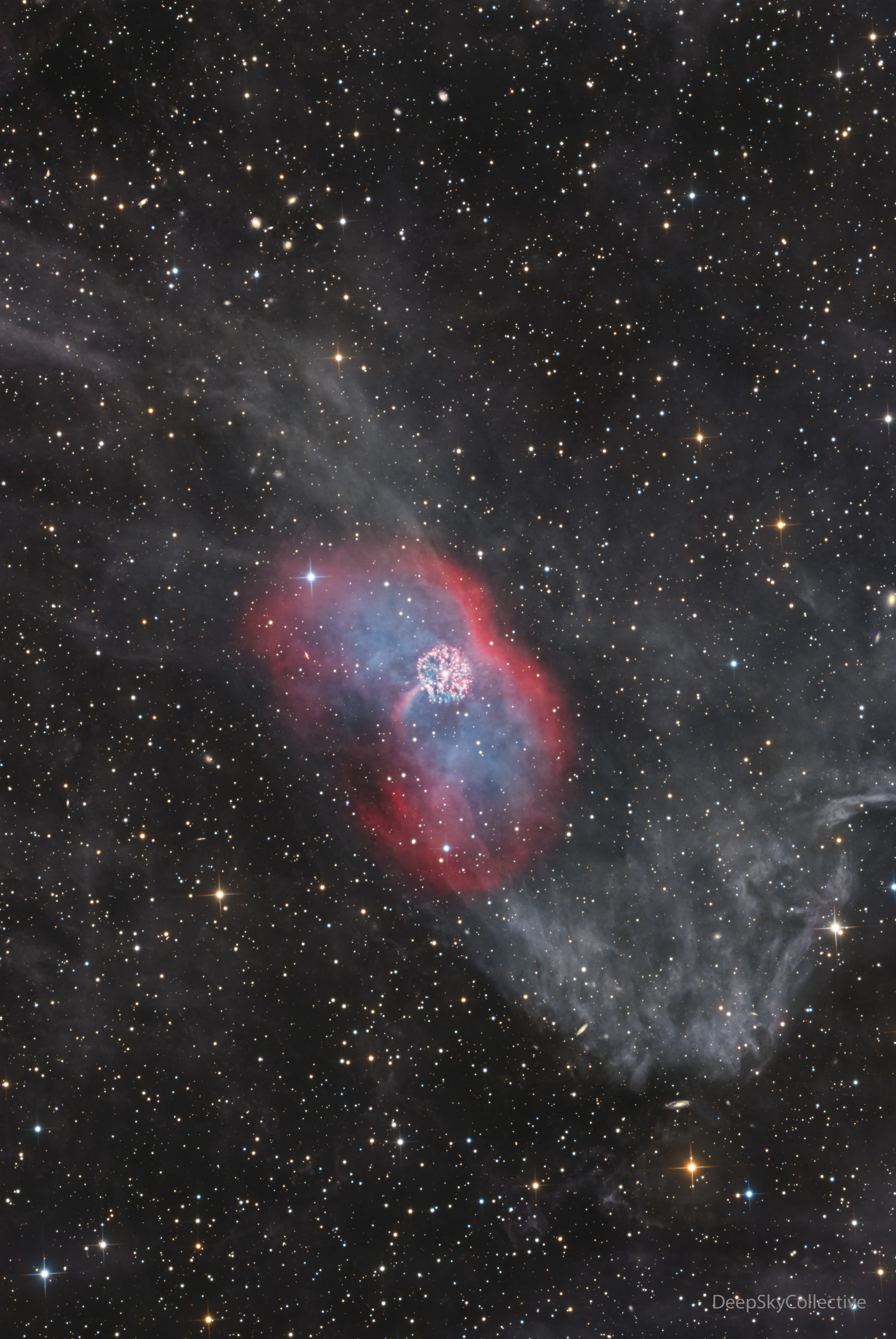
GK ペルセウス星系は、写真に写っている 3 つの星雲のうち 2 つとのみ関連していることがわかっています。1500 光年離れた新星ペルセウス 1901 (GK ペルセウス) は、これまでに記録された新星の中で 2 番目に近い星でした。中心には白色矮星があり、これはかつて太陽のような恒星だったものの生き残った核です。その周囲を円形の花火星雲が取り囲んでいます。これは、1901 年に記録された白色矮星の表面での熱核爆発 (新星) によって噴出したガスです。花火星雲を取り囲む赤く輝くガスは、中心の恒星を取り囲んでいた大気です。このガスは新星爆発の前に噴出しており、拡散した惑星状星雲のように見えます。横切って流れるかすかな灰色のガスは、偶然通り過ぎただけのように見える星間巻雲です。1901 年、GK ペルセウスの新星はベテルギウスよりも明るくなりました。同様に、T CrB 星系も今年後半に新星爆発を起こすと予想されているが、それがいつ起こるか、またどの程度明るくなるかは正確にはわかっていない。
原文(English)
The star system GK Per is known to be associated with only two of the three nebulas pictured. At 1500 light years distant, Nova Persei 1901 (GK Persei) was the second closest nova yet recorded. At the very center is a white dwarf star, the surviving core of a former Sun-like star. It is surrounded by the circular Firework nebula, gas that was ejected by a thermonuclear explosion on the white dwarf's surface -- a nova -- as recorded in 1901. The red glowing gas surrounding the Firework nebula is the atmosphere that used to surround the central star. This gas was expelled before the nova and appears as a diffuse planetary nebula. The faint gray gas running across is interstellar cirrus that seems to be just passing through coincidently. In 1901, GK Per's nova became brighter than Betelgeuse. Similarly, star system T CrB is expected to erupt in a nova later this year, but we don't know exactly when nor how bright it will become.
\ この感動を宇宙仲間にシェア /
宇宙をXでシェア
©
Deep Sky Collective
/ APOD