
🚀 宇宙の記憶・カレンダー検索
🚀 象徴的な写真:
APOD第1回
🚀 創造の柱
🚀 スピリット火星着陸
🚀 ハッブル超深宇宙
🚀 地球へようこそ|ブルー・マーブル
🚀 エンケラドス
🚀 ベテルギウス
🚀 火星着陸
🚀 青い夕焼け
🚀 冥王星のハート
🚀 皆既日食
🚀 アースライズ再構築
🚀 ブラックホール
🚀 ウェッブ初画像
🚀 アポロ11着陸
APOD30周年(2025年6月16日)
ブラックホールが通過する星を破壊する
A Black Hole Disrupts a Passing Star
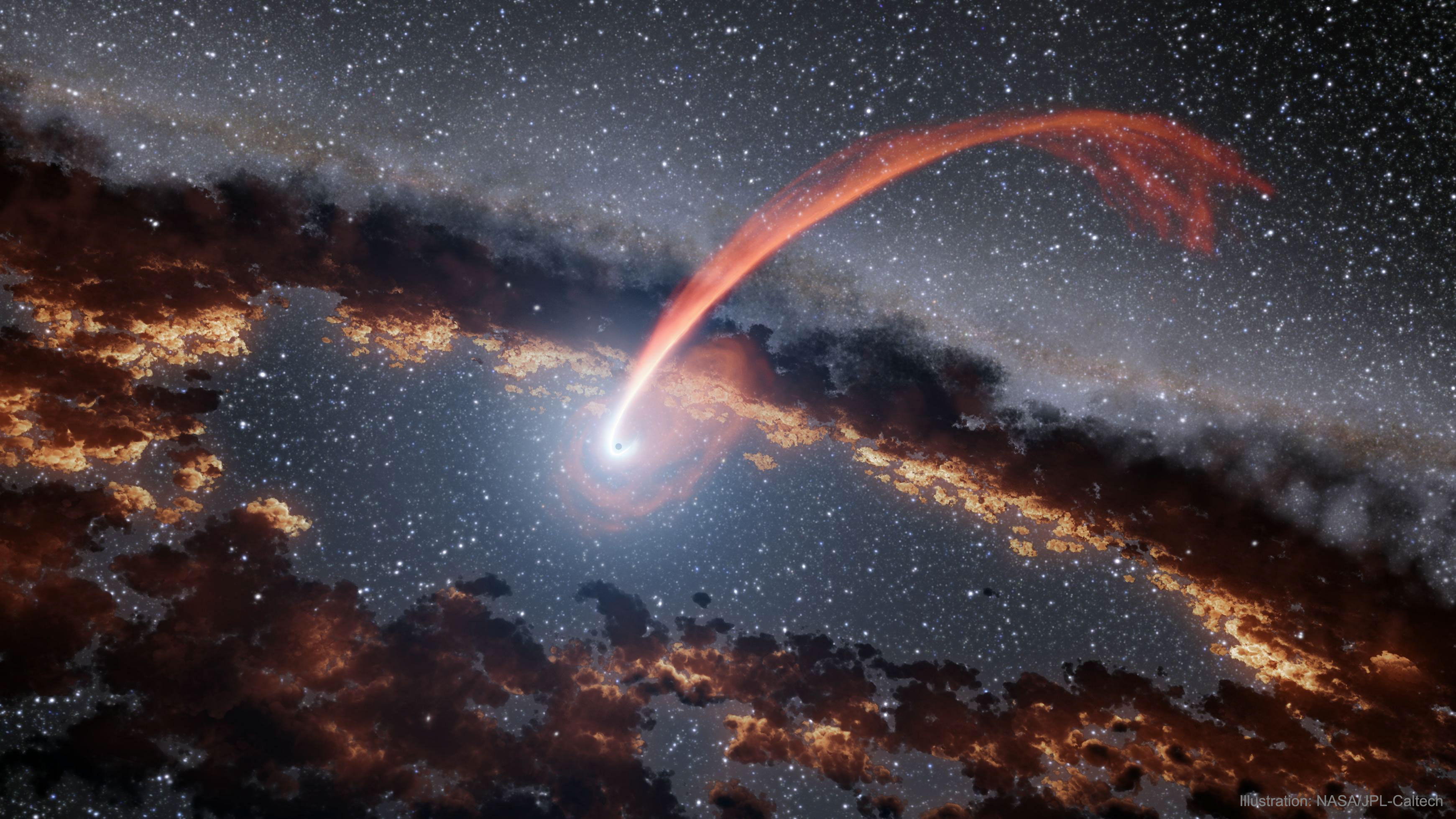
ブラックホールに近づく星はどうなるでしょうか? 星が巨大なブラックホールに直接衝突した場合、星は完全にブラックホールに落ち込み、すべてが消滅します。しかし、より可能性が高いのは、星がブラックホールの重力によって外層が引き離される、つまりブラックホールが破壊されるほどブラックホールに近づくことです。すると、星のガスの大部分はブラックホールに落ち込みません。こうした恒星の潮汐破壊現象は超新星爆発と同じくらい明るくなる場合があり、自動天体観測によって発見されるケースが増えています。掲載されているアーティストのイラストでは、星が巨大なブラックホールを通過し、放出されたガスが周回を続けています。ブラックホールを取り囲むガスと塵の円盤の内縁は、この破壊現象によって加熱され、星が消滅した後も長く光り続けることがあります。ホール・ニュー・ワールドズ:NASAではブラックホール・ウィークです!
原文(English)
What happens to a star that goes near a black hole? If the star directly impacts a massive black hole, then the star falls in completely -- and everything vanishes. More likely, though, the star goes close enough to have the black hole's gravity pull away its outer layers, or disrupt, the star. Then, most of the star's gas does not fall into the black hole. These stellar tidal disruption events can be as bright as a supernova, and an increasing amount of them are being discovered by automated sky surveys. In the featured artist's illustration, a star has just passed a massive black hole and sheds gas that continues to orbit. The inner edge of a disk of gas and dust surrounding the black hole is heated by the disruption event and may glow long after the star is gone. Hole New Worlds: It's Black Hole Week at NASA!
\ この感動を宇宙仲間にシェア /
宇宙をXでシェア
© NASA / APOD