
🚀 宇宙の記憶・カレンダー検索
🚀 象徴的な写真:
APOD第1回
🚀 創造の柱
🚀 スピリット火星着陸
🚀 ハッブル超深宇宙
🚀 地球へようこそ|ブルー・マーブル
🚀 エンケラドス
🚀 ベテルギウス
🚀 火星着陸
🚀 青い夕焼け
🚀 冥王星のハート
🚀 皆既日食
🚀 アースライズ再構築
🚀 ブラックホール
🚀 ウェッブ初画像
🚀 アポロ11着陸
APOD30周年(2025年6月16日)
CG4:球体と銀河
CG4: The Globule and the Galaxy
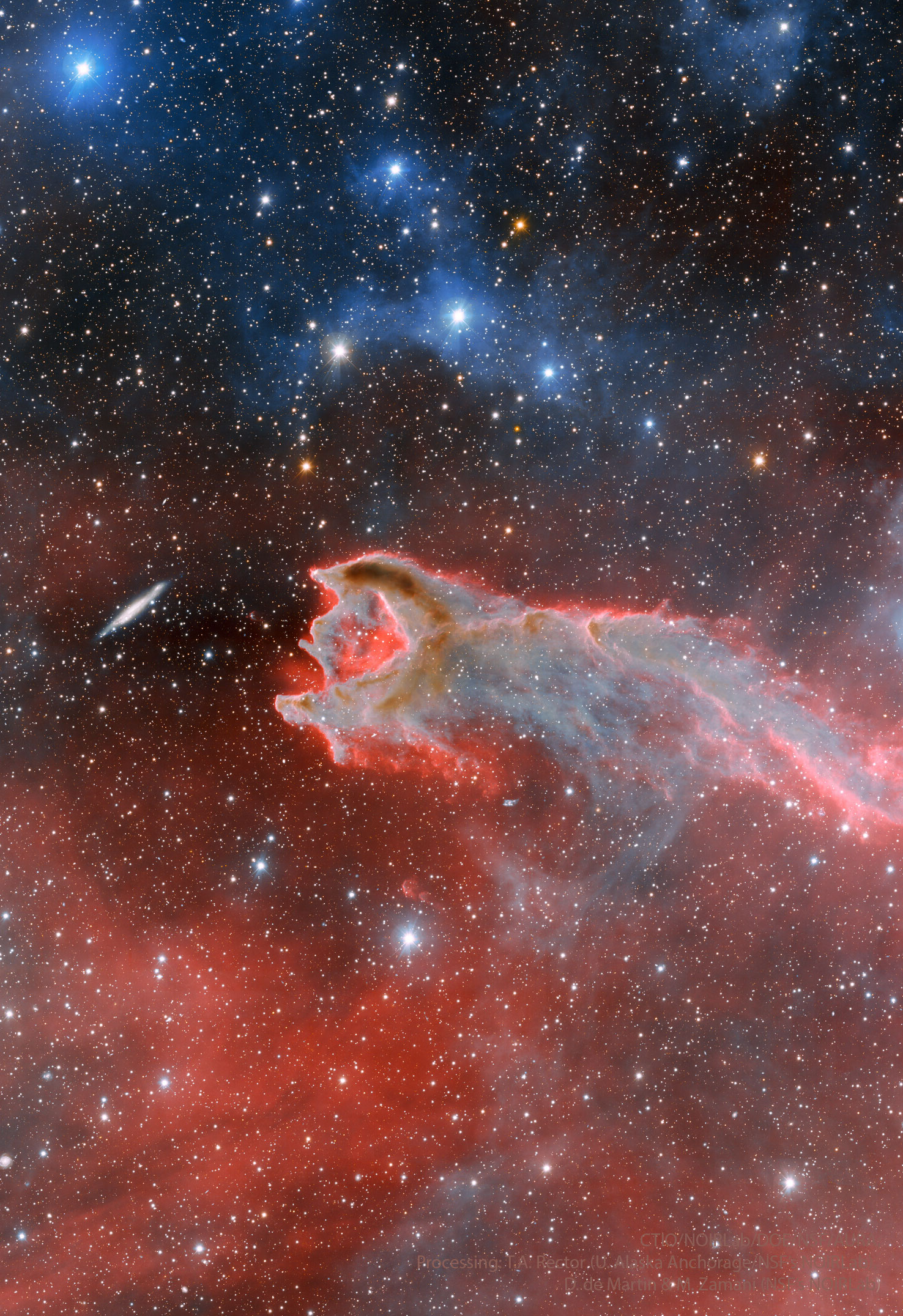
ガス雲が銀河を飲み込むことはできるだろうか?そんなことはあり得ない。掲載写真に写っている奇妙な「生物」の「爪」は、彗星状球状体と呼ばれるガス雲である。しかし、この球状体は破裂している。彗星状球状体は通常、塵の塊状の頭部と細長い尾部を持つ。これらの特徴から、彗星状球状体は彗星と視覚的に似ているが、実際には大きく異なる。球状体はしばしば星の誕生の場であり、多くの球状体の頭部には非常に若い星が見られる。この天体の頭部が破裂した理由はまだ分かっていない。球状体の左側にある銀河は巨大で、非常に遠くにあり、偶然の重なりによってCG4の近くに位置しているにすぎない。
原文(English)
Can a gas cloud eat a galaxy? It's not even close. The "claw" of this odd looking "creature" in the featured photo is a gas cloud known as a cometary globule. This globule, however, has ruptured. Cometary globules are typically characterized by dusty heads and elongated tails. These features cause cometary globules to have visual similarities to comets, but in reality they are very much different. Globules are frequently the birthplaces of stars, and many show very young stars in their heads. The reason for the rupture in the head of this object is not yet known. The galaxy to the left of the globule is huge, very far in the distance, and only placed near CG4 by chance superposition.
\ この感動を宇宙仲間にシェア /
宇宙をXでシェア
© NASA / APOD