
🚀 宇宙の記憶・カレンダー検索
🚀 象徴的な写真:
APOD第1回
🚀 創造の柱
🚀 スピリット火星着陸
🚀 ハッブル超深宇宙
🚀 地球へようこそ|ブルー・マーブル
🚀 エンケラドス
🚀 ベテルギウス
🚀 火星着陸
🚀 青い夕焼け
🚀 冥王星のハート
🚀 皆既日食
🚀 アースライズ再構築
🚀 ブラックホール
🚀 ウェッブ初画像
🚀 アポロ11着陸
APOD30周年(2025年6月16日)
翻訳対象のテキストが見つかりません。
Milky Way Behind Three Merlons
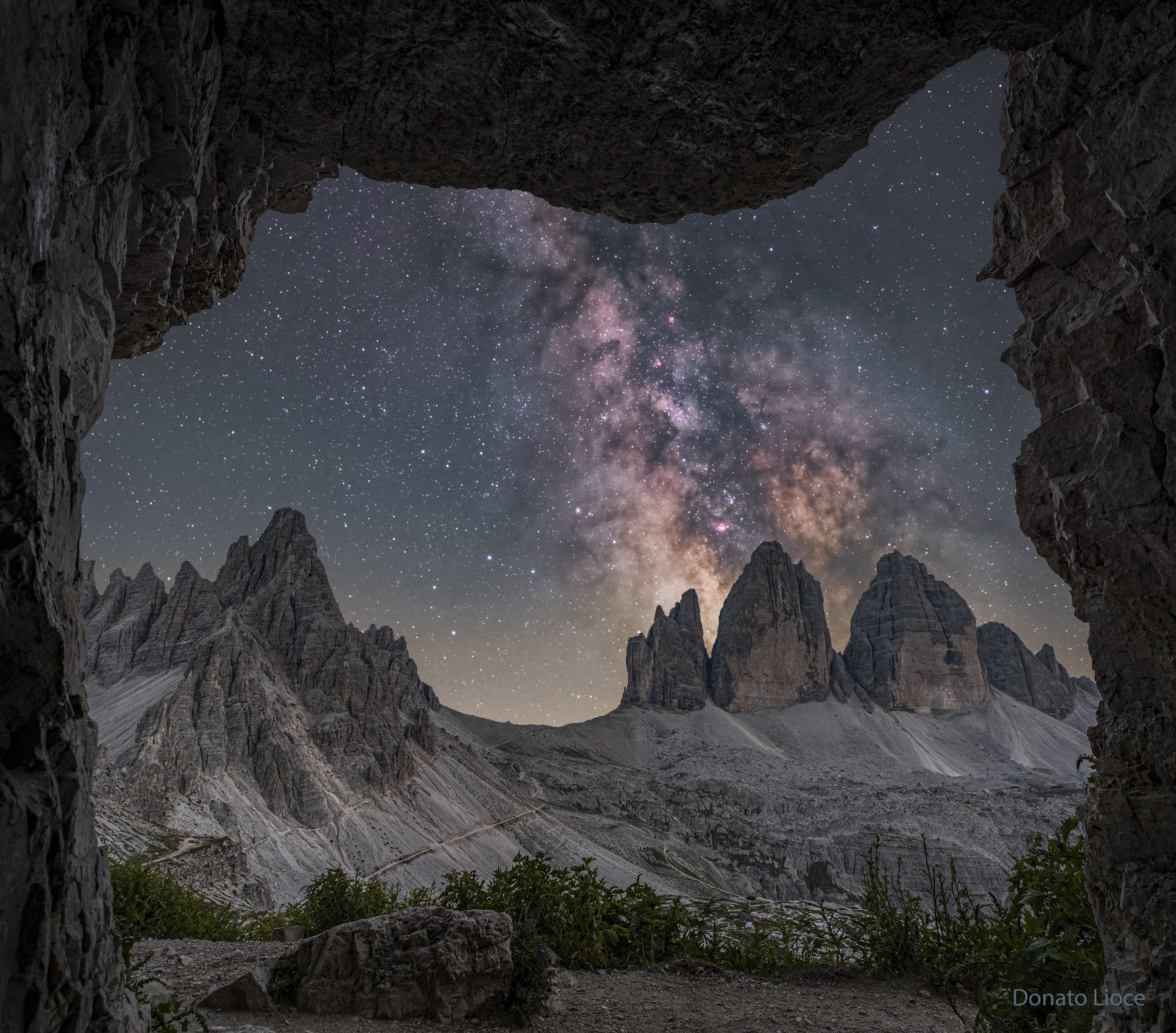
To some, they look like battlements, here protecting us against the center of the Milky Way. The Three Merlons, also called the Three Peaks of Lavaredo, stand tall today because they are made of dense dolomite rock which has better resisted erosion than surrounding softer rock. They formed about 250 million years ago and so are comparable in age with one of the great extinctions of life on Earth. A leading hypothesis is that this great extinction was triggered by an asteroid about 10-km across, larger in size than Mount Everest, impacting the Earth. Humans have gazed up at the stars in the Milky Way and beyond for centuries, making these battlefield-like formations, based in the Sexten Dolomites, a popular place for current and ancient astronomers.
原文(English)
To some, they look like battlements, here protecting us against the center of the Milky Way. The Three Merlons, also called the Three Peaks of Lavaredo, stand tall today because they are made of dense dolomite rock which has better resisted erosion than surrounding softer rock. They formed about 250 million years ago and so are comparable in age with one of the great extinctions of life on Earth. A leading hypothesis is that this great extinction was triggered by an asteroid about 10-km across, larger in size than Mount Everest, impacting the Earth. Humans have gazed up at the stars in the Milky Way and beyond for centuries, making these battlefield-like formations, based in the Sexten Dolomites, a popular place for current and ancient astronomers.
\ この感動を宇宙仲間にシェア /
宇宙をXでシェア
© Donato Lioce;
Text: Natalia Lewandowska
(SUNY Oswego) / APOD