
🚀 宇宙の記憶・カレンダー検索
🚀 象徴的な写真:
APOD第1回
🚀 創造の柱
🚀 スピリット火星着陸
🚀 ハッブル超深宇宙
🚀 地球へようこそ|ブルー・マーブル
🚀 エンケラドス
🚀 ベテルギウス
🚀 火星着陸
🚀 青い夕焼け
🚀 冥王星のハート
🚀 皆既日食
🚀 アースライズ再構築
🚀 ブラックホール
🚀 ウェッブ初画像
🚀 アポロ11着陸
APOD30周年(2025年6月16日)
IFNとNGC 7771群
IFN and the NGC 7771 Group
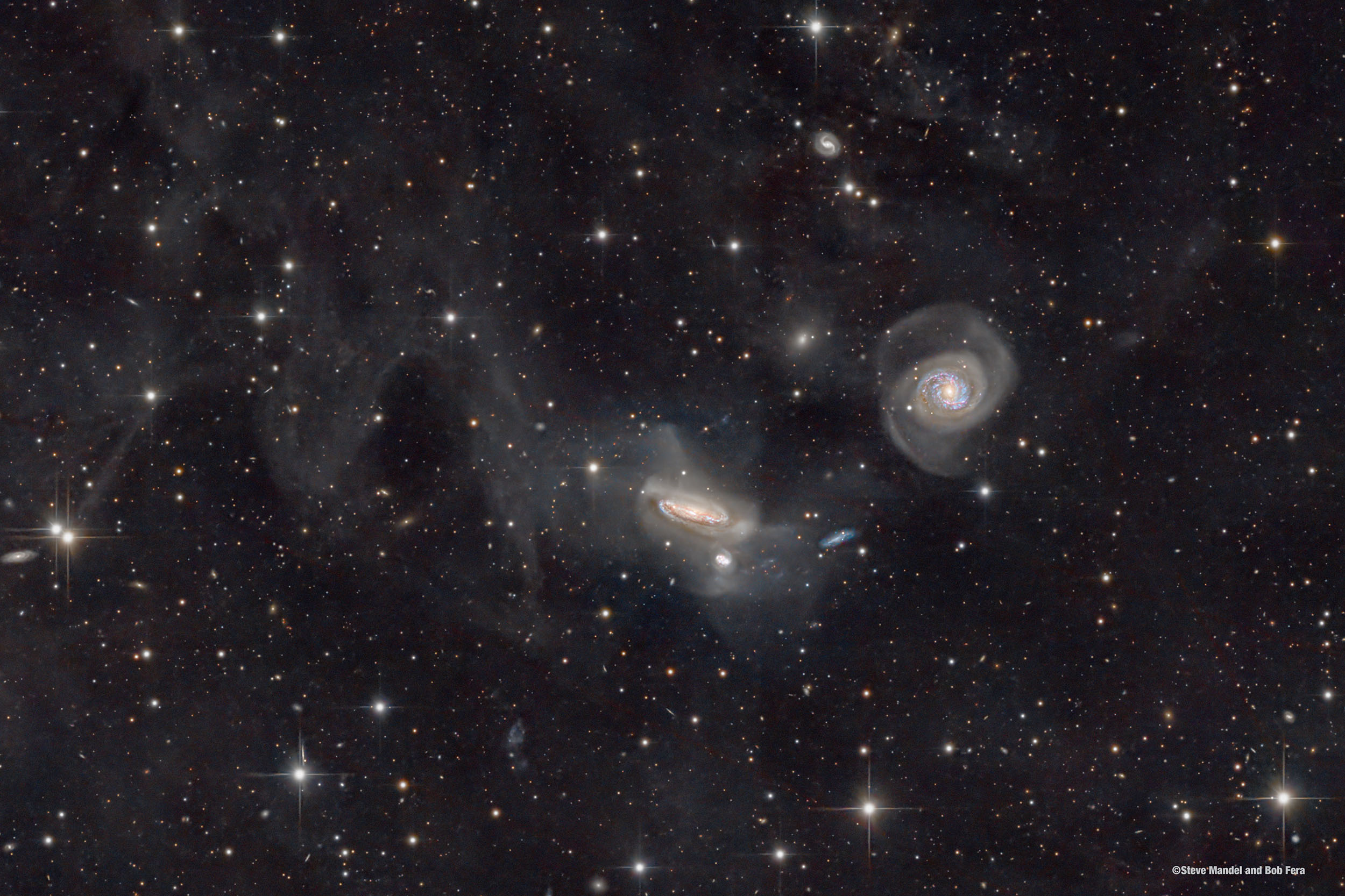
この興味深い天体写真には、NGC 7771銀河群が写っています。ペガスス座の方向に約2億光年離れたNGC 7771は、中心付近にある横向きの大きな渦巻銀河で、直径は約7万5000光年、その下に2つの小さな銀河があります。右側には大きな渦巻銀河NGC 7769が正面から写っています。NGC 7771銀河群は相互作用しており、宇宙の時間スケールで最終的に銀河同士の合体につながる接近を繰り返しています。この相互作用は、銀河自体の形状の歪みや、相互の重力潮汐によって生じるかすかな星の流れによって追跡できます。しかし、この銀河群をはっきりと見ることは困難です。なぜなら、この深宇宙画像には、視野を横切る広範囲の塵の雲も写っているからです。薄暗く塵に覆われた銀河の巻雲は、統合フラックス星雲(Integrated Flux Nebulae)として知られています。この淡いIFNは、私たちの銀河系である天の川銀河からの星の光を反射しており、銀河面からわずか数百光年ほど上空に位置しています。
原文(English)
Galaxies of the NGC 7771 Group are featured in this intriguing skyscape. Some 200 million light-years distant toward the constellation Pegasus, NGC 7771 is the large, edge-on spiral near center, about 75,000 light-years across, with two smaller galaxies below it. Large spiral NGC 7769 is seen face-on to the right. Galaxies of the NGC 7771 group are interacting, making repeated close passages that will ultimately result in galaxy-galaxy mergers on a cosmic timescale. The interactions can be traced by distortions in the shape of the galaxies themselves and faint streams of stars created by their mutual gravitational tides. But a clear view of this galaxy group is difficult to come by as the deep image also reveals extensive clouds of foreground dust sweeping across the field of view. The dim, dusty galactic cirrus clouds are known as Integrated Flux Nebulae. The faint IFN reflect starlight from our own Milky Way Galaxy and lie only a few hundred light-years above the galactic plane.
\ この感動を宇宙仲間にシェア /
宇宙をXでシェア
© Steve Mandel / APOD